Every night I saw little variations as I began tracking the Moon’s phases. Watching the Moon enlarge and recede over decades seemed soothing. This easy behavior helped me to understand nature more deeply.
Phases of the Moon show how the Moon shape evolves during the month.They enable us to grasp the nocturnal dance of the skies.
Tonight, the phases of the Moon always have something enchanted to show!
What gives rise to the phases of the Moon?
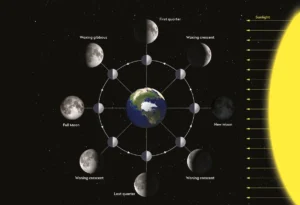
It aids to know precisely what causes the different moon phases before we start it. One often held incorrect belief is that the moon phases are brought about by Earth’s shadow landing on the moon. The phases of the moon are actually produced by something far more basic and exquisite: the varying angle between the moon, Earth, and the sun as the moon travels around our world.
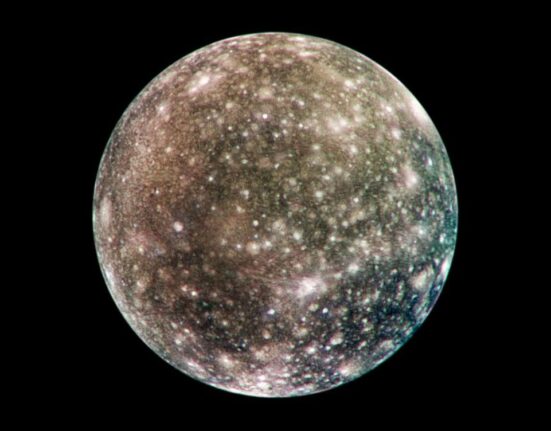
The moon doesn’t generate its own light. What we witness when we glance at the moon is sunlight bouncing off its surface. Different sections of the moon’s sunlit side come into our view as it circles Earth. That is the new moon; when the moon is between Earth and the sun, we see none of the lit side. The whole illuminated side we see when Earth lies between the moon and the sun is the full moon. Between these two extremes, every phase of the moon symbolizes the slow shifting from one to the other.
One term known as the synodic month, the full cycle of the phases of the moon lasts around 29.5 days. This is somewhat longer than the 27.3 days it actually takes the moon to orbit Earth because Earth is also rotating the sun; so, the moon has to travel a little farther to return to the same position relative to both Earth and the sun. Many past and present civilizations base the calendar month on the 29.5-day cycle of the phases of the moon.
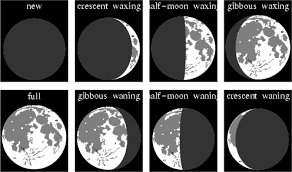
Eight Moon Phases (Short Edition)
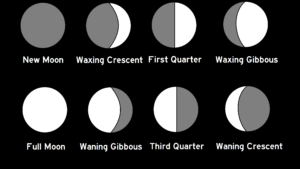
New Moon: The invisible Moon signals a fresh cycle; associated with goal setting and fresh starts.
A slender crescent on the right – symbolizes first steps, momentum, and expansion.
First Quarter – Linked to decision-making and action; right side lighted.
More than half lit – denotes refinement, persistence, and perseverance; waxing gibbous
Full Moon – Completely bright; connected to fulfillment, amplified feelings, and closure.
Encouragement of thanks, sharing, and release, waning gibbous is left side lit, shrinking.
Left half lighted – a period for reflection, letting go, and readying for new starts last quarter.
Waning Crescent – Thin left sliver; contemplative, calm, and spiritually silent before the fresh cycle
How to Spot the Moon’s Phases Using Your Own Eyes
For sky-watchers, recognizing the phases of the moon by eye is among of the most fulfilling talents. By noting rise/set times and applying the DOC rule—D = waxing, O = full, C = waning—you can swiftly identify each phase. This gives the Moon’s cycle a vibrant, dynamic beat.
The phases of the moon and their impact on tides
The phases of the moon have a direct impact on Earth’s tides. Strong spring tides result from aligned gravitational forces during new and full moons; quarter moons generate weaker neap tides. Sailors, fishermen, surfers, and coastal settlements all have to know these cycles since tide charts depending on lunar phase data globally.
Scientific and astrological phases of the moon
Astronomy and space science depend critically on the phases of the moon. While full moons impede visibility, astronomers plan observations near to freshly discovered moons for dark nights. Like Apollo, space missions timed landings using lunar phases. These expected patterns also allow researchers to investigate Earth-Moon dynamics and improve orbital models.
Moon phases in various cultures and customs throughout the world
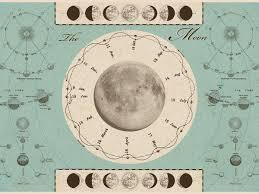
The phases of the moon have been more often seen, worshipped, and incorporated into human culture than any other natural occurrence. The phases of the moon have influenced calendars, religious practices, farming techniques, folklore, and art across every continent and throughout all of recorded history.
ancient egypt
With amazing accuracy, ancient Egyptians charted the phases of the moon and connected them to their god Thoth, the god of wisdom, writing, and time. Religious celebrations were controlled using the moon’s phases, which were thought to affect the Nile’s floods—the foundation of Egyptian agricultural success.
Ancient Rome and Greece
Greek and Roman societies personified the lunar phases through deities: Selene and Luna for the full moon, Artemis and Diana for the crescent moon, and Hecate for the dark, fresh moon phase. Among the first to precisely explain that the phases of the moon were caused by the reflection of sunshine, Greek philosopher Anaxagoras made a startlingly accurate observation for the fifth century BCE.
Indigenous Customs
Based on the phases of the moon, indigenous civilizations all over created complex knowledge systems. Native American tribes gave names to each full moon of the year — the Wolf Moon, the Snow Moon, the Harvest Moon — based on seasonal events that coincided with those phases of the moon. For navigation, time ceremonies, and control of community events, aboriginal Australians, Polynesian sailors, and many other native peoples relied on the phases of the moon.
Islamic and Hebrew lunar calendars
Both the Hebrew and Islamic calendars rely directly on the phases of the moon. In Islam, the appearance of the waxing crescent moon ushers in every new month; Ramadan, Eid, and other religious celebrations are timed according to the lunar phases. The days of Rosh Hashanah, Passover, and other big Jewish feasts on the Hebrew calendar are calculated using the phases of the moon.
Phases of the Moon and Horticulture: Lunar Planting Advisor
Among the oldest and most widely used agricultural ideas in human history is the belief that the phases of the moon have an effect on plant development. Gardeners have employed the phases of the moon to schedule their planting, pruning, harvesting, and soil preparation operations from ancient Mesopotamia to contemporary biodynamic agriculture. Although scientific study on this subject is still inconsistent, millions of gardeners worldwide swear by the technique and claim better crops when working in sync with the phases of the moon.
The premise of lunar gardening is that the gravitational influence of the moon, which causes ocean tides, also influences soil moisture content and plants. Sap and moisture are said to rise upward through plants during the waxing stages of the moon when the moon is growing toward fullness; hence, this is the ideal time for grafting, above-ground crop planting, and transplanting. Energy is reported to move down into roots during the waning phases of the moon, making this great for pruning and harvesting, as well as for planting root vegetables and bulbs.
With the full moon particularly preferred for harvesting fruits and vegetables meant for eating fresh—as they have a higher water content and more vivid taste at this phase—the new moon and full moon stages of the moon are seen to be the most potent planting times. Resting the garden, composting, and preparing the soil are best done during the dark days of the waning crescent phases of the moon.
The phases of the moon spiritually signify
For many millions of people across the globe, the phases of the moon have great religious meaning beyond science and astronomy. Seen either astrologically, Wiccan, yoga philosophically, or personal spiritually, the phases of the moon provide a natural structure for internal work, goal setting, and cyclic living.
In many spiritual traditions, the phases of the moon mirror the human experience: birth, development, fullness, release, and renewal cycles. New moon phases match freshly starting projects and planting goals. The waxing phases of the moon symbolize momentum development and work.The whole moon cycles of the moon represent perfectness, clarity, and the brightening of what has been growing in your life. The waning lunar phases call for thanks, letting go, and letting go of what is no longer useful.
Many practitioners of contemporary spirituality perform periodic new moon and full moon rituals coordinated with the phases of the moon. Meditation, journaling, crystal charging, candle ceremonies, tarot reading, and group meetings may all be among these activities. Deepening self-awareness, increasing intuition, and developing a sense of rhythm and purpose in everyday life are said to result from deliberately working with the phases of the moon in this manner.
Events Unique to the Moon’s Phases
Many notable astronomical phenomena that draw great public interest and have own particular relevance happen inside the normal lunar cycle of phases.
Supermoon
When the full moon phases of the moon match the moon being at or close to perigee—that is, its closest point to Earth in its elliptical orbit—a supermoon results. This gives the moon a lot bigger and brighter appearance than a regular full moon. Among the most beautiful occurrences in the yearly phases of the moon cycle, supermoons cause stronger-than-average spring tides.
Blue Moon
Either the second full moon phases of the moon inside a single calendar month, or the third full moon in a season spanning four full moons, define a blue moon. Celebrated for their scarcity, blue moons happen every two to three years. The well-known phrase “once in a blue moon” derives straight from this rather rare arrangement in the moon cycle’s phases.
Lunar Eclipse
Among the most spectacular events that might happen during the full moon phases of the moon is a lunar eclipse. It occurs when Earth casts its shadow on the lunar surface as it passes exactly between the sun and the moon. Sunlight refracted across Earth’s atmosphere during a total lunar eclipse causes the moon to become a deep red or copper color, a phenomena sometimes known as a Blood Moon. From the whole night side of Earth, lunar eclipses can be seen and endure for many hours.
Other Named Moons and Harvest Moon
Native American, Colonial American, and European folk customs have traditionally given each full moon in the phases of the moon cycle a name. Celebrated for rising shortly after sunset for many nights in a row, the Harvest Moon is the full moon phase of the moon nearest to the autumn equinox and traditionally provided farmers extra hours of light to gather their crops. Among other named full moon phases of the moon are the Cold Moon in December, the Wolf Moon in January, the Pink Moon in April, and the Strawberry Moon in June.
Children’s Education in the Phases of the Moon
Children of all ages can find a great educational subject in the phases of the moon. Learning about the moon’s phases naturally sparks a child’s curiosity about the natural world by combining science, art, narrative, and observation.
Hands-on exercises are among the most efficient methods to educate young students about the moon’s phases. A favorite school project, creating each of the eight phases of the moon using the cream filling of Oreo cookies, is both instructive and tasty. Another well-liked technique is a moon journal in which kids note and draw the moon every evening throughout a month, describing the varying phases of the moon in their own words and images.
Digital tools and applications make teaching the phases of the moon more accessible and entertaining than ever. Children can direct their tablets toward the sky using augmented reality applications and view the phases of the moon annotated in real time. Free, excellent animations and movies on NASA’s website and YouTube channel clarify the phases of the moon in language appropriate for children.
Frequently Asked Questions
Q: There are how many lunar phases?
A: I still recall my shock at learning that there are eight phases of the moon rather than just four most people are familiar with. Growing up, I only knew the new moon, full moon, and the two half moons, but once I started paying close attention I realized the waxing crescent, waxing gibbous, waning gibbous, and waning crescent are just as beautiful and significant. The eight phases of the moon will help you to have a much more complete appreciation of the whole lunar cycle and make sky-watching so much more satisfying.
Q: Why do the phases of the moon change?
A: It literally shocked me the first time someone adequately clarified to me why the moon phases vary. It is just the angle between the moon, Earth, and the sun changing as the moon orbits us; it is not Earth’s shadow. The different phases of the moon are created as the angle changes and we see more or less of the moon’s illuminated part. Once you really get this, the moon’s phases seem more like a flawlessly choreographed cosmic dance than less like magic.
Q: Completion of all phases of the moon takes about how long?
Every month I monitor the moon phases, and I am always somewhat astonished at the speed the entire cycle travels. From one New Moon to the next, the full phases of the moon cycle span nearly 29.5 days. That means in barely a month you get to see the entire spectrum of lunar phases — from absolute darkness to vivid brilliance and back again. Once you begin to notice, 29.5 days seems really quick and very fulfilling.
Q: Do the phases of the moon influence human actions?
A: Honestly, I used to be a complete skeptic about this until I started noticing my own energy and sleep shifting with the phases of the moon. Though the degree of the impact is still under discussion by science, several studies have found that people sleep less and feel more restless around the full moon phases of the moon. Whether gravitational, psychological, or cultural, the way the phases of the moon seem to agitate things—emotionally, energetically, even physically for many people—is undeniably genuine.
Q: What is the best way to learn and track the phases of the moon?
A: The method that worked best for me was combining a good moon phase app with actual nightly sky observation. Apps give you instant accurate data on the phases of the moon, but nothing replaces going outside and watching the moon change with your own eyes night after night. Keeping a simple moon journal where you sketch the phases of the moon each evening for a full month is genuinely transformative — by the end of the month, the phases of the moon feel like old friends rather than abstract concepts, and you find yourself naturally anticipating each new phase before it arrives.
Conclusion
Nature’s most perfect gifts to humanity are the phases of the moon—a consistent, gorgeous, and endlessly significant cycle that has directed human life for as long as our species has lived. The phases of the moon touch practically every area of human life, from the tides of the ocean to the turning of old calendars, from the growing of crops to the setting of spiritual aspirations.
Learning about and watching the phases of the moon lets you become a member of an unbroken chain of human sky-gazers spanning millennia. Every sailor who traveled by the lunar calendar, every poet writing beneath a full moon, every youngster pointing at a crescent in the sky and inquiring what it was were all partaking in the same age-old connection with the phases of the moon you are nurturing today.
Appreciation of the lunar phases demands neither any particular belief system, nor any scientific ability, nor any specific equipment. They just want you to glance up. Tonight, the moon is in some phase—waxing or waning, crescent or gibbous, new or full—wherever you are. As they always have been, the phases of the moon are waiting for you.Therefore go outside, locate the moon in the sky, and greet yourself into one of the most ancient and most universal human customs known.