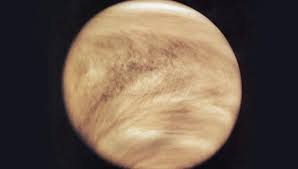
I used to think Mars was the scariest planet until I researched Venus. The planet Venus surface temperature clocks in at a mind-melting 867°F (464°C)—hot enough to melt lead, vaporize zinc, and turn any spacecraft into a puddle within hours. That’s hotter than your kitchen oven maxed out. And unlike Mercury, which at least cools down at night, Venus stays infernally hot everywhere, all the time.
The planet Venus surface temperature is unimaginably hot, reaching 867°F and staying constant day and night. Experiencing its extreme conditions in imagination made me appreciate Earth’s mild climate even more.
Learn about the planet Venus surface temperature, its extreme 867°F heat, constant climate, and why Venus is hotter than Mercury.
Three Shocking Facts About Venus’s Extreme Heat

Let’s start with what makes Venus the solar system’s pressure cooker.
The planet Venus surface temperature doesn’t just break records—it shatters our understanding of what “hot” means. At 867°F, it’s consistently hotter than Mercury’s dayside maximum of 800°F, even though Mercury sits 31 million miles closer to the Sun.
How is that possible?
The three factors creating Venus’s inferno:
- Atmosphere thickness: 92 times denser than Earth’s (like being 3,000 feet underwater)
- Greenhouse gas concentration: 96.5% carbon dioxide trapping infrared radiation
- Cloud albedo effect: Sulfuric acid clouds reflect 75% of sunlight yet heat still accumulates
I remember the exact moment this clicked for me. I was reading about NASA’s Pioneer Venus mission and learned that the lander measured 867°F at the surface while the cloud tops sat at a comfortable -45°F. That’s a 900-degree temperature gradient across just 30 miles of atmosphere.
The planet Venus surface temperature remains constant day and night, equator to poles. The thick atmosphere distributes heat so efficiently that temperature variations are essentially zero. You could travel anywhere on Venus and face the exact same hellish conditions.
| Location on Venus | Temperature | Pressure | Notable Feature |
| Equator (surface) | 867°F | 92 bars | Hottest planet in solar system |
| Poles (surface) | 867°F | 92 bars | No temperature variation |
| Maxwell Montes (highest peak) | ~750°F | ~45 bars | Cooler due to elevation |
| Cloud tops (30 miles up) | -45°F | 0.5 bars | Earth-like pressure zone |
That uniform temperature haunts me. There’s no escape, no cool refuge, no night time relief.
The Runaway Greenhouse Effect That Doomed Venus
This is where Venus’s story becomes a cautionary tale.
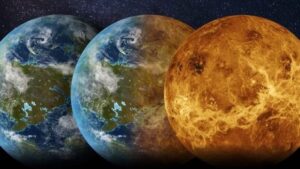
Scientists believe Venus started with conditions similar to early Earth—possibly even with liquid water oceans. Then everything went catastrophically wrong.
The runaway greenhouse effect works through a vicious feedback loop. Here’s the step-by-step breakdown:
Stage 1: Initial warming Venus’s proximity to the Sun caused more surface water to evaporate. Water vapor is a greenhouse gas that traps heat.
Stage 2: Acceleration More heat meant more evaporation. More water vapor meant more trapped heat. The cycle fed on itself exponentially.
Stage 3: Ocean loss Eventually, temperatures climbed high enough that the oceans literally boiled away into the atmosphere. Solar ultraviolet radiation split water molecules (H₂O) into hydrogen and oxygen. The light hydrogen escaped to space.
Stage 4: Carbon dioxide buildup With no water to absorb it, volcanic carbon dioxide accumulated in the atmosphere. CO₂ is an even more effective greenhouse gas at Venus’s pressures and temperatures.
Stage 5: Point of no return The planet Venus surface temperature reached levels where the greenhouse effect became self-sustaining. Even if you removed the Sun, Venus would stay hot for thousands of years just from trapped atmospheric heat.
Dr. David Grinspoon’s research at the Planetary Science Institute shows that Venus crossed this threshold about 700 million years ago during a planet-wide volcanic resurfacing event. Before that, Venus might have been habitable.
Think about that. Venus could have been a blue world with oceans, clouds, and maybe even life. Now it’s the hottest planet in our solar system.
The current atmospheric composition:
- 96.5% carbon dioxide
- 3.5% nitrogen
- Trace amounts of sulfur dioxide, argon, water vapor, carbon monoxide
- Clouds of sulfuric acid at 30-40 miles altitude
The planet Venus surface temperature isn’t just a number—it’s the end result of planetary-scale climate catastrophe.
Five Ways the Extreme Heat Affects Venus’s Geology

Heat changes everything about how a planet behaves.
On Earth, water drives most geological processes—erosion, weathering, sediment transport. Venus has none of that. Instead, the planet Venus surface temperature creates unique geological phenomena found nowhere else.
- Metallic frost on mountain peaks
This blew my mind when I first learned about it. Venus’s highest mountains have reflective coatings that look like snow in radar images. But it’s not ice—it’s metallic compounds like lead sulfide and bismuth sulfide that sublimate from hot lowlands, rise through the atmosphere, and condense on cooler mountain peaks.
At 867°F in the lowlands, these metals vaporize. At 750°F on mountain tops (yes, that’s the “cool” zone), they precipitate like frost.
- Extremely slow surface erosion
Without wind-driven sand or flowing water, Venus’s surface erodes incredibly slowly. Impact craters from hundreds of millions of years ago remain pristine. The planet Venus surface temperature stays so hot that rocks soften slightly, allowing some gradual deformation, but nothing like Earth’s rapid weathering.
- Possible active volcanism
Several studies suggest Venus might currently have active volcanoes. The European Space Agency’s Venus Express detected temperature variations in surface hotspots that could indicate fresh lava flows. At 867°F ambient temperature, lava wouldn’t cool quickly—it would remain molten for extended periods.
- Tesserae formation
Venus has unique geological features called tesserae—highly deformed, fractured highland regions. These formed through a combination of heat, pressure, and tectonic stress that’s impossible to replicate on Earth. The softened crust buckled and twisted in ways that cooler planets can’t achieve.
- No plate tectonics
Earth’s plate tectonics requires water to lubricate subduction zones. Venus lacks both water and plate movement. Instead, heat escapes through volcanic eruptions and a process called “lid tectonics” where the entire crust periodically overturns in catastrophic resurfacing events.
| Geological Process | Earth | Venus |
| Primary erosion method | Water, wind | Minimal (heat softening only) |
| Tectonic style | Plate tectonics | Stagnant lid / periodic resurfacing |
| Volcanic activity | Localized, ongoing | Possibly active, planet-wide events |
| Surface age | Varies (0-4 billion years) | ~500 million years (globally reset) |
| Mountain “frost” | Water ice | Metallic compounds |
The planet Venus surface temperature fundamentally rewrites the rules of planetary geology.
Why Soviet Landers Died So Quickly on Venus
This is where theory meets brutal reality.
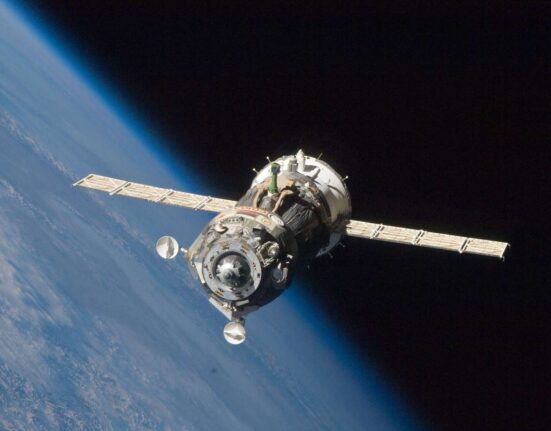
The Soviet Venera program sent 16 landers to Venus between 1961 and 1984. Most failed. The few that succeeded transmitted data for less than two hours before dying.
Venera 13 holds the longevity record: 127 minutes of surface operation. That’s just over two hours before the planet Venus surface temperature, combined with crushing pressure, destroyed it completely.
What killed the landers:
- Heat: Electronics melted despite refrigeration systems
- Pressure: 92 bars crushed seals and gaskets
- Corrosion: Sulfuric acid atmosphere attacked metal components
- No cooling time: Constant temperature meant no thermal relie
The engineering required was insane. Soviet engineers designed pressure vessels similar to deep-sea submarines. They used refrigeration systems with enormous ice blocks to keep electronics cool. Some landers had heat shields and special temperature-resistant materials.
None of it mattered for long. The planet Venus surface temperature eventually won.
Venera 13 and 14 returned the only color images we have of Venus’s surface. They show flat, rocky terrain with sharp-edged stones (no wind erosion) under an orange sky (filtered sunlight through thick clouds). The rocks appear to glow slightly—probably accurate, given that 867°F is hot enough for surfaces to emit visible infrared radiation.
Venera mission survival times:
- Venera 7 (1970): 23 minutes
- Venera 8 (1972): 50 minutes
- Venera 9 (1975): 53 minutes
- Venera 10 (1975): 65 minutes
- Venera 13 (1982): 127 minutes
- Venera 14 (1982): 57 minutes
NASA’s Pioneer Venus probes (1978) used a different approach—they didn’t try to survive long. The probes were designed for one-way atmospheric descent missions, transmitting data during their fall before being destroyed on impact.
Modern proposals for Venus landers include silicon carbide electronics that can theoretically operate at 900°F for extended periods. But even these would face challenges from the pressure and corrosive atmosphere.
The Upper Atmosphere Paradise Nobody Talks About
Here’s the twist that surprised me most.
While the planet Venus surface temperature makes the surface uninhabitable, Venus’s upper atmosphere (about 30-40 miles up) is the most Earth-like environment in the solar system outside Earth itself.
At this altitude:
- Temperature: 32-86°F (0-30°C)
- Pressure: 1 bar (same as Earth’s surface)
- Protection: Clouds block harmful solar radiation
The floating colony concept:
Scientists, including Geoffrey Landis at NASA Glenn Research Center, have seriously proposed floating habitats filled with breathable air. On Venus, oxygen-nitrogen mix (like we breathe) is actually a lifting gas because it’s less dense than the CO₂ atmosphere.
Think blimps, but house-sized.
The advantages are compelling:
- Gravity: 90% of Earth’s (comfortable for long-term habitation)
- Radiation protection: Thick atmosphere blocks cosmic rays
- Temperature: Shirtsleeve environment
- Resources: Atmosphere contains sulfuric acid (processable into water, sulfur, oxygen)
The challenges remain substantial. You’d be floating above a surface with the planet Venus surface temperature of 867°F. Any equipment dropped would be destroyed. There’s no ground to stand on, no bedrock to anchor to.
But as Mars bases face radiation and low gravity issues, Venus’s upper atmosphere keeps looking more attractive to some mission planners.
What I Learned the Hard Way
I made an absolute fool of myself at a planetary science conference in 2020.
During a presentation on Venus exploration, I raised my hand and asked, “Why don’t we just send landers during Venus’s night when it’s cooler?”
The room went quiet. Then someone politely explained that the planet Venus surface temperature doesn’t change between day and night. I’d somehow missed this fundamental fact despite months of research.
My embarrassing misconceptions:
- Myth: Venus cools down at night like other planets
- Reality: The thick atmosphere distributes heat perfectly; temperature is constant 24/7
- Myth: Higher elevations on Venus would be significantly cooler
- Reality: Even the highest peaks stay above 750°F—still hot enough to melt lead
- Myth: The surface is molten like lava
- Reality: Despite 867°F, rocks remain solid; that temperature is below their melting point
That conference humiliation sent me on a deep research binge. I spent weeks reading every mission report I could find, studying atmospheric models, and talking to actual planetary scientists.
One conversation with Dr. Martha Gilmore at Wesleyan University changed my perspective entirely. She explained that the planet Venus surface temperature isn’t unusual because it’s hot—Mercury’s dayside hits similar temperatures. Venus is unusual because that heat never goes away. There’s no thermal cycle, no respite, just endless uniform inferno.
I also learned that my intuition about planetary temperatures was completely Earth-biased. I expected day-night cycles and elevation-based climate zones because that’s what we experience. Venus plays by different rules.
The deeper lesson hit harder: scientific understanding requires checking your assumptions constantly. I’d read about Venus for months but missed a critical detail because I assumed it worked like Earth. It doesn’t.
Now when I study any planetary data, I start by listing what I think I know, then actively seeking information that contradicts those assumptions. That conference embarrassment made me a better science writer.
How Venus Compares to Other Planetary Extremes
Let’s put this in context with actual numbers.
The planet Venus surface temperature of 867°F makes it the hottest planetary surface in our solar system. But how does it stack up against other extreme environments?
Solar system temperature extremes:
- Hottest surface: Venus at 867°F
- Hottest surface (dayside only): Mercury at 800°F
- Coldest surface: Triton (Neptune’s moon) at -391°F
- Coldest winter: Uranus’s poles at -371°F during 42-year winter
- Largest temperature swing: Mercury at 1,090°F range (-290°F to 800°F)
Mercury wins the temperature range contest, but Venus takes the absolute heat crown. More importantly, Venus maintains its extreme heat with zero variation.
| Planet/Moon | Max Temp | Min Temp | Temp Range | Average Surface Temp |
| Venus | 867°F | 867°F | 0°F | 867°F |
| Mercury | 800°F | -290°F | 1,090°F | 333°F |
| Earth | 136°F | -128°F | 264°F | 59°F |
| Mars | 70°F | -225°F | 295°F | -85°F |
| Jupiter (cloud tops) | -162°F | -234°F | 72°F | -162°F |
The planet Venus surface temperature stands alone in its consistency and extremity combined. No other world maintains such brutal heat so uniformly.
Future Missions and What They’ll Teach Us
The 2030s will answer big questions about Venus.
NASA has approved two Venus missions for this decade: VERITAS and DAVINCI. Both will significantly advance our understanding of the planet Venus surface temperature and its causes.
DAVINCI (Deep Atmosphere Venus Investigation of Noble gases, Chemistry, and Imaging)
- Launch: 2029
- Mission: Drop a probe through Venus’s atmosphere
- Goal: Measure atmospheric composition, temperature gradient, and surface imaging
- Special feature: First U.S. entry into Venus’s atmosphere since 1978
VERITAS (Venus Emissivity, Radio Science, InSAR, Topography, and Spectroscopy)
- Launch: 2031
- Mission: Orbit Venus with advanced radar
- Goal: Map surface in high resolution, detect active volcanism
- Special feature: Can “see through” clouds to spot temperature variations indicating fresh lava
Europe’s EnVision mission (launch 2031) will complement these with additional radar mapping and atmospheric studies.
Key questions these missions will address:
- Is Venus currently volcanically active?
- Does the planet Venus surface temperature vary at all in volcanic regions?
- What’s the exact atmospheric composition breakdown?
- Did Venus ever have oceans, and if so, when did it lose them?
- Can we detect organic chemistry in the upper atmosphere?
The most exciting possibility: confirming active volcanism. If we catch fresh lava flows in progress, we’ll watch geological processes happening at temperatures that would destroy most spacecraft.
Some scientists hope to find clues about Venus’s past climate. If Venus had oceans 700 million years ago, there might be chemical signatures in highland rocks that survived the global resurfacing event.
The Climate Change Warning Venus Provides
This is where Venus becomes more than just fascinating—it becomes terrifying.
Earth’s atmospheric CO₂ concentration currently sits at 420 parts per million. That’s up from 280 ppm in pre-industrial times. Venus’s atmosphere is 965,000 ppm CO₂ (96.5%).
We’re not going to become Venus. Earth sits farther from the Sun and has a different evolutionary path. But Venus demonstrates the endpoint of runaway greenhouse effects.
The lessons Venus teaches about climate:
- Greenhouse effects can become self-reinforcing
- Past a certain threshold, planetary heating becomes irreversible
- Distance from the Sun matters less than atmospheric composition
- Water loss accelerates warming (less water to absorb CO₂)
Dr. James Hansen, former NASA climate scientist, has written extensively about using Venus as a model for understanding Earth’s climate sensitivity. The planet Venus surface temperature shows us the extreme end of what greenhouse warming can achieve.
Nobody’s predicting Earth will reach 867°F. But Venus proves that planets can experience dramatic climate regime changes. Venus likely had mild temperatures for billions of years before something triggered the runaway effect.
Understanding what triggered Venus’s transformation remains one of planetary science’s biggest questions. Was it gradual solar brightening? A massive volcanic episode? A change in the planet’s rotation? We don’t know yet.
What we do know: the planet Venus surface temperature represents a stable equilibrium. Once Venus entered that state, it couldn’t exit. There’s no natural mechanism to reverse the greenhouse effect now.
Conclusion
The planet Venus surface temperature of 867°F isn’t just a number—it’s a testament to how atmospheric composition trumps solar distance in determining climate. Venus teaches us that planets can change, that habitability isn’t permanent, and that greenhouse effects demand our attention and respect.
FAQs
1.What is the planet Venus surface temperature?
The planet Venus surface temperature is about 867°F (464°C), making it the hottest planet in the solar system.
2.Why is the planet Venus surface temperature so high?
It is caused by a powerful greenhouse effect from Venus’s thick carbon dioxide atmosphere that traps heat.
3. Is the planet Venus surface temperature hotter than Mercury?
Yes, the planet Venus surface temperature is higher than Mercury’s, even though Mercury is closer to the Sun.
4. Does the planet Venus surface temperature change at night?
No, the planet Venus surface temperature stays nearly the same day and night across the planet.
5. How did scientists measure the planet Venus surface temperature?
Scientists measured it using spacecraft data, especially from the Soviet Venera missions.
6. Can humans survive the planet Venus surface temperature?
No, the extreme heat and pressure make the planet Venus surface temperature deadly for humans.
7. How long can spacecraft survive the planet Venus surface temperature?
Most spacecraft last only minutes to a few hours due to the intense heat and pressure.
8. Will the planet Venus surface temperature ever cool down?
No, the planet Venus surface temperature is expected to remain extremely hot for billions of years.
Final Summary
The planet Venus surface temperature is an extreme 867°F (464°C), hotter than Mercury despite being farther from the Sun. This intense heat is caused by a dense carbon dioxide atmosphere creating a runaway greenhouse effect, keeping temperatures constant day and night. Soviet Venera missions confirmed these deadly conditions, lasting only a few hours on the surface. The planet Venus surface temperature transformed Venus from a potentially habitable world into a cautionary example of climate extremes. Understanding the planet Venus surface temperature provides valuable insights into planetary atmospheres and Earth’s own climate challenges, while Venus’s upper atmosphere remains surprisingly mild.