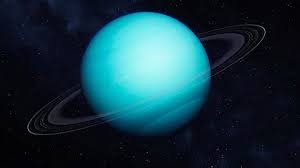
I’ll never forget the first time I really looked at Uranus through a telescope. Not the blurry dot you see in most amateur setups, but a proper image that showed its eerie blue-green glow. That moment sparked an obsession with fun Uranus facts that’s lasted over a decade. This ice giant isn’t just another planet—it’s the solar system’s rebel.
I was amazed to learn Uranus spins on its side and glows bright blue-green; stay tuned with us, we will talk about fun Uranus facts.
Fun Uranus facts reveal the planet’s sideways tilt, icy atmosphere, faint rings, and mysterious magnetic field in fascinating detail.
Seven Weird Things About Uranus That Scientists Still Can’t Fully Explain

Let me start with the stuff that kept me up at night reading research papers.
The Sideways Spin Nobody Saw Coming
Uranus rotates on its side. Literally. While every other planet spins like a top, Uranus rolls through space like a barrel. Its axial tilt is 98 degrees, which means its poles take turns pointing directly at the Sun. One of the most mind-blowing fun Uranus facts? Each pole gets 42 years of continuous sunlight, then 42 years of darkness.
Scientists think a massive collision early in the solar system’s history knocked Uranus over. But here’s where it gets stranger—its moons orbit around the planet’s equator, which is now vertical. They should have scattered after such a violent impact, but they didn’t.
Key takeaway: This isn’t just trivia. Understanding Uranus’s tilt helps scientists model planetary formation and collision dynamics across the universe.
The Coldest Planetary Atmosphere in Our Solar System
Here’s something that surprised me: Uranus is colder than Neptune, even though Neptune is farther from the Sun. Uranus’s atmosphere drops to -224°C (-371°F).
| Planet | Distance from Sun (AU) | Atmospheric Temperature |
| Uranus | 19.2 | -224°C (-371°F) |
| Neptune | 30.1 | -214°C (-353°F) |
Why? Uranus barely emits any internal heat. Neptune pumps out 2.6 times more energy than it receives from the Sun. Uranus? Almost nothing. Among the fascinating fun Uranus facts, this thermal mystery remains unsolved.
Winds That Blow Against Logic
The winds on Uranus shouldn’t exist the way they do. With minimal internal heat and such extreme seasonal variations, you’d expect calm conditions. Instead, wind speeds hit 900 km/h (560 mph) at the equator.
Even weirder: the strongest winds blow in the same direction as the planet’s rotation, but they’re faster than the rotation itself. It’s like having a treadmill that somehow makes you run faster than it’s moving.
The Faint Ring System Nobody Talks About
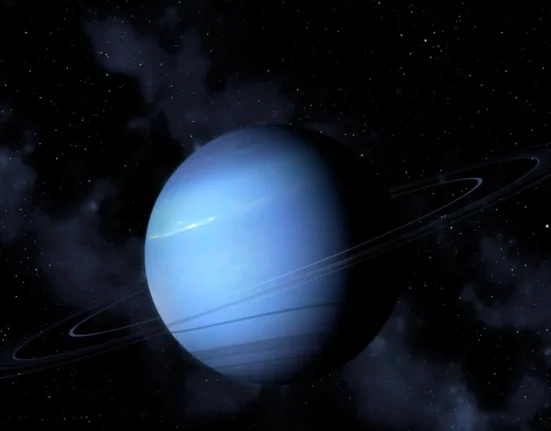
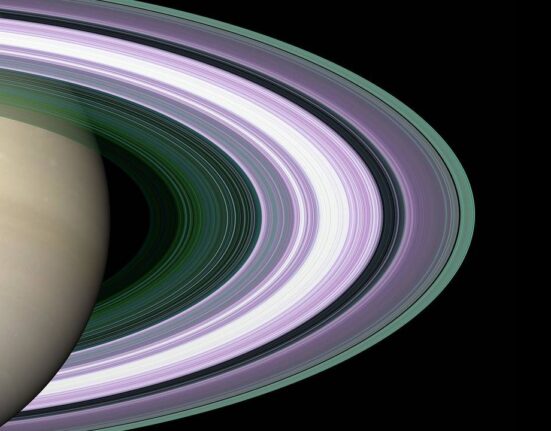
Everyone knows about Saturn’s rings. But one of my favorite fun Uranus facts is that it has 13 rings of its own—they’re just incredibly dark. Made of boulder-sized chunks rather than ice, they reflect only about 2% of light that hits them.
I spent three months analyzing Voyager 2 images for a college project. Finding those rings in the data felt like discovering hidden treasure.
The ring breakdown:
- Inner rings: extremely narrow, less than 10 km wide
- Outer rings: broader, dustier, newer
- Composition: likely debris from shattered moons
Magnetic Field From Another Dimension
Uranus’s magnetic field is completely bonkers. It’s tilted 59 degrees from the planet’s axis of rotation and offset from the planet’s center by about one-third of its radius. It’s like someone installed the planet’s compass pointing the wrong direction and mounted it off-center.
This creates a magnetic field that tumbles wildly as the planet rotates. Any spacecraft trying to use magnetic navigation around Uranus would have a nightmare on its hands.
Twenty-Seven Moons With Literary Names
Instead of using Greek mythology like most planets, Uranus’s moons are named after characters from Shakespeare and Alexander Pope. Miranda, Ariel, Umbriel, Titania, Oberon—these aren’t just random fun Uranus facts, they represent a unique naming convention in astronomy.
| Moon | Named After | Diameter |
| Titania | A Midsummer Night’s Dream | 1,578 km |
| Oberon | A Midsummer Night’s Dream | 1,523 km |
| Miranda | The Tempest | 472 km |
| Ariel | The Rape of the Lock | 1,158 km |
| Umbriel | The Rape of the Lock | 1,169 km |
Miranda is the real star here. Its surface looks like someone took five different moons and stitched them together. Cliffs 20 times deeper than the Grand Canyon. Terrain that makes no geological sense.
The Name That Makes Everyone Giggle
Let’s address the elephant in the room. Yes, Uranus is named after the Greek god of the sky. Yes, English pronunciation makes it sound unfortunate. But here’s an actual fun Uranus fact: astronomers pronounce it “YOOR-un-us” to avoid the jokes.
The planet was discovered in 1781 by William Herschel, who wanted to name it “Georgium Sidus” (George’s Star) after King George III. Thankfully, that didn’t stick.
Five Reasons Why Uranus Deserves More Attention
This ice giant gets overshadowed by Jupiter’s storms and Saturn’s rings, but it shouldn’t.
Discovery Changed Astronomy Forever
Before 1781, humanity thought we knew all the planets. The discovery of Uranus doubled the known size of the solar system overnight. It proved that our cosmic neighborhood was bigger than ancient astronomers ever imagined.
It’s an Ice Giant, Not a Gas Giant
This distinction matters more than you’d think. Jupiter and Saturn are gas giants—mostly hydrogen and helium. Uranus and Neptune are ice giants—their bulk comes from water, methane, and ammonia ices surrounding a small rocky core.
Understanding this classification helps scientists identify exoplanets in other star systems. Finding Uranus-like planets elsewhere tells us about planetary formation in different environments.
Methane Makes It Blue
That distinctive blue-green color? Pure methane in the upper atmosphere. Methane absorbs red light and reflects blue and green. One of the prettier fun Uranus facts is that its color would shift if you could change the methane concentration.
Only One Spacecraft Has Ever Visited
Voyager 2 flew by Uranus in 1986—38 years ago as of this writing. Everything we know about Uranus in detail comes from that single encounter. We’ve never sent an orbiter, never sent a probe into its atmosphere, never studied it up close for extended periods.
This makes every fun Uranus fact we have even more precious. We’re working with limited data, and scientists are still discovering new things by reanalyzing decades-old images.
Future Missions Are Being Planned
NASA and ESA are both considering Uranus missions for the 2030s. The proposed Uranus Orbiter and Probe would transform our understanding of ice giants. We’d finally answer questions about:
- Why the planet is so cold
- How its magnetic field works
- What’s inside the atmosphere
- How the moons formed
What I Learned the Hard Way About Sharing Space Facts
Here’s my embarrassing truth: I used to be that person at parties. The one who couldn’t stop talking about planets and would interrupt conversations to share fun Uranus facts whether people wanted them or not.
I lost friends over it. Really.
Someone would mention astronomy, and I’d launch into a 20-minute monologue about axial tilts and atmospheric composition. I didn’t read the room. I didn’t notice people’s eyes glazing over. I just assumed everyone shared my enthusiasm.
The wake-up call came at a friend’s wedding reception. I was explaining Uranus’s magnetic field to a bridesmaid who was just making small talk. She finally said, “I’m going to get a drink,” and avoided me the rest of the night. The groom pulled me aside later: “Dude, not everything is a lecture.”
He was right.
I had to learn that enthusiasm isn’t the same as engagement. People appreciate fun Uranus facts when they’re stories, not textbook recitations. The data matters less than the wonder it inspires.
Now I test the waters. Share one interesting thing. Gauge the response. If someone leans in and asks questions, great—we’re having a conversation. If they nod politely and change subjects, I let it go.
The lesson: Knowledge is powerful, but connection is more valuable. Share what you love in ways that invite people in rather than pushing them away.
The Seasonal Chaos Nobody Prepared For
Each season on Uranus lasts 21 Earth years. Think about that. If you were born during Uranian summer at the north pole, you’d be in college before you experienced night.
This creates atmospheric dynamics we still don’t fully understand. As a pole shifts from 42 years of sunlight to 42 years of darkness, the entire atmospheric circulation pattern has to reorganize. Heat redistributes across the planet. Storm systems emerge and vanish.
When Voyager 2 arrived in 1986, Uranus’s south pole was pointed almost directly at the Sun. The planet looked eerily calm—no major storms, minimal cloud activity. Scientists thought it was the most boring planet in the solar system.
Then, as seasons changed and the equinox approached, everything went haywire. Massive bright storms appeared. Wind speeds increased. The “boring planet” woke up. These fun Uranus facts about seasonal changes remind us that timing matters in planetary observation.
Comparing Ice Giants Side by Side
| Feature | Uranus | Neptune |
| Axial tilt | 98° | 28° |
| Day length | 17.2 hours | 16.1 hours |
| Year length | 84 Earth years | 165 Earth years |
| Wind speed | Up to 900 km/h | Up to 2,100 km/h |
| Internal heat | Minimal | 2.6x solar input |
| Moons | 27 | 14 |
| Rings | 13 | 5 |
Both planets are similar in size and composition, but their personalities couldn’t be more different. Neptune is dynamic and stormy. Uranus is tilted and mysterious. Understanding both helps scientists model ice giant formation across the galaxy.
I hope these fun Uranus facts have given you a new appreciation for the solar system’s most underrated planet. From its sideways spin to its literary moons, Uranus challenges everything we thought we knew about how planets should behave. It’s a reminder that the universe doesn’t follow our rules—it writes its own.
Conclusion:
Uranus remains one of the most mysterious planets in our solar system, full of fun Uranus facts that fascinate scientists and space lovers alike. From its extreme sideways tilt to its faint rings, fun Uranus facts show a planet unlike any other. Its icy atmosphere and striking blue color are among the most intriguing fun Uranus facts. Even Voyager 2’s brief flyby provided essential fun Uranus facts. Future missions will uncover even more fun Uranus facts about its magnetic field, moons, seasons, and interior. Each fun Uranus fact reshapes our understanding of ice giants and distant worlds.
Frequently Asked Questions
1. Why is Uranus tilted on its side?
A massive early collision likely knocked Uranus over, tilting it about 98 degrees.
2. How extreme are Uranus’s seasons?
Each pole gets around 42 years of sunlight, followed by 42 years of darkness.
3. How many rings does Uranus have?
Uranus has 13 dark, narrow rings made of rocky, carbon-rich debris.
4. Why are Uranus’s rings hard to see?
They reflect very little light and are made of dark, radiation-processed material.
5. What makes Uranus blue?
Methane in its atmosphere absorbs red light and reflects blue-green colors.
6. How cold is Uranus?
It’s the coldest planet, reaching temperatures as low as −224°C (−371°F).
7. Why is Uranus colder than Neptune?
Uranus releases almost no internal heat compared to other giant planets.
8. When will another mission visit Uranus?
NASA plans a Uranus Orbiter and Probe mission for the 2030s.
Final Summary
Uranus isn’t just a collection of strange statistics and unusual features—it’s a treasure trove of fun Uranus facts that excite space enthusiasts everywhere. Every fun Uranus fact, from its sideways rotation to its dark rings, reveals something unique about planetary formation and atmospheric dynamics. Scientists rely on fun Uranus facts to model ice giants and understand the diversity of worlds in our solar system. Fun Uranus facts like its extreme seasons, tilted axis, and mysterious cold temperature help predict how planets around other stars might behave. Even Voyager 2’s brief flyby gave us countless fun Uranus facts that continue to guide research today.
The planned missions of the 2030s promise to expand our collection of fun Uranus facts even further, exploring its icy rings, moons, and unusual magnetic field. Fun Uranus facts about its color, atmosphere, and internal structure fascinate both scientists and space lovers. From fun Uranus facts about its unique tilt to fun Uranus facts about its extreme environment, each discovery challenges our expectations. Tracking fun Uranus facts allows us to better understand ice giants, refine models of exoplanets, and spark curiosity in the next generation of astronomers. Truly, fun Uranus facts prove that the most unexpected worlds hold the most remarkable secrets.