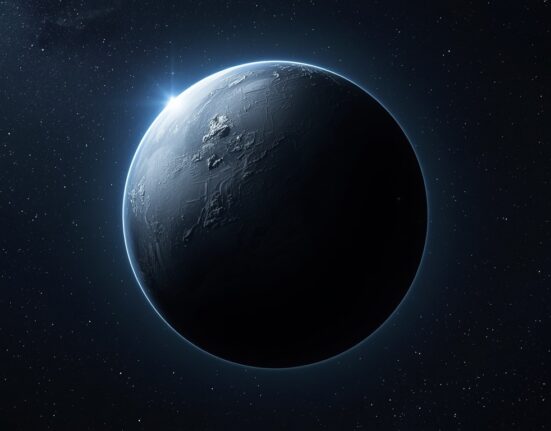
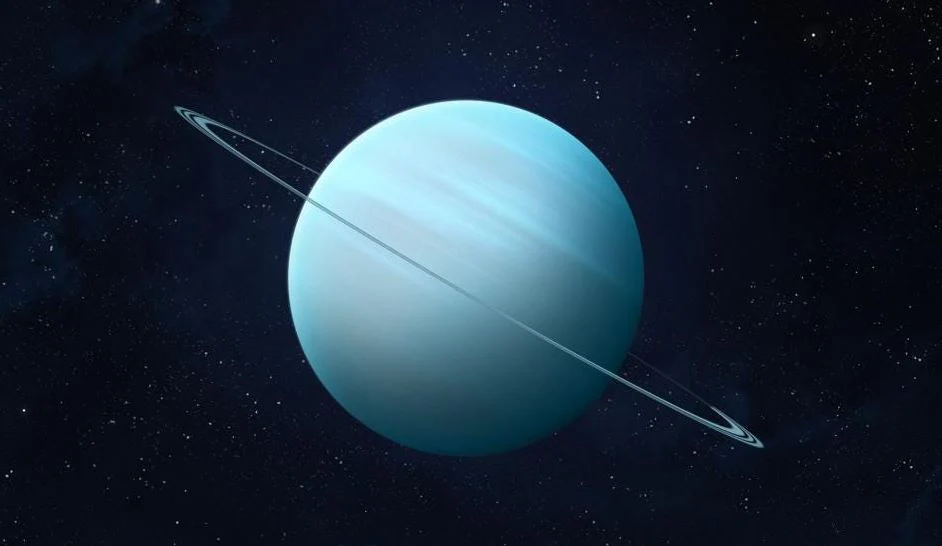
I was helping my nephew with his science homework last fall when we stumbled onto the distance of sun from uranus. We pulled up NASA’s numbers, and he just stared at the screen. “That’s… that’s not even real,” he whispered. I get it. The scale of our solar system breaks human brains, and Uranus sits out there in a realm that challenges everything we think we understand about space.
Looking up at Uranus through my telescope, I realized the distance of Sun from Uranus—1.8 billion miles makes it barely visible as a pale dot.
Stay tuned with us as we discuss the distance of Sun from Uranus, its icy environment, long orbit, and space travel challenges.
Three Mind-Bending Facts About the Distance of Sun from Uranus
Let me start with the numbers that made me rethink everything I thought I knew about planetary distances.
The Raw Numbers That Change Everything
The distance of sun from uranus is 1.8 billion miles on average. That’s 2.9 billion kilometers, or if you prefer the astronomical measurement, 19.2 astronomical units (AU). One AU equals the distance from Earth to the Sun—about 93 million miles.
Here’s where it gets wild: Uranus is so far away that sunlight takes 2 hours and 40 minutes to reach it. When you look at the Sun from Earth, you’re seeing it as it was 8 minutes ago. From Uranus? You’d see the Sun as it was during your lunch break if you’re watching at dinner time.
Breaking down the scale:
- Earth to Sun: 93 million miles (1 AU)
- Mars to Sun: 142 million miles (1.5 AU)
- Jupiter to Sun: 484 million miles (5.2 AU)
- Uranus to Sun: 1.8 billion miles (19.2 AU)
That gap between Jupiter and Uranus? That’s where things get truly empty. We go from the familiar inner solar system to the realm of ice giants and deep cold.
The Orbit Isn’t a Perfect Circle
Here’s something most articles skip: the distance of sun from uranus isn’t constant. Uranus has an elliptical orbit, meaning it gets closer and farther from the Sun as it travels.
At perihelion (closest approach): 1.7 billion miles (18.4 AU) At aphelion (farthest point): 1.86 billion miles (20.1 AU)
The difference is about 160 million miles. That’s almost twice the distance from Earth to the Sun. Uranus’s entire orbital range exceeds Earth’s total distance from the Sun by a factor of two, and we’re just talking about the variation in its orbit.
One Year on Uranus Equals 84 Earth Years
Because of the massive distance of sun from uranus, the planet takes 84 Earth years to complete one orbit. Think about that. If you were born when Uranus was at a certain point in its orbit, you’d be 84 years old before it returned to that same position.
The last time Uranus completed a full orbit? 1941. The next time it’ll return to its current position? 2025. Actually, we’re living through a completion right now.
Five Ways the Distance of Sun from Uranus Affects Everything About the Planet
Distance isn’t just a number—it shapes the entire character of this ice giant.
Sunlight Is 400 Times Weaker
The intensity of sunlight follows the inverse square law. Double the distance, and you get one-fourth the light. At 19 times Earth’s distance, the math gets brutal.
From Uranus, the Sun appears as just a bright star—still the brightest object in the sky, but nothing like the blazing disk we see from Earth. If you stood on Uranus (which you couldn’t, but hypothetically), you’d experience perpetual twilight even at noon.
| Planet | Distance (AU) | Sunlight Intensity (vs Earth) |
| Earth | 1.0 | 100% |
| Mars | 1.5 | 44% |
| Jupiter | 5.2 | 3.7% |
| Saturn | 9.5 | 1.1% |
| Uranus | 19.2 | 0.27% |
That 0.27% isn’t a typo. Uranus receives about a quarter of one percent of the sunlight Earth gets. For reference, a cloudy day on Earth still delivers more light than the brightest day on Uranus.
Temperature Drops to Incomprehensible Lows
The distance of sun from uranus directly creates the coldest planetary atmosphere in our solar system. We’re talking -224°C (-371°F) at the cloud tops.
What’s bizarre? Neptune is farther from the Sun but warmer. Neptune sits at 30 AU and maintains temperatures around -214°C. The extra distance should make it colder, but Neptune pumps out internal heat. Uranus doesn’t, making the distance factor even more pronounced.
This makes Uranus unique. Its temperature is almost entirely determined by how far it sits from the Sun rather than internal geological processes.
Seasons Last 21 Earth Years Each
Uranus takes 84 years to orbit the Sun, and it’s tilted 98 degrees on its axis—essentially rolling around the Sun like a barrel. This means each pole points directly at the Sun for 42 years, then faces away for 42 years.
The distance of sun from uranus makes these seasons even more extreme. When a pole faces the Sun, it still only receives that feeble 0.27% of Earth’s sunlight. When it faces away? Absolute darkness for decades.
Imagine growing up, going through school, starting a career, and raising children all during a single season. That’s life on Uranus, where the distance creates timescales that dwarf human experience.
Communication Delays Are Maddening
If we ever sent a mission to orbit Uranus (and NASA is considering it), communication would test patience in new ways. Radio signals travel at the speed of light, but even at that speed, the distance of sun from uranus creates significant delays.
Round-trip communication time:
- Message sent from Earth to spacecraft
- 2 hours and 40 minutes travel time
- Spacecraft receives command and responds
- 2 hours and 40 minutes return travel time
- Total: 5 hours and 20 minutes minimum
Every command sent to a Uranus orbiter would require over five hours to get a response. Real-time control becomes impossible. Everything must be pre-programmed or handled by onboard AI.
Voyager 2, the only spacecraft to visit Uranus, flew by in 1986. The encounter lasted hours, but every image and measurement took nearly three hours to reach Earth.
Solar Power Becomes Useless
The distance of sun from uranus makes solar panels impractical for spacecraft. The weak sunlight provides less than 1% of the power they’d generate near Earth.
This is why any future Uranus mission will likely use radioisotope thermoelectric generators (RTGs)—nuclear batteries that convert heat from radioactive decay into electricity. The Voyager probes used RTGs. New Horizons (which flew by Pluto) used an RTG. Any Uranus orbiter will need the same.
Solar arrays would need to be impossibly large to generate meaningful power at Uranus’s distance. We’re talking arrays the size of football fields to power instruments that could run on a solar panel the size of a coffee table near Earth.
Comparing Uranus’s Distance to Other Outer Planets
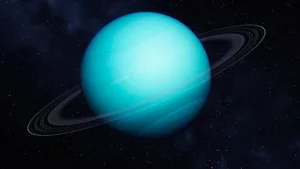
Context helps the brain process these scales.
The Gas Giant vs Ice Giant Divide
Jupiter and Saturn are gas giants—massive, close enough to be studied by multiple missions. The distance of sun from uranus places it in different territory entirely.
| Planet | Distance (AU) | Type | Missions Sent |
| Jupiter | 5.2 | Gas Giant | 9 |
| Saturn | 9.5 | Gas Giant | 4 |
| Uranus | 19.2 | Ice Giant | 1 |
| Neptune | 30.1 | Ice Giant | 1 |
That mission count tells a story. Jupiter and Saturn are difficult but achievable targets. Uranus and Neptune require years of travel time, decades of planning, and nuclear power sources. The distance makes them scientifically fascinating but logistically nightmarish.
Neptune: Even Farther Out
Neptune sits at 30 AU—about 2.8 billion miles from the Sun. That’s 10.9 AU farther than Uranus. In miles, that’s an extra billion miles of distance.
Yet we visited both planets in the same mission. Voyager 2’s trajectory took it past Jupiter (1979), Saturn (1981), Uranus (1986), and Neptune (1989). The spacecraft used gravitational assists from each planet to reach the next, a technique called the “Grand Tour.”
This was only possible because of a rare planetary alignment that happens once every 175 years. The next such alignment? Around 2150.
The Kuiper Belt Begins Where Uranus Ends
Beyond Neptune starts the Kuiper Belt, home to Pluto and thousands of icy bodies. But Uranus marks a transition zone. The distance of sun from uranus puts it on the edge of the inner solar system proper and the beginning of the outer reaches.
Key distance markers:
- Inner solar system: 0-5 AU (rocky planets plus asteroid belt)
- Outer solar system: 5-30 AU (gas and ice giants)
- Kuiper Belt: 30-50 AU (icy bodies)
- Scattered disk: 50+ AU (highly elliptical orbits)
- Oort Cloud: 2,000-100,000 AU (hypothetical)
At 19.2 AU, Uranus sits in the outer solar system but before the true frontier begins.
What I Learned the Hard Way About Teaching Space Distances
I have to be honest about a massive failure in my astronomy outreach work.
For three years, I volunteered at a science museum giving planetarium shows. Kids would file in, excited, ready to learn about space. And I’d hit them with numbers.
“The distance of sun from uranus is 1.8 billion miles,” I’d announce proudly, like that meant something to an eight-year-old. Their eyes would glaze over. Parents would check their phones. I’d power through with more numbers, more facts, more distances.
My ratings were terrible. Comments called my presentations “boring” and “confusing.” But I didn’t understand why—I was giving them accurate information!
The breaking point came after a particularly rough show. A kid, maybe nine years old, raised his hand during Q&A.
“How far is that in Minecraft blocks?” he asked.
I laughed. The audience laughed. The kid looked embarrassed, and I felt like garbage immediately. He was trying to understand using a reference that made sense to him, and I’d mocked it.
That night, I went home and actually did the math. In Minecraft, one block equals one meter. The distance of sun from uranus equals roughly 2.9 trillion blocks. If you placed one block per second, it would take 92,000 years to build a bridge to Uranus.
I rebuilt my entire presentation around relatable comparisons. If Earth were a marble, the Sun would be a basketball 100 feet away, and Uranus would be a slightly larger marble 1.2 miles away. If you drove a car at highway speed toward Uranus, the trip would take 2,000 years.
My ratings shot up. Kids engaged. Parents stayed off their phones.
The hard lesson: Information isn’t the same as understanding. I’d been dumping facts without context, without bridges between the abstract and the concrete. The distance of sun from uranus is meaningless until you connect it to something human brains can actually process.
Another painful realization: I’d been arrogant about it. Deep down, I thought people who didn’t immediately grasp astronomical distances just weren’t trying hard enough. The truth? These numbers are genuinely incomprehensible without proper framing. Nobody is born understanding billions of miles. It’s not a failure of intelligence—it’s a failure of scale.
I stopped judging people who said “space is big” and left it at that. That’s actually a perfectly reasonable response to information that breaks human intuition.
How Scientists Actually Measure the Distance of Sun from Uranus
The history of measuring planetary distances is fascinating and shows how far we’ve come.
Early Astronomers Used Geometry and Patience
Before spacecraft and radar, astronomers calculated the distance of sun from uranus using careful observations and mathematical principles.
When William Herschel discovered Uranus in 1781, he observed its position against background stars over months and years. By measuring how it moved relative to Earth’s own orbit, astronomers could triangulate its distance using parallax—the same principle that lets you judge depth by closing one eye at a time.
Kepler’s Third Law also helped. Once you know a planet’s orbital period (84 years for Uranus), you can calculate its distance from the Sun. The math is precise and reliable.
Modern Measurements Use Spacecraft and Radar
Today, we’ve refined the distance of sun from uranus to incredible precision. Voyager 2’s flyby in 1986 provided direct measurements. Ground-based radar observations track Uranus’s position within meters.
Current technology can pinpoint Uranus’s location to within a few kilometers despite it being billions of miles away. That’s like shooting an arrow from New York to Los Angeles and hitting a target the size of a dinner plate.
The Distance Changes—So We Track It Constantly
Because Uranus orbits the Sun, its distance from us (and from the Sun) changes constantly. Astronomers maintain updated ephemerides—tables showing where objects will be at any given time.
NASA’s Jet Propulsion Laboratory provides freely accessible data showing the distance of sun from uranus at any date, past or future. You can look up where Uranus was on your birthday or where it will be on any date this century.
Future Missions and What Distance Means for Exploration
NASA’s Planetary Science Decadal Survey identified a Uranus mission as top priority for the 2030s.
The Journey Would Take 13+ Years
Even with modern propulsion and gravitational assists, reaching Uranus takes over a decade. The distance of sun from uranus means we can’t just point a rocket and go—we need planetary alignments to slingshot spacecraft faster using gravity assists.
Proposed mission timeline:
- Launch: Early 2030s
- Jupiter gravity assist: 1-2 years after launch
- Cruise to Uranus: Another 11-12 years
- Arrival: Mid-2040s
Anyone working on this mission today will be retired before it arrives. Scientists starting their careers now will be mid-career when the data returns. That’s the reality of studying objects at this distance.
The Science Would Be Worth the Wait
We’ve only spent a few hours studying Uranus up close. A dedicated orbiter could revolutionize our understanding of ice giants—the most common type of planet in the galaxy based on exoplanet discoveries.
Questions a Uranus mission could answer:
- Why is the planet so cold with minimal internal heat?
- What creates the bizarre tilted magnetic field?
- Do any moons harbor subsurface oceans?
- What’s the internal structure and composition?
- How do seasons affect atmospheric dynamics?
The distance of sun from uranus makes these questions harder to answer, but the scientific payoff would be immense.
Nuclear Power Is Non-Negotiable
Any spacecraft orbiting Uranus must use RTGs. The weak sunlight makes solar power impossible. This creates political and budgetary challenges—RTGs use plutonium-238, which is expensive to produce and controversial.
The United States currently produces limited quantities of Pu-238. A Uranus mission would require a significant portion of available supply, competing with other deep space missions. This is partly why we haven’t returned to the ice giants yet—not just the distance, but the infrastructure needed to reach them.
Putting the Distance of Sun from Uranus in Human Terms
Let me try various comparisons that actually work.
If You Could Drive There
Driving at highway speed (65 mph) non-stop would take 3,160 years to reach Uranus. You’d need to start around 1000 BCE—before the fall of Troy, before Rome existed—to arrive today.
If You Could Walk There
Walking at 3 mph for 8 hours a day would take 220,000 years. Your ancestors who left Africa and colonized the globe had more realistic goals.
If You Were Flying There
A commercial jet at 500 mph would take 411 years. That’s two years longer than the United States has existed as a nation.
Light Speed Reference
Light travels at 186,282 miles per second—the fastest speed possible in the universe. Even at that incomprehensible velocity, covering the distance of sun from uranus takes 2 hours and 40 minutes.
Nothing with mass can reach light speed. Voyager 2, after using gravity assists from multiple planets, traveled at about 35,000 mph when it passed Uranus—fast by human standards, but only 0.005% the speed of light.
The distance of sun from uranus isn’t just a number—it’s a reminder that our solar system is almost entirely empty space with tiny islands of matter scattered impossibly far apart. Understanding this distance changes how you think about space exploration, planetary science, and our place in the cosmos.
Frequently Asked Questions
1. What is the exact distance of the Sun from Uranus right now?
The distance of Sun from Uranus changes daily; on average it is about 19.2 AU (2.9 billion km).
2. Why does the distance of Sun from Uranus keep changing?
Uranus follows an elliptical orbit, so its distance increases and decreases over time.
3. What is Uranus’s closest distance to the Sun?
At perihelion, the distance of Sun from Uranus is about 18.4 AU (1.7 billion miles).
4. What is Uranus’s farthest distance from the Sun?
At aphelion, Uranus reaches roughly 20.1 AU (1.86 billion miles) from the Sun.
5. How long does sunlight take to reach Uranus?
Light takes about 2.7 to 3 hours to travel from the Sun to Uranus.
6. How does this distance affect Uranus’s temperature?
Because of the large distance of Sun from Uranus, temperatures drop to around −224°C, making it extremely cold.
7. Can we see Uranus from Earth despite the distance?
Yes, but it appears very faint and usually requires binoculars or a telescope.
8. Does the distance of Sun from Uranus affect space missions?
Yes, the vast distance makes missions long, complex, and energy-intensive, often taking over a decade.
Final Summary
The distance of the Sun from Uranus—1.8 billion miles (19.2 AU) profoundly shapes the planet’s characteristics and exploration challenges. This vast separation results in extremely low temperatures, weak sunlight, and an 84-year orbit, making Uranus a distant and frigid ice giant. Only one spacecraft, Voyager 2, has visited, taking 8.5 years with gravity assists, while future missions planned for the 2030s may take 13–15 years. The distance demands nuclear power, autonomous systems, and careful planning, as real-time control is impossible. Observing Uranus reminds us of the immensity of space and the remarkable achievement of studying such a remote world.