I’ll never forget the moment my astronomy professor casually mentioned that Uranus smells like rotten eggs. The entire lecture hall erupted in laughter, but that bizarre detail sparked my obsession with cool facts uranus that most people never learn in school. This tilted, blue-green giant hiding in the outer solar system turned out to be weirder, stranger, and more fascinating than any science fiction I’d ever read.
While stargazing one night, I spotted Uranus and marveled at its pale blue-green glow—truly a cool fact about Uranus.
Discover 20 amazing cool facts Uranus, from its sideways tilt and icy diamond rain to its moons, rings, and extreme cold in the outer solar system.
Seven Mind-Blowing Cool Facts Uranus That Rewrite the Planetary Playbook
Let’s start with the facts that make Uranus the solar system’s most misunderstood planet.
Most people know Uranus exists and maybe giggle at its name. That’s where their knowledge ends. But the cool facts uranus hiding beneath that simple exterior are absolutely wild.
Fact 1: Uranus Rotates Sideways at 98 Degrees
Every other planet in our solar system spins more or less upright like a top. Uranus rolls through space on its side with an axial tilt of 98 degrees. Imagine Earth tipped over so the North Pole pointed toward the Sun for half the year and the South Pole for the other half.
This creates the most extreme seasons in the solar system. Each pole experiences 42 years of continuous sunlight followed by 42 years of complete darkness. That’s because Uranus takes 84 Earth years to orbit the Sun.
Fact 2: Uranus Actually Smells Like Rotten Eggs (and Farts)
This isn’t a joke. Scientists confirmed in 2018 that Uranus’s upper atmosphere contains hydrogen sulfide—the same compound that makes rotten eggs and human flatulence smell terrible.
Dr. Patrick Irwin from Oxford University used spectroscopic data from the Gemini North telescope to detect hydrogen sulfide in Uranus’s cloud deck. If you could somehow survive in Uranus’s atmosphere (you absolutely couldn’t), it would smell disgusting.
Fact 3: Uranus Is the Coldest Planet Despite Not Being the Farthest
Neptune sits farther from the Sun, yet Uranus holds the record for coldest planetary temperature: -371°F (-224°C) measured in its upper atmosphere.
Why? Uranus emits almost no internal heat—only about 1.06 times the energy it receives from the Sun. Neptune radiates 2.6 times more energy than it receives. Scientists still don’t know why Uranus is so thermally quiet.
Fact 4: Uranus Has 28 Known Moons Named After Shakespeare Characters
Forget Greek and Roman mythology. Uranus’s moons have names like Titania, Oberon, Ariel, Umbriel, and Miranda—all from Shakespeare plays and Alexander Pope poems.
The largest moon, Titania, stretches 980 miles across. The smallest confirmed moons are just 8-10 miles in diameter.
Fact 5: A Day on Uranus Lasts 17 Hours and 14 Minutes
Despite Uranus being four times wider than Earth, it spins faster. One complete rotation takes just 17.24 hours.
But here’s where it gets weird: because Uranus rotates on its side, defining “day” becomes complicated. During summer at each pole, the “day” lasts 42 Earth years of continuous sunlight.
Fact 6: Uranus Has 13 Known Rings
Everyone knows about Saturn’s spectacular rings. But one of the cool facts uranus that surprises people is that it also has rings—13 distinct ones discovered so far.
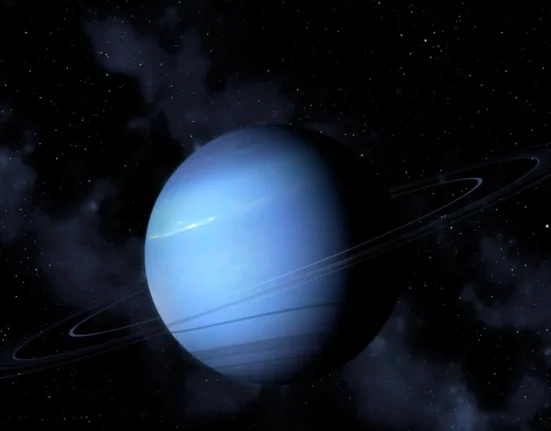
These rings are dark, thin, and made primarily of dust and dark particles possibly containing organic compounds. They’re incredibly faint compared to Saturn’s ice-bright rings.
Fact 7: Only One Spacecraft Has Ever Visited Uranus
NASA’s Voyager 2 flew by Uranus in January 1986—the only spacecraft to ever visit. That brief encounter provided almost everything we know about the planet.
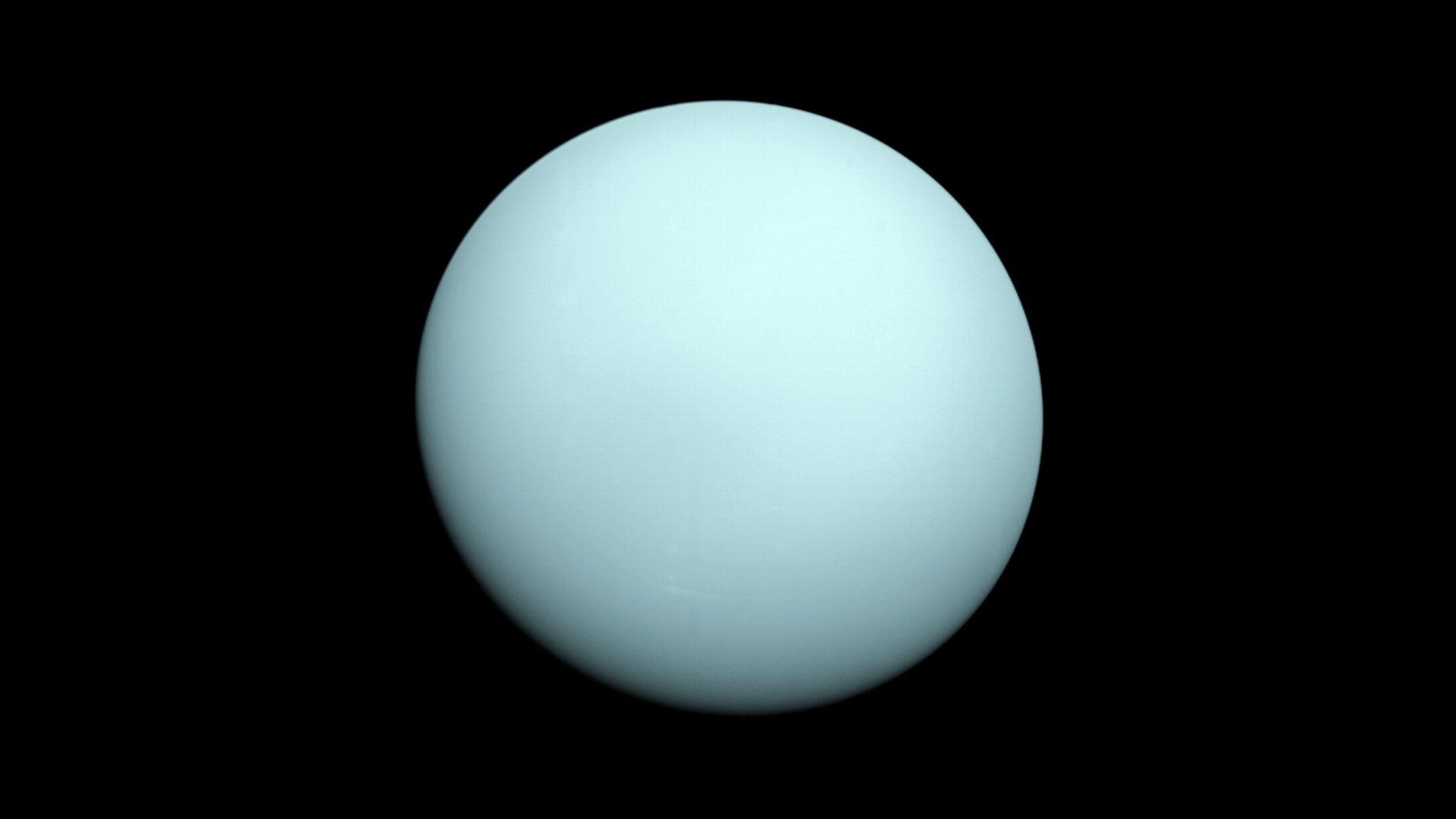
Voyager 2 discovered 10 new moons, confirmed the ring system, measured the magnetic field, and photographed the planet’s featureless blue-green atmosphere.
| Cool Fact | Details | Why It Matters |
| Sideways rotation | 98-degree axial tilt | Creates 42-year seasons at each pole |
| Hydrogen sulfide clouds | Confirmed 2018 spectroscopy | Would smell like rotten eggs |
| Coldest planet | -371°F upper atmosphere | Colder than Neptune despite being closer to Sun |
| Shakespeare moons | 28 moons from literary sources | Unique naming convention in solar system |
| Fast rotation | 17.24-hour day | Faster than Earth despite being 4x wider |
| Ring system | 13 known rings | Often overlooked compared to Saturn |
| Single visitor | Voyager 2 in 1986 | Still our only close-up data source |
Understanding these cool facts uranus reveals a planet that defies almost every rule we think applies to planetary formation and behavior.
The Backwards Magnetic Field That Baffles Scientists
This is one of the cool facts uranus that kept me awake reading research papers at 2 AM.
Uranus has a magnetic field, but it’s completely wrong.
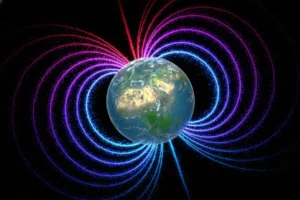
On Earth, the magnetic field roughly aligns with our rotation axis—the magnetic north pole is near the geographic North Polecool facts uranus a dipole field, like a bar magnet.
Uranus’s magnetic field is tilted 59 degrees from its rotation axis. Even stranger, the field doesn’t originate from the planet’s center—it’s offset by about 30% of the planet’s radius.
Why this is so weird:
Planetary magnetic fields typically generate in the core through dynamo action—electrically conductive fluids moving in the planet’s interior create electrical currents that produce magnetic fields.
On Earth, this happens in our liquid iron outer core. On gas giants like Jupiter, it happens in metallic hydrogen layers deep inside.
But Uranus (and its twin Neptune) likely generates its magnetic field in a different region—possibly in the mantle layer where exotic “superionic ices” of water, methane, and ammonia exist under extreme pressure.
The superionic ice theory:
At the pressures and temperatures inside Uranus’s mantle (millions of times Earth’s atmospheric pressure, thousands of degrees Fahrenheit), water doesn’t exist as liquid or ice the way we know it.
Instead, it forms superionic ice—a bizarre state of matter where oxygen atoms arrange in a crystalline lattice while hydrogen atoms flow freely through it like electrons in metal. This superionic ice conducts electricity.
If the magnetic field generates in this mantle layer rather than a core, it explains the weird tilt and offset. The conductive region doesn’t align with the rotation axis.
One of the most fascinating cool facts uranus is that its magnetic field might reveal an entirely new type of planetary dynamo that could be common among ice giants throughout the galaxy.
Practical implications:
Neptune shows a similarly tilted, offset magnetic field (47-degree tilt). This suggests ice giants form a distinct category of planets with unique internal dynamics.
Since astronomers have discovered that Neptune-sized exoplanets are incredibly common around other stars, understanding Uranus’s magnetic field helps us predict conditions on thousands of distant worlds.
The Giant Impact That Knocked Uranus Sidewayscool facts uranus
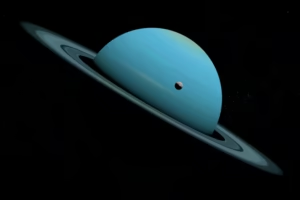
Scientists are nearly certain they know what caused Uranus’s extreme 98-degree tilt—a massive collision early in the solar system’s history.
Computer simulations show that an object roughly one to three times Earth’s mass slammed into Uranus billions of years ago. The impact was violent enough to tip the entire planet on its side.
Evidence supporting the giant impact theory:
- The tilt itself: A 98-degree axial tilt is toocool facts uranus from gradual gravitational interactions
- Moon orbits: Uranus’s moons orbit around its equator (perpendicular to its orbit), suggesting they formed after the tilt
- Low internal heat: The impact might have expelled heat or disrupted Uranus’s core, explaining why it emits so little thermal energy
- Composition models: Simulations match Uranus’s current composition if an impact mixed its interior layers
But here’s one of the controversial cool facts uranus that scientists still debate: Did the impact happen once or twice?
The two-impact hypothesis:
Some models suggest Uranus experienced two major collisions rather than one. The first created the initial tilt and debris that formed some moons. The second refined the tilt to its current 98 degrees and formed additional moons.
This could explain why Uranus’s moons show different compositions and orbital characteristics—they formed during different impact events.
What happened to the impactor?
The object that hit Uranus didn’t survive intact. It either:
- Merged with Uranus completely
- Shattered into debris that formed some of Uranus’s moons
- Partially merged while ejecting material into space
Some researchers speculate that Uranus’s irregular composition (it might not have a distinct core) resulted from this impact thoroughly mixing the planet’s interior.
The Composition That Makes Uranus an “Ice Giant”
One of the most important cool facts uranus relates to its classification: Uranus isn’t a “gas giant” like Jupiter and Saturn—it’s an “ice giant.”
This terminology confuses people because “ice” suggests frozen water, but inside Uranus, nothing is frozen solid as we’d recognize.
What Uranus is actually made of:
- Atmosphere (outer 15-20%): Hydrogen (~83%), Helium (~15%), Methane (~2%)
- Mantle (middle 60%): “Ices” of water (H₂O), methane (CH₄), and ammonia (NH₃)
- Core (inner 20%): Rock and metal (possibly)
The term “ices” in planetary science refers to volatile compounds containing hydrogen, regardless of their physical state. Inside Uranus’s mantle, these materials exist as hot, dense, electrically conductive fluids under pressures exceeding 6 million times Earth’s atmosphere.
The methane that makes Uranus blue:
Uranus appears blue-green because methane in its upper atmosphere absorbs red light and reflects blue and green wavelengths. The more methane, the bluer the planet appears.
Neptune appears deeper blue than Uranus despite having similar methane concentrations. Scientists discovered in 2022 that both planets have a haze layer, but Uranus’s haze is thicker, making it appear lighter blue-green.
Diamond rain inside Uranus:
One of the wildest cool facts uranus involves diamonds. At certain depths inside the mantle, extreme pressure breaks apart methane molecules. The carbon atoms then crystallize into diamond, which slowly sinks toward the core like rainfall.
Laboratory experiments at the SLAC National Accelerator Laboratory confirmed this is possible by recreating ice giant conditions and watching diamond nanoparticles form.
| Layer | Depth | Primary Composition | State of Matter | Temperature |
| Upper Atmosphere | 0-300 miles | H₂, He, CH₄ | Gas | -370°F |
| Lower Atmosphere | 300-5,000 miles | H₂, He (compressed) | Supercritical fluid | -320°F to 900°F |
| Mantle | 5,000-15,500 miles | H₂O, NH₃, CH₄ ices | Superionic fluid | 900°F to 8,500°F |
| Core (theoretical) | 15,500-15,760 miles | Rock, metals | Possibly liquid | ~9,000°F |
Understanding what Uranus is made of represents some of the most important cool facts uranus for predicting conditions on similar exoplanets.
The 42-Year Seasons That Defy Imagination
Uranus’s sideways rotation creates the most extreme seasons in the solar system.
Each pole experiences 42 years ofcool facts uranus followed by 42 years of complete darkness. During the transition periods (equinoxes), the Sun rises and sets normally across the entire planet.
What this means in practice:
Imagine living at Uranus’s north pole. For 42 Earth years, the Sun never sets—it circles the horizon in a slow spiral. Then it sets for the last time, and you experience 42 years of continuous night.
During the equatorial regions’ “spring” and “fall,” day and night alternate every 17 hours (Uranus’s rotation period). But the Sun appears to move in strange arcs across the sky because of the planet’s tilt.
Seasonal temperature variations:
One of the surprising cool facts uranus is that despite these extreme seasonal differences in sunlight, temperature variations across the planet are relatively small.
The thick atmosphere distributes heat efficiently. Voyager 2 measurements showed similar temperatures at both the illuminated pole and the dark pole during its 1986 flyby.
However, seasonal cloud patterns do change. The Hubble Space Telescope observed Uranus during different seasons and noticed increased atmospheric activity near the poles as they transitioned from darkness to sunlight.
The upcoming equinox observations:
Uranus’s next equinox occurs in 2028. Astronomers are preparing intensive observation campaigns because this is when we can see the ring system edge-on and study atmospheric dynamics during seasonal transitions.
These observations might reveal new cool facts uranus about how its weather systems respond to changing sunlight patterns over decades.
The Moon Miranda—Uranus’s Frankenstein Creation
Of all Uranus’s 28 moons, Miranda stands out as the strangest.
This small moon (only 293 miles across) has the most varied and chaotic terrain of any object in the solar system. When Voyager 2 photographed Miranda in 1986, scientists were stunned.
Miranda’s bizarre features:
- Coronae: Oval-shaped regions with concentric ridges
- Verona Rupes: A cliff approximately 12 miles high—the tallest cliff in the solar system
- Mixed terrain: Ancient cratered regions adjacent to young grooved terrain
- Chaotic surface: Looks like it was assembled from completely different moons
One of the most intriguing cool facts uranus involves the theory of how Miranda got this way.
The shattered moon hypothesis:
Scientists initially proposed that Miranda was completely shattered by a massive impact, then reassembled from the debris. The pieces came back together in random orientations, creating the chaotic surface we see today.
However, modern analysis suggests a different explanation: tidal heating and cryovolcanism.
The tidal heating theory:
Early in Uranus’s history, Miranda might have been in an orbital resonance with other moons. This resonance created tidal forces that heated Miranda’s interior, causing cryovolcanic activity (ice volcanoes).
Different regions of the moon experienced different levels of tidal heating, creating varied terrain. When the resonance broke, the activity stopped, freezing Miranda in its current bizarre state.
Why this matters:
Miranda demonstrates that even small moons can have complex geological histories. Among all the cool facts uranus, Miranda’s weird surface teaches us that:
- Tidal forces can dramatically affect moon geology
- Orbital resonances create unexpected heating mechanisms
- Small worlds can be just as interesting as large planets
What I Learned the Hard Way About Dismissing Uranus
I spent my entire undergraduate astronomy degree basically ignoring Uranus.
It wasn’t Mars with its potential for life. It wasn’t Jupiter with its Great Red Spot and dozens of fascinating moons. It wasn’t Saturn with those spectacular rings. Uranus was just… there. A bluish dot in the outer solar system that seemed boring and featureless.
During my senior thesis research, my advisor suggested I focus on ice giants. I practically begged him to let me study Jupiter instead.
He smiled and said, “Trust me. Spend two weeks reading about Uranus first. If you still want to switch topics, we’ll talk.”
My embarrassing misconceptions:
- Myth: Uranus is just a smaller, bluer Neptune
- Reality: Uranus is thermally unique, emittingcool facts uranus heat while Neptune radiates significantly
- Myth: Uranus is boring because it has no visible cloud features
- Reality: Its clouds exist but require infrared and UV observation to see; Voyager 2 visited during an unusually quiet period
- Myth: The cool facts uranus are limited because we only visited once
- Reality: That single Voyager 2 flyby revealed extraordinary mysteries that we’re still trying to solve decades later
I spent those two weeks reading everything about Uranus. The sideways rotation. The weird magnetic field. The hydrogen sulfide clouds. The diamond rain. Miranda’s chaos. The more I learned, the more fascinated I became.
The turning point:
I came across a paper about Uranus’s low internal heat. The author posed a simple question: “Where did Uranus’s heat go?”
Every model of planetary formation predicts Uranus should be radiating significant internal heat like Neptune. But it isn’t. Something happened—possibly that ancient giant impact, possibly something we haven’t thought of yet.
That question hooked me. I ended up writing my thesis on thermal evolution models of ice giants and spent the next six years of my career studying Uranus and Neptune.
The deeper lesson:
I’d dismissed an entire planet based on superficial impressions and incomplete data. The cool facts uranus that I initially overlooked became the foundation of my research career.
Uranus taught me that:
- Absence of drama doesn’t mean absence of interest: Just because Uranus looks quiet doesn’t mean it’s boring
- Mysteries hide in unexpected places: The most interesting questions often involve things we don’t understand
- Every object has a story: Even seemingly featureless planets have complex histories worth studying
Now when I teach introductory astronomy, I spend extra time on Uranus. I don’t want my students making the same mistake I did—dismissing fascinating science because it doesn’t scream for attention.
The Proposed Uranus Orbiter Mission That Could Change Everything
The most exciting cool facts uranus might be discoveries we haven’t made yet.
NASA’s Planetary Science Decadal Survey (2023-2032) ranked a Uranus mission as the highest priority flagship mission for the next decade. If funded and approved, the Uranus Orbiter and Probe could launch in the early 2030s.
Mission objectives:
- Orbital tour: Spend 3-4 years orbiting Uranus, studying its atmosphere, rings, and moons
- Atmospheric probe: Drop a probe into Uranus’s atmosphere to directly sample composition
- Magnetosphere study: Map the tilted magnetic field in detail
- Moon flybys: Close encounters with all major moons, especially Miranda
- Ring observations: Study ring composition and dynamics
What we could learn:
The mission would answer fundamental questions about cool facts uranus that we can’t resolve from Earth:
- Why is Uranus so cold internally? Direct measurements of heat flow and internal structure
- What’s the exact atmospheric composition? The probe would sample gases directly rather than relying on spectroscopy
- Do the moons have subsurface oceans? Gravitational and magnetic measurements could detect liquid water
- How does the magnetic field actually work? Detailed mapping during orbit
- Is there active geology on any moons? High-resolution imaging could reveal recent geological activity
The timeline challenge:
A Uranus mission faces brutal timeline constraints. The journey takes 13-17 years depending on the trajectory and gravity assists used.
If the mission launches in 2031, it wouldn’t arrive at Uranus until 2044-2048. Scientists who are 30 years old when the mission launches will be in their late 40s or early 50s when it arrives.
This generational commitment requires patience rarely seen in modern space exploration.
Alternative proposals:
Some scientists advocate for a dual mission: separate orbiters for both Uranus and Neptune launched on similar timelines. This would provide comparative data on both ice giants simultaneously.
Others propose a Uranus flyby mission using solar electric propulsion that could arrive faster but with less comprehensive science return.
The question of which cool facts uranus we’ll discover next depends entirely on whether these missions receive funding and approval.
The Exoplanet Connection—Why Uranus Matters Beyond Our Solar System
Uranus isn’t just an oddball in our solar system—it’s the template for understanding thousands of distant worlds.
Astronomers have discovered that Neptune-sized planets (14-17 Earth masses) are among the most common types of exoplanets.cool facts uranus are probably ice giants similar to Uranus and Neptune.
The exoplanet statistics:
Studies of exoplanet populations reveal:
- Neptune-sized planets are more common than Jupiter-sized planets
- Many orbit closer to their stars than Mercury does to our Sun
- Their compositions likely range from Neptune-like to Uranus-like
Understanding cool facts uranus directly informs our predictions about these distant worlds.
What Uranus teaches us about exoplanets:
- Interior structure: If Uranus lacks a distinct core, similar exoplanets might also have mixed interiors
- Magnetic fields: Tilted, offset fields might be common among ice giants, affecting atmospheric retention
- Atmospheric chemistry: Hydrogen sulfide clouds could be common, with implications for habitability and biosignatures
- Thermal evolution: Understanding why Uranus is so cold helps predict temperature ranges on similar exoplanets
The habitability question:
No one expects to find life on Uranus itself. But some of Uranus’s moons—particularly Titania and Oberon—might have subsurface oceans heated by tidal forces and radioactive decay.
The cool facts uranus we learn about moon formation and evolution apply to exomoons around ice giant exoplanets, some of which might orbit in their star’s habitable zone.
Conclusion
The cool facts uranus hiding beneath its featureless blue-green exterior reveal a world of extremes—sideways seasons, rotten-egg atmospheres, diamond rain, and mysteries we’re only beginning to unravel. This tilted giant challenges our assumptions about planetary formation and reminds us that the most fascinating stories often belong to the underdogs we initially overlook.
Frequently Asked Questions
1. What are some cool facts Uranus that make it unique?
Uranus rotates on its side, has extreme seasons, the coldest atmosphere in the solar system, 13 rings, 28 moons, and diamond rain.
2. Why does Uranus rotate sideways?
A likely collision with a massive object billions of years ago tipped Uranus 98°, creating its sideways rotation and extreme 42-year-long seasons.
3. What is Uranus made of?
Uranus is an ice giant, mostly water, methane, and ammonia “ices,” with hydrogen and helium making up only 15–20% of its mass.
4. Why is Uranus called an ice giant?
Because its mantle contains dense, electrically conductive “ices” instead of mainly hydrogen-helium gas like Jupiter and Saturn.
5. How cold is Uranus?
Uranus is the coldest planet, with upper atmosphere temperatures around -371°F (-224°C), colder than Neptune despite being closer to the Sun.
6. What causes Uranus to be colder than Neptune?
Uranus emits almost no internal heat, possibly due to a giant impact disrupting its interior, while Neptune radiates much more energy.
7. Could humans land or survive on Uranus?
No—Uranus has no solid surface, extreme cold,cool facts uranus, caustic gases, and a chaotic magnetic field, making human survival impossible.
8. How has Uranus been explored?
Only NASA’s Voyager 2 visited in 1986, providing most of our knowledge; future missions will likely be long-term orbiters or atmospheric probes.
Final Summary
The cool facts Uranus reveal a planet stranger than it seems. Its 98-degree tilt, extreme seasons, and hydrogen sulfide clouds are some cool facts Uranus. The icy composition, diamond rain, faint rings, and 28 moons are more cool facts Uranus. Voyager 2 confirmed key cool facts Uranus, while its tilted magnetic field and unusual heat loss add fascinating cool facts Uranus. Sideways rotation, superionic ice layers, and extreme cold are all notable cool facts Uranus. Future missions aim to explore cool facts Uranus further, highlighting its mysteries and teaching us about planetary evolution.