I spent an entire astronomy class debate in college arguing that Venus must have at least one moon. My professor let me go on for five embarrassing minutes before gently correcting me with actual data. The question of how many moons does venus have seems simple, but the answer—and the reasons behind it—reveal something profound about planetary evolution, gravitational dynamics, and why Earth’s closest neighbor is also one of its loneliest.
I once stared at a star chart and wondered, how many moons does Venus have—surprisingly, zero! It felt strange thinking a planet so similar to Earth could be completely alone.
How many moons does Venus have? Discover why this Earth-sized planet has zero moons and what it reveals about planetary formation.
Zero Moons—The Definitive Answer That Raises More Questions
Let’s address this directly and without ambiguity.
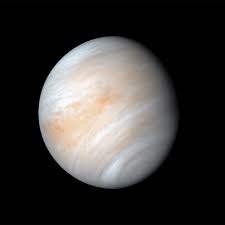
The answer to how many moons does venus have is exactly zero. Venus has no natural satellites orbiting it. None. Not even a tiny captured asteroid spinning around in the distance.
This makes Venus one of only two planets in our solar system completely devoid of moons. Mercury is the other moonless world, but that makes more sense given Mercury’s small size and proximity to the Sun’s overwhelming gravity.
The stark reality:
-
- Venus diameter: 7,521 miles (95% of Earth’s size)
- Venus mass: 81.5% of Earth’s mass
- Number of moons orbiting Venus: 0
- Number of quasi-satellites: Several (but these don’t count as true moons)
Venus should have moons based on its size and position in the solar system. Mars, which is barely half Venus’s size, has two moons (Phobos and Deimos). Jupiter has 95 confirmed moons. Even tiny Pluto has five.
So when people ask how many moons does venus have, the follow-up question is always: Why doesn’t it have any?
Scientists have proposed multiple theories, none of them boring. Understanding why Venus lacks moons teaches us about planetary formation, gravitational interactions, and the chaotic history of our solar system’s early days.
| Planet | Diameter (miles) | Mass (Earth = 1) | Number of Moons | Distance from Sun (AU) |
| Mercury | 3,032 | 0.055 | 0 | 0.39 |
| Venus | 7,521 | 0.815 | 0 | 0.72 |
| Earth | 7,918 | 1.000 | 1 | 1.00 |
| Mars | 4,212 | 0.107 | 2 | 1.52 |
The data screams an obvious question: Why would a planet nearly identical to Earth in size lack what Earth, Mars, and almost every other planet possesses?
Three Leading Scientific Theories Explaining Venus’s Loneliness
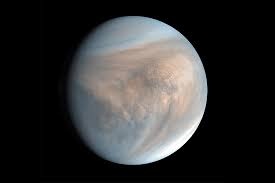
Scientists don’t just shrug at the question of how many moons does venus have.
They’ve developed detailed theories backed by computer simulations, gravitational modeling, and observations of planetary formation around other stars.
Theory 1: Venus Never Captured or Created a Moon
Some researchers argue Venus formed without ever acquiring a natural satellite. During the solar system’s violent early period (the Late Heavy Bombardment about 4 billion years ago), planets underwent massive collisions that could create moons.
Earth’s Moon likely formed when a Mars-sized object called Theia slammed into proto-Earth. The debris coalesced into our lunar companion.
Venus probably experienced similar impacts. But perhaps the collision angles, velocities, or timing differed in ways that prevented moon formation. The debris might have fallen back to Venus or escaped into independent solar orbits instead of coalescing.
Theory 2: The Sun Stole Venus’s Moon
This is my favorite theory because it sounds like cosmic theft.
Venus orbits much closer to the Sun than Earth does—67 million miles versus 93 million miles. At that distance, the Sun’s gravitational influence is significantly stronger.
Dr. Alex Alemi’s research from UC Santa Cruz (published in 2019) suggests that any moon orbiting Venus would face constant gravitational tugging from the Sun. Over millions of years, these tidal forces would destabilize the orbit.
The moon would either:
- Crash into Venus
- Escape into an independent solar orbit
- Get pulled into the Sun
Computer simulations show this process takes 10-100 million years depending on the moon’s initial orbit. When examining how many moons does venus have today versus potentially billions of years ago, we might be seeing the aftermath of solar gravitational theft.
Theory 3: Venus’s Bizarre Rotation Destroyed Its Moon
Venus rotates backwards (retrograde) and incredibly slowly. One Venusian day lasts 243 Earth days—longer than Venus’s 225-Earth-day year.
This weird rotation could have resulted from the same collision that might have created an early moon. But that slow, backwards spin creates unusual tidal interactions.
Earth’s Moon gradually moves away from Earth (about 1.5 inches per year) due to tidal forces. Venus’s rotation is so slow that tidal forces might have worked differently—potentially causing any early moon to spiral inward and crash into the planet.
The evidence remains inconclusive:
All three theories are plausible. Venus might never have had a moon, might have lost one to solar interference, or might have destroyed one through tidal interactions. We simply don’t know which scenario occurred.
Understanding how many moons does venus have requires accepting that the answer might be “zero now, but possibly one or more in the past.”
The Quasi-Satellites That Don’t Actually Count
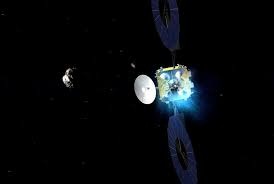
Here’s where the answer to how many moons does venus have gets technical.
Venus has several “quasi-satellites”—asteroids that appear to orbit Venus from our perspective but don’t actually qualify as true moons.
What makes a quasi-satellite different from a moon:
A true moon is gravitationally bound to its planet. The planet’s gravity dominates the moon’s motion.
A quasi-satellite orbits the Sun, not the planet. It just happens to orbit the Sun at the same rate as the planet, creating the illusion of orbiting the planet.
Venus’s known quasi-satellites:
- 2002 VE68: The most studied, roughly 200 meters across
- 2012 XE133: Discovered more recently
- 2013 ND15: Another recent discovery
These objects orbit the Sun every 225 days (same as Venus’s year) in a 1:1 resonance. From Venus’s perspective, they trace complex paths that look like orbits. But the Sun’s gravity, not Venus’s, controls their motion.
Think of it like two dancers circling a stage at the same speed. They stay near each other, but neither one is actually following the other—they’re both following the choreography (the Sun’s gravity).
When people ask how many moons does venus have, the technically correct answer remains zero. Quasi-satellites are temporary cosmic dance partners, not gravitationally bound moons.
These quasi-satellites could eventually escape their resonance with Venus, crash into Venus, or drift into different solar orbits. They’re not permanent companions.
Historical Claims of Venusian Moons That Were Wrong
The question of how many moons does venus have has an embarrassing history in astronomy.
Between the 1600s and 1700s, multiple respected astronomers claimed to have discovered moons orbiting Venus. They even gave it a name: Neith, after an Egyptian deity.
The claimed observations:
- 1686: Giovanni Cassini reported observing a Venusian moon multiple times
- 1740: James Short observed what he believed was Venus’s moon
- 1759: Andreas Mayer reported a moon observation
- 1761: Jacques Montaigne observed the supposed moon during a Venus transit
These weren’t amateur stargazers—these were serious astronomers using the best telescopes of their era.
They were all wrong.
What they likely saw:
- Optical illusions from telescope aberrations
- Background stars appearing near Venus
- Internal reflections in their telescope optics
- Lens flares from Venus’s brightness
By the mid-1800s, improved telescopes and more rigorous observation methods confirmed that how many moons does venus have is zero, not one or more.
This historical confusion teaches important lessons about the scientific method:
- Even brilliant scientists can make systematic errors
- Technology limitations can create false observations
- Peer review and repeated observation are essential
The “Neith” saga reminds us that answering how many moons does venus have required centuries of increasingly sophisticated observation.
| Year | Observer | Claimed Discovery | Later Explanation |
| 1686 | Giovanni Cassini | Moon “Neith” | Optical illusion/background star |
| 1740 | James Short | Moon “Neith” | Lens aberration |
| 1761 | Jacques Montaigne | Moon during transit | Internal reflection |
| Modern era | Space missions | No moons confirmed | Definitive answer: zero |
What Modern Space Missions Revealed About Venus’s Moons
The space age permanently settled the question of how many moons does venus have.
NASA’s Mariner 2 flew by Venus in 1962, becoming the first spacecraft to visit another planet. No moon detected.
The Soviet Venera program launched 16 missions to Venus between 1961 and 1984. Despite extensive photography and observation, no moons appeared.
Key missions confirming zero moons:
- Mariner 2, 5, 10 (1962-1974): NASA flybys
- Venera series (1961-1984): Soviet orbiters and landers
- Pioneer Venus (1978-1992): NASA orbiter studying Venus for 14 years
- Magellan (1990-1994): NASA radar mapping mission
- Venus Express (2006-2014): ESA orbiter
- Akatsuki (2015-present): Japanese atmospheric orbiter
These missions collectively spent decades in Venus orbit, mapping the planet with radar, photographing from every angle, and measuring gravitational variations. Not one moon was detected.
The gravitational measurements are particularly telling. A moon’s mass would create detectable perturbations in spacecraft orbits. Venus showed no such perturbations.
Understanding how many moons does venus have required this comprehensive observational campaign. Ground-based telescopes couldn’t provide definitive answers, but space missions could.
Why Size Doesn’t Determine Moon Presence
Venus breaks the intuitive rule that bigger planets have more moons.
When people first learn how many moons does venus have (zero), they’re often shocked because Venus is almost Earth-sized.
The surprising moon distribution:
-
- Tiny Mars (4,212 miles diameter): 2 moons
- Huge Venus (7,521 miles diameter): 0 moons
- Earth (7,918 miles diameter): 1 moon
- Dwarf planet Pluto (1,476 miles diameter): 5 moons
Size clearly doesn’t correlate with moon count. So what does?
Factors that actually matter for moon acquisition:
- Distance from the Sun: Closer planets face stronger solar gravity that can destabilize moon orbits
- Formation history: Specific impact events create moons; not all planets experienced the right collisions
- Rotation rate: Faster rotation creates tidal bulges that can capture or maintain moons
- Timing of impacts: Early impacts might create moons; late impacts might destroy them
- Orbital dynamics: Gravitational resonances with other planets can affect moon stability
Venus’s proximity to the Sun (point 1) probably plays the biggest role in why how many moons does venus have equals zero today, even if moons existed in the past.
The outer planets (Jupiter, Saturn, Uranus, Neptune) have dozens of moons each partly because:
- They’re far from the Sun’s disruptive gravity
- They formed in debris-rich regions
- Their strong gravity captures passing objects
- Their rapid rotations help stabilize moon orbits
Venus lacks these advantages. It orbits in the Sun’s gravitational sweet spot where maintaining a moon becomes extremely difficult.
What Venus’s Moonless State Tells Us About Planetary Evolution
The answer to how many moons does venus have (zero) isn’t just trivia—it reveals fundamental truths about planetary science.
Lesson 1: Planetary twins can have different fates
Earth and Venus are sometimes called sister planets or twins because:
- Nearly identical size (Venus is 95% of Earth’s diameter)
- Similar mass (Venus is 81.5% of Earth’s mass)
- Similar density (Venus: 5.24 g/cm³; Earth: 5.52 g/cm³)
- Similar composition (both are rocky terrestrial planets)
Yet they evolved completely differently. Earth has oceans, life, and one large moon. Venus has a runaway greenhouse atmosphere, surface temperatures hot enough to melt lead, and no moons.
Understanding how many moons does venus have helps us appreciate that identical starting conditions don’t guarantee identical outcomes.
Lesson 2: Orbital location shapes destiny
Venus’s position in the solar system (0.72 AU from the Sun) places it in a zone where:
- Solar radiation is intense enough to drive atmospheric evolution
- Solar gravity is strong enough to destabilize moon orbits
- The habitable zone boundary is nearby (Venus might have been habitable early in its history)
Earth orbits at 1.0 AU—just far enough that the Sun can’t easily steal our Moon, but close enough for liquid water to exist.
That seemingly small 0.28 AU difference (about 26 million miles) might explain everything from atmospheric evolution to the answer of how many moons does venus have.
Lesson 3: We need more data
Despite decades of missions, we still don’t know definitively why Venus lacks moons. The most sophisticated computer simulations can’t rule out any of the three main theories.
Future missions to Venus will continue investigating, but the fundamental question might remain unanswered until we develop new ways to study planetary histories.
What I Learned the Hard Way
That college astronomy debate still makes me cringe.
I’d prepared for class by reading about terrestrial planets. I knew Venus was Earth’s twin. I’d seen diagrams showing Venus’s size compared to Earth’s.
In my mind, “Earth-sized planet” automatically meant “has a moon.”
My embarrassing logic:
- Venus is basically Earth’s size → Check
- Earth has a moon → Check
- Therefore Venus must have a moon → Wrong
I confidently stated this in class discussion. My professor, Dr. Ramirez, asked, “Are you sure about that?”
I doubled down. “Well, maybe not as big as Earth’s Moon, but it has to have something.”
She pulled up a solar system chart showing moon counts. Zero for Venus. Zero for Mercury. My face burned.
My biggest misconceptions:
- Myth: Planet size determines moon presence
- Reality: Orbital dynamics, formation history, and solar distance matter more
- Myth: All rocky planets should have moons
- Reality: Only Earth has a large moon among terrestrial planets; Mars’s moons are tiny captured asteroids
- Myth: Modern astronomy has answered all basic planetary questions
- Reality: We still don’t know definitively why how many moons does venus have equals zero
The class laughed—not maliciously, but enough to sting. I spent the rest of the semester reading everything I could find about Venus.
The deeper I researched, the more I realized how little we actually know. Venus is Earth’s nearest planetary neighbor, yet it remains mysterious in fundamental ways.
That embarrassment taught me three lessons:
- Check assumptions: I assumed without verifying
- Simple questions have complex answers: “How many?” seems easy until you ask “Why?”
- Ignorance is fixable: I learned more about Venus after being wrong than I ever would have learned by being right
Now when someone asks me how many moons does venus have, I don’t just say “zero.” I explain the theories about why, the historical false discoveries, and the spacecraft missions that confirmed it.
Being wrong publicly was humiliating. But it made me a better science communicator.
How Venus Compares to Other Inner Planets
Context clarifies why the answer to how many moons does venus have is notable.
Inner planet moon comparison:
| Planet | Distance from Sun (million miles) | Diameter (miles) | Number of Moons | Moon Names |
| Mercury | 36 | 3,032 | 0 | None |
| Venus | 67 | 7,521 | 0 | None |
| Earth | 93 | 7,918 | 1 | The Moon |
| Mars | 142 | 4,212 | 2 | Phobos, Deimos |
The pattern isn’t based on size or distance alone. It’s based on specific historical events and gravitational dynamics unique to each planet.
Mercury’s moonless state makes sense:
Mercury is small and close to the Sun. It can’t hold onto a moon against solar gravitational interference. Its formation probably didn’t include moon-creating impacts.
Earth’s Moon is unusual:
Earth’s Moon is proportionally huge—1/4 of Earth’s diameter. It likely formed from a massive collision (the Giant Impact Hypothesis). This was a rare, lucky event.
Mars’s moons are different:
Phobos and Deimos are tiny—probably captured asteroids. Phobos is only 14 miles across; Deimos is 8 miles. They’re not true moons in the sense of being formed with Mars.
Venus stands out as the odd case—big enough to theoretically hold a moon, positioned where moon capture should be possible, yet with zero satellites.
Understanding how many moons does venus have requires appreciating that Venus is the exception that challenges our planetary formation theories.
Future Exploration and What We Might Learn
The question of how many moons does venus have is settled (zero), but related questions remain unanswered.
NASA and ESA have approved multiple Venus missions for the late 2020s and early 2030s:
DAVINCI (Deep Atmosphere Venus Investigation of Noble gases, Chemistry, and Imaging)
- Launch: 2029
- Mission: Atmospheric probe descent
- Relevant capability: Could detect any extremely small, previously undetected satellites
VERITAS (Venus Emissivity, Radio Science, InSAR, Topography, and Spectroscopy)
- Launch: 2031
- Mission: Orbital radar mapping
- Relevant capability: Precise gravity measurements could reveal ancient moon impacts
EnVision
- Launch: 2031 (ESA mission)
- Mission: Orbital studies of geological activity
- Relevant capability: Surface mapping might show evidence of ancient moon debris
These missions won’t find moons—we know how many moons does venus have is zero. But they might answer why.
Questions future missions could address:
- Did Venus ever have a moon that crashed into it? (Surface geology might show evidence)
- What caused Venus’s retrograde rotation? (Possibly related to moon-forming impacts)
- Are there small debris clouds we’ve missed? (Better orbital surveys)
- How does Venus’s gravity field vary? (Could reveal ancient moon interactions)
Some scientists have proposed looking for chemical signatures in Venus’s atmosphere that might result from a moon collision. If a moon crashed into Venus within the last billion years, traces might remain.
Understanding how many moons does venus have now versus in the past could reveal whether Venus’s current hellish conditions (900°F surface temperature, crushing atmospheric pressure) resulted partly from moon-related events.
Conclusion
The answer to how many moons does venus have is definitively zero—no natural satellites orbit Earth’s twin sister planet. This moonless state, shared only with Mercury, results from either never forming moons, losing them to solar gravitational interference, or destroying them through tidal forces from Venus’s bizarre retrograde rotation. Venus stands as a reminder that even the simplest questions reveal profound mysteries.
Frequently Asked Questions
How many moons does Venus have, and why is this surprising?
Venus has zero moons, which surprises many because it’s nearly Earth-sized, yet Earth has one moon.
Did Venus ever have moons in the past?
Scientists suspect Venus may have had moons billions of years ago, but tidal forces and retrograde rotation likely caused them to crash or escape.
What are Venus’s quasi-satellites, and do they count?
Quasi-satellites orbit the Sun in resonance with Venus but are not gravitationally bound, so they don’t count.
How did space missions determine how many moons does Venus have?
Missions like Mariner, Venera, Pioneer Venus, Magellan, Venus Express, and Akatsuki confirmed zero moons through photography and gravitational measurements.
Why doesn’t Venus have any moons today?
Possible reasons: it never captured one, lost one due to the Sun’s gravity, or tidal forces from slow retrograde rotation destroyed them.
Does Venus’s rotation affect its moons?
Yes, its extremely slow, retrograde rotation creates tidal forces that would destabilize any moon.Why is knowing how many moons does Venus have important?It helps scientists understand planetary formation, evolution, and why Earth has a stable climate due to its Moon.
Can future missions reveal ancient moons?
Future missions may detect gravitational anomalies or atmospheric signatures indicating Venus once had moons.
Final Summary
The answer to how many moons does Venus have is zero, a fact full of surprising fun. Many wonder how many moons does Venus have, given its Earth-like size. Scientists study how many moons does Venus have to understand planetary formation and tidal forces. Observations confirm how many moons does Venus have, while quasi-satellites do not count. Historical claims misled people about how many moons does Venus have, and modern missions verify how many moons does Venus have. Learning how many moons does Venus have helps explain retrograde rotation. Every measurement of how many moons does Venus have continues to teach astronomers. Truly, how many moons does Venus have equals zero, a key fact for exoplanets.