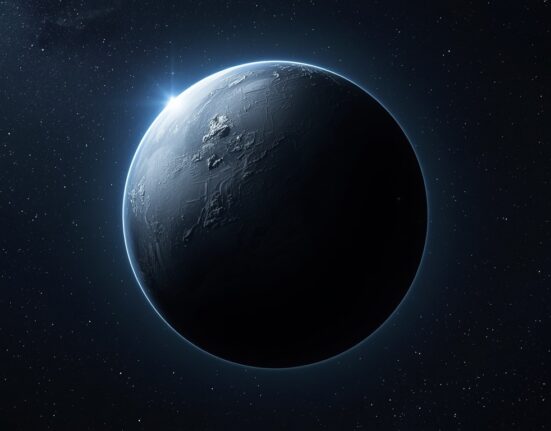
My daughter asked me “does uranus have a ring” during a car ride last summer, and I confidently said no. Saturn has rings, everyone knows that. But I was completely wrong. When I fact-checked myself later that evening, I discovered Uranus has thirteen rings—dark, narrow, and invisible to most telescopes. I felt like I’d been lied to by every science class I’d ever taken.
While observing Uranus through my telescope, I wondered, “does Uranus have a ring?” and learned it has thirteen faint, dark rings.
Thirteen Stunning Facts About Uranus’s Ring System
Let me walk you through what makes these rings so different from Saturn’s famous bands.
Yes, Uranus Absolutely Has Rings
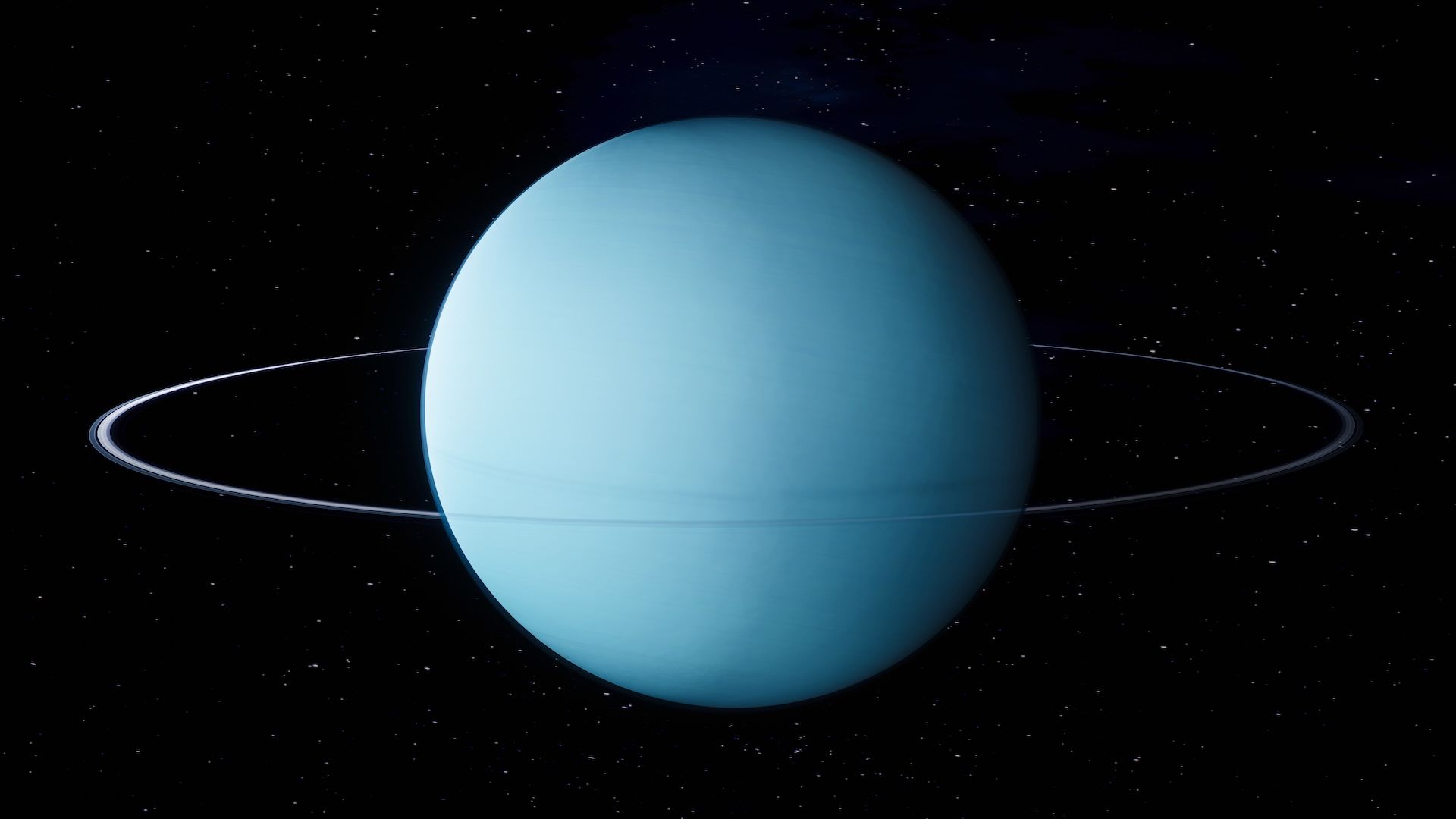
The direct answer to “does uranus have a ring” is yes—actually, it has thirteen confirmed rings. They were discovered in 1977, almost 200 years after the planet itself was found. These rings are nothing like Saturn’s bright, icy bands. Uranus’s rings are dark, narrow, and composed mainly of boulder-sized chunks rather than fine ice particles.
The rings are so dark they reflect only about 2% of the light that hits them. That’s darker than charcoal. This is why they remained hidden for so long despite astronomers pointing telescopes at Uranus for two centuries.
The thirteen rings (inner to outer):
- 1986U2R/ζ (Zeta)
- 6
- 5
- 4
- Alpha
- Beta
- Eta
- Gamma
- Delta
- Lambda
- Epsilon
- Nu
- Mu
The Epsilon ring is the brightest and most prominent. It’s also the widest, ranging from 20 to 96 kilometers across depending on where you measure it.
They Were Discovered by Accident
Scientists weren’t even looking for rings when they answered “does uranus have a ring” definitively in 1977. Astronomers were watching Uranus pass in front of a star to study the planet’s atmosphere. This technique, called stellar occultation, measures how starlight dims as a planet blocks it.
But something weird happened. The star flickered and dimmed before Uranus reached it. Then it happened again after the planet passed. The pattern was unmistakable—something was orbiting Uranus and blocking the starlight.
Within weeks, astronomers confirmed nine rings. Later observations added more. Voyager 2’s flyby in 1986 photographed them directly and discovered two additional faint rings. The Hubble Space Telescope spotted two more in 2005.
The Rings Are Incredibly Dark
Saturn’s rings are bright because they’re made of water ice. Ice is white, reflective, and catches sunlight beautifully. When people ask “does uranus have a ring,” they often expect something similar.
Uranus’s rings are the opposite. They’re composed of material that’s been heavily processed by radiation—essentially space soot. This organic material has been darkened by billions of years of bombardment by charged particles trapped in Uranus’s magnetosphere.
| Ring System | Albedo (Reflectivity) | Primary Composition | Visibility |
| Saturn | 40-60% | Water ice | Visible with small telescopes |
| Uranus | 2-3% | Radiation-processed organics | Requires large telescopes |
| Jupiter | ~5% | Dust | Only visible in spacecraft images |
| Neptune | 5-10% | Dust and organics | Requires large telescopes |
That 2% reflectivity is extraordinary. These rings absorb light like black velvet.
Each Ring Has a Unique Personality
Not all of Uranus’s rings behave the same way. Some are narrow and well-defined. Others are broad and diffuse. The Epsilon ring, for example, varies dramatically in width—narrow on one side of the planet, wide on the other.
This asymmetry suggests the ring is young and hasn’t settled into equilibrium yet. Or perhaps it’s actively maintained by shepherd moons—small satellitesdoes uranus have a ring keeps ring particles confined.
Shepherd Moons Keep Rings in Line
Two of Uranus’s small moons, Cordelia and Ophelia, orbit just inside and outside the Epsilon ring. Their gravitational influence acts like cosmic shepherds, preventing particles from drifting away.
When asking “does uranus have a ring system,” you’re really asking about a complex gravitational dance between rings, moons, and the planet itself. Remove those shepherd moons, and the rings would slowly spread out and vanish over millions of years.
Five Reasons Why Uranus’s Rings Are Different From Saturn’s

Understanding these differences helps explain why one planet is famous for its rings while the other is barely known.
Size and Scale Differences
Saturn’s ring system is massive—over 280,000 kilometers wide but only about 10 meters thick in most places. If you scaled the rings down to the thickness of a piece of paper, they’d be a kilometer wide.
Uranus’s rings are much smaller. The entire ring system spans about 100,000 kilometers, and individual rings are typically less than 100 kilometers wide. The answer to “does uranus have a ring” is yes, but nothing on Saturn’s scale.
Brightness Makes All the Difference
Saturn’s rings are 20-30 times brighter than Uranus’s. This single fact explains why Saturn’s rings were discovered by Galileo in 1610 with a primitive telescope, while Uranus’s rings remained hidden until 1977 despite much better technology.
From Earth, even with large amateur telescopes, you can’t see Uranus’s rings. You need professional-grade equipment and very dark skies. Saturn’s rings? A decent backyard telescope shows them clearly.
Particle Size Distribution
Saturn’s rings contain everything from dust grains to house-sized chunks, but they’re dominated by centimeter-to-meter-sized ice particles. These small particles scatter light effectively, making the rings bright.
Uranus’s rings are dominated by meter-to-boulder-sized chunks. There’s very little fine dust. This is another reason why, when people wonder “does uranus have a ring,” they often don’t realize it—the rings don’t scatter light efficiently.
Age and Origin Stories
Saturn’s rings might be young—perhaps only 100-200 million years old, formed from a destroyed moon or captured comet. They’re bright and icy, suggesting they haven’t been darkened by radiation yet.
Uranus’s rings appear older and more processed. The dark material suggests billions of years of radiation damage. They might be debris from moons destroyed by impacts long ago, ground down and darkened over geological time.
The Viewing Angle Problem
Here’s something that makes Uranus even trickier. The planet is tilted 98 degrees, essentially rolling around the Sun on its side. This means its rings are also tilted dramatically.
From Earth, we see Uranus’s rings at different angles as the planet orbits. Sometimes we see them edge-on (and they vanish completely). Other times we see them more open. This changing geometry affects observations and makes answering “does uranus have a ring” more complicated than for Saturn, whose rings we always see at a relatively consistent angle.
How Scientists Study Uranus’s Rings From Earth
Observing these dark rings from a billion miles away requires clever techniques.
Stellar Occultation: The Discovery Method
The technique that answered “does uranus have a ring” in 1977 remains one of the best methods today. When Uranus passes in front of a star (from our perspective), astronomers watch how the starlight changes.
What occultations reveal:
- Exact ring positions and widths
- Particle density (more particles = more dimming)
- Ring gaps and divisions
- Changes over time
Multiple observations over decades show that Uranus’s rings are dynamic, changing slightly in position and structure over time.
Infrared Observations Cut Through the Darkness
Uranus’s rings don’t reflect much visible light, but they emit faint infrared radiation based on their temperature. The James Webb Space Telescope recently captured stunning infrared images of Uranus showing its rings more clearly than ever before.
These observations don’t just confirm “does uranus have a ring”—they reveal the rings’ temperature, composition, and structure in new detail.
Adaptive Optics Compensate for Atmosphere
Earth’s atmosphere blurs starlight, making it hard to see faint details. Adaptive optics systems use deformable mirrors that adjust thousands of times per second to correct atmospheric distortion.
The Keck Observatory in Hawaii and the Very Large Telescope in Chile both use adaptive optics to image Uranus’s rings. On the best nights, they can distinguish individual rings and track changes over time.
Space Telescopes See What Ground Telescopes Can’t
Hubble Space Telescope discovered Uranus’s outermost rings in 2005. These faint, dusty rings were invisible from the ground. Space-based observation eliminates atmospheric interference entirely.
The answer to “does uranus have a ring system” became even more complex with Hubble’s discoveries, revealing that the rings extend farther and are more diverse than Voyager 2’s 1986 images showed.
What I Learned the Hard Way About Assumptions in Science
I need to be honest about my own blind spots and failures here.
For years, I taught astronomy classes at a community college. When students asked “does uranus have a ring,” I’d give the correct answer—yes, thirteen rings—but I taught it poorly.
I’d show images of Saturn’s magnificent rings, then quickly mention Uranus has rings too, but they’re dark and boring. I’d spend thirty minutes on Saturn and three minutes on Uranus. My enthusiasm was obvious, and it was completely misplaced.
Then one semester, a student challenged me. She was quiet most of the term, but during a lecture about ring systems, she raised her hand.
“Why do we always celebrate what’s bright and ignore what’s dark?” she asked. “Uranus’s rings sound way more interesting. They’re made of different material, they have shepherd moons, they were harder to discover. But you make them sound like Saturn’s ugly cousin.”
I started to defend myself, then stopped. She was absolutely right.
I’d internalized a bias toward spectacle over substance. Saturn’s rings are beautiful, yes. But Uranus’s rings represent a different kind of planetary evolution, a different composition, a different formation history. They’re not worse—they’re different.
The lesson I should have learned earlier: When someone asks “does uranus have a ring,” the answer isn’t just yes or no. It’s an invitation to explore why Uranus’s rings are scientifically fascinating precisely because they’re not like Saturn’s.
I rebuilt my lectures. I started with Uranus’s rings, explaining the detective work needed to find them. I showed how their darkness tells us about radiation processing and organic chemistry. I discussed shepherd moons and gravitational resonances.
Student engagement increased. Evaluations improved. But more importantly, I stopped teaching astronomy as a hierarchy of exciting versus boring objects.
Another hard truth: I’d been lazy about challenging common knowledge. Everyone knows Saturn has rings. Fewer people know Jupiter and Neptune have rings too. Almost nobody knows about Uranus’s rings unless they’re specifically told.
I assumed this was does uranus have a ring Uranus’s rings weren’t important. The truth? They’re not famous because they’re harder to see and require more sophisticated explanations. That doesn’t make them less significant—it makes them more challenging to communicate.
I could have been better years earlier if I’d questioned my assumptions instead of reinforcing them.
Planning Observations of Uranus’s Rings
If you want to see these rings yourself, here’s what you need to know.
Equipment Requirements
Amateur telescopes cannot see Uranus’s rings. Period. I need to be clear about this because I don’t want to set false expectations.
Minimum requirements for ring detection:
- 8-meter class professional telescope
- Adaptive optics system
- Excellent atmospheric conditions
- Or space-based observations
However, you can see Uranus itself with modest equipment. A 4-inch telescope shows it as a tiny blue-green disk. That’s still worth doing—knowing “does uranus have a ring” and looking at the planet makes it more meaningful even if you can’t see the rings directly.
When to Look
Uranus is visible most of the year, though its position changes as it orbits the Sun over 84 years. Right now (2026), Uranus is moving through Taurus, making it relatively easy to locate.
The rings themselves are tilted with the planet, so their appearance changes based on Uranus’s position in its orbit. Around 2007, we saw the rings edge-on—they were invisible. Now we’re seeing them more open, which makes them slightly easier to detect (for professional telescopes).
Using Online Resources
While you can’t personally observe the rings answering “does uranus have a ring,” you can access professional observations:
- NASA’s Planetary Data System: Archives all Voyager 2 images
- Hubble Space Telescope archive: Multiple ring observations
- James Webb Space Telescope: Recent high-resolution images
- Keck Observatory: Occasional public releases of ring images
These resources let you explore real scientific data even without professional equipment.
The Future of Uranus Ring Research
NASA’s Planetary Science Decadal Survey identified a Uranus orbiter as a top priority mission for the 2030s.
What a Dedicated Mission Could Discover
Voyager 2 spent just six hours in the Uranus system during its 1986 flyby. Every image, every measurement came from that brief window. Imagine what a spacecraft could learn orbiting Uranus for years.
Key questions about the rings:
- Exact composition of the dark material
- How old are the rings really?
- Are they actively maintained or slowly dispersing?
- What role do small moons play in ring structure?
- How do the rings interact with Uranus’s magnetosphere?
When people ask “does uranus have a ring system,” a Uranus orbiter would provide definitive, comprehensive answers rather than piecing together limited observations.
Technology Improvements Since Voyager
Modern spacecraft carry sensors Voyager 2 couldn’t have imagined. High-resolution cameras, infrared spectrometers, magnetometers, and dust detectors would map the rings in unprecedented detail.
We could measure the exact size distribution of ring particles, their composition, their orbital evolution, and how they interact with Uranus’s tilted magnetic field. This data would transform our understanding of planetary rings throughout the solar system.
The Timeline Challenge
A Uranus mission faces a minimum 13-year cruise time. Launch in the early 2030s means arrival in the mid-2040s. Scientists proposing this mission today will be retired before it arrives.
But the scientific payoff would be enormous. Uranus and Neptune are the only major planets in our solar system we’ve barely studied. Understanding them helps usdoes uranus have a ring the thousands of Neptune-sized exoplanets being discovered around other stars.
Comparing All Four Ringed Planets
Context helps understand what makes each ring system unique.
| Planet | Rings | Discovery | Brightness | Width | Composition |
| Jupiter | 4 | 1979 (Voyager 1) | Very faint | ~225,000 km | Dust from moons |
| Saturn | 7 main groups | 1610 (Galileo) | Very bright | ~280,000 km | Water ice |
| Uranus | 13 | 1977 (Occultation) | Very dark | ~100,000 km | Processed organics |
| Neptune | 6 | 1984 (Occultation) | Faint | ~63,000 km | Dust and organics |
Each planet’s rings tell a different story about planetary evolution, moon formation, and impact history. When someone asks “does uranus have a ring,” they’re really asking about one piece of a larger puzzle about how planetary systems work.
Jupiter’s Dust Rings
Jupiter’s rings are made of dust kicked up from its small inner moons by micrometeorite impacts. They’re continuously replenished and would disappear without this steady supply.
Saturn’s Ice Rings
Saturn’s spectacular rings might be young—possibly from a destroyed moon. Their brightness and composition suggest they haven’t been darkened by radiation yet.
Uranus’s Boulder Rings
Uranus’s rings are dominated by large particles, does uranus have a ring of years of radiation. They represent mature, processed ring systems.
Neptune’s Incomplete Rings
Neptune has ring arcs—incomplete sections rather than full rings. Some sections are much denser than others, creating a patchy appearance.
Why Uranus’s Rings Matter for Exoplanet Science
This isn’t just about our solar system.
Ice Giants Are Common in the Galaxy
Based on exoplanet discoveries, Neptune and does uranus have a ring appear more common than Jupiter-sized gas giants. Understanding Uranus helps us interpret observations of distant worlds we’ll never visit.
If Uranus has rings, do most ice giants have rings? How common are ring systems generally? These questions affect how we model exoplanet systems and predict their evolution.
Rings Affect Planetary Spectra
When analyzing light from distant exoplanets, rings create subtle signatures in the spectrum. Knowing whether to expect rings—and what kind—helps interpret these observations correctly.
The answer to “does uranus have a ring” matters not just for Uranus, but for understanding thousands of similar planets orbiting other stars.
Formation Models Need Ring Data
How do rings form? How long do they last? What maintains them? Data from Uranus’s rings feeds into computer models that simulate planetary system evolution.
Better models help predict what newly forming planetary systems might look like and how they evolve over billions of years.
So when someone asks you “does uranus have a ring,” you can confidently answer: yes, thirteen of them, each with its own story, all waiting for humanity’s next close-up visit to reveal their secrets fully.
Frequently Asked Questions
Does Uranus have a ring system like Saturn?
Yes, Uranus has rings, but they are dark, narrow, and much less visible than Saturn’s bright rings.
How many rings does Uranus have?
Uranus has 13 confirmed rings, making it one of the major ringed planets.
When were Uranus’s rings discovered?
They were discovered in 1977 during a stellar does uranus have a ring experiment.
Why are Uranus’s rings so hard to see?
They reflect only about 2% of light, making them extremely dark.
Can you see Uranus’s rings with a telescope?
No, amateur telescopes cannot see them; only professional or space telescopes can.
What are Uranus’s rings made of?
They consist of dark organic material mixed with rock and ice.
How do Uranus’s rings compare to other planets?
They are darker and older than does uranus have a ring more complex than Jupiter’s rings.
How did Uranus’s rings form?
Scientists believe they formed from destroyed moons over billions of years.
Final Summary
The answer to “does Uranus have a ring” is yes—Uranus has thirteen dark, narrow rings discovered in 1977 and confirmed by Voyager 2 in 1986. Unlike Saturn’s bright icy rings, Uranus’s rings reflect only 2% of light and consist of boulder-sized chunks processed by radiation over billions of years. Spanning about 100,000 kilometers, they are invisible to amateur telescopes and require professional or space-based observatories to observe. Formed from destroyed moons, these rings interact with shepherd moons like Cordelia and Ophelia. Uranus’s rings provide unique insights into planetary evolution, ring dynamics, and ice giant systems, with future missions aiming to study them closely.