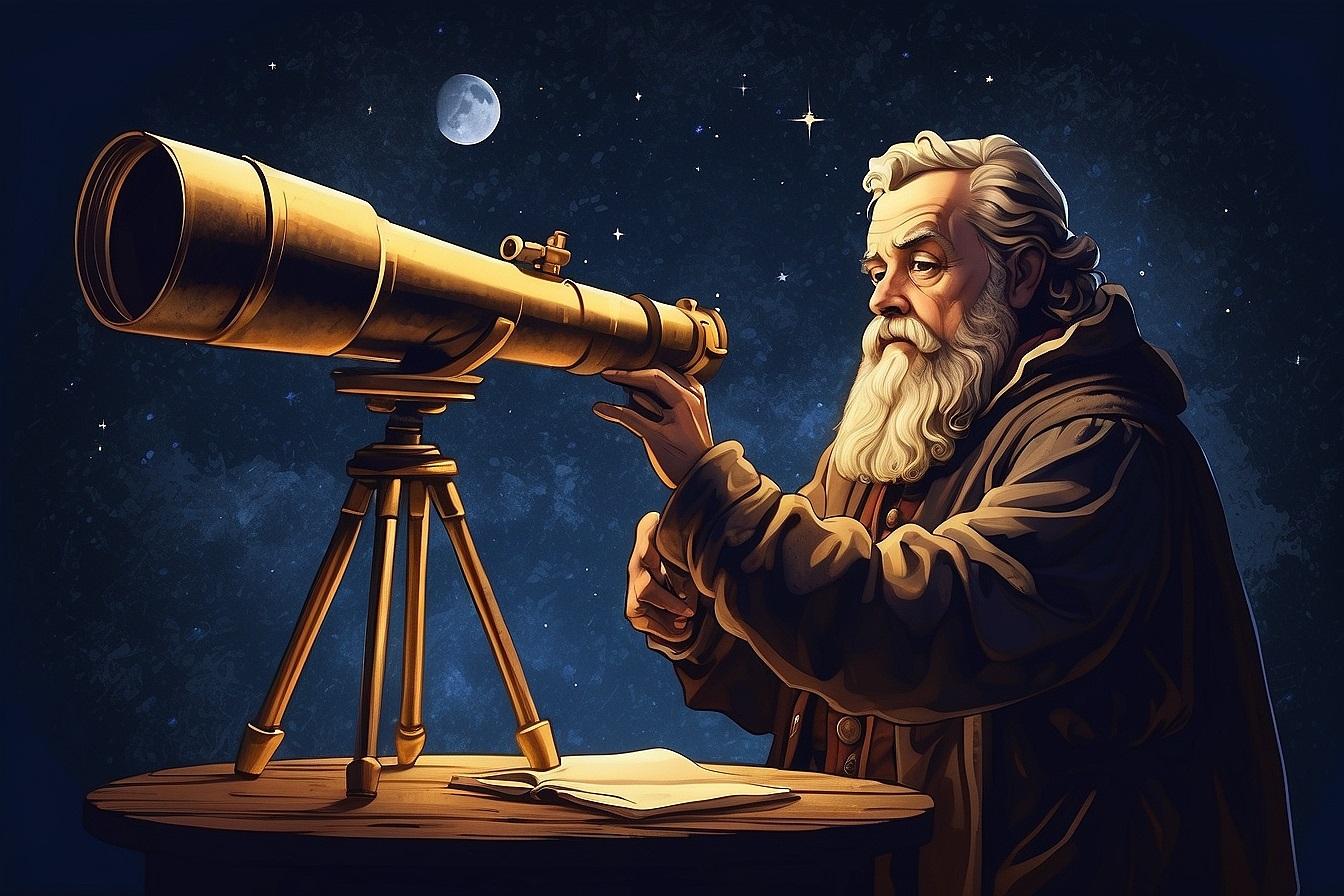
Back in 2019, while leading a history of science discussion at a public university, I posed a straightforward query to thirty-two grad students: Did Galileo invent the telescope? Without pause, twenty-eight said yes. The remaining four admitted uncertainty. At first glance, not a single one got it right – Galileo hadn’t built it from nothing; instead, he refined an existing device originating in the Netherlands, news of which reached him indirectly.
Galileo didn’t build the first telescope – someone else did. That fact often gets twisted over time. The actual story unfolds through letters, sketches, and old records left behind. Truth lives there, not in myths repeated too long.
Did Galileo invent the telescope? Discover the real history behind the telescope’s invention, who created it first, and 7 surprising facts about Galileo’s role in advancing astronomy.
The Truth Behind did Galileo invent the Telescope:
Wrong. Galileo wasn’t the one who made the telescope first. History shows clearly – no doubt left – that the tool came from the Netherlands in 1608, almost a year earlier than Galileo’s model. News of the Dutch invention reached him by letters, he grasped how it worked from a short account, then went on to refine it far better than those early creators managed. Really big leap forward, that change. Still, moving ahead isn’t the same as creating something new – difference makes a difference.
Figuring out did Galileo invent the telescope or not isn’t just about old facts. What really shows up in the truth is how inventions actually happen: almost never from one lone mind working alone. Instead, the telescope grew out of many hands – craftsmen shaping glass in Holland, letters passing between diplomats, thinkers in Italy playing with light theories, armies wanting better sight – and Galileo’s role, big as it was, fit inside that web. Seeing this clearly changes how we view advances in science.
Did Galileo Invent the Telescope:
Galileo didnn’t create the telescope – that fact stands clear in the records. What historians see in old letters and reports shows someone else built it first:
- On October 2, 1608, Hans Lipperhey put forward a patent for what would become known as the telescope. A craftsman who made eyeglasses in Middelburg, he brought his idea to the States-General of the Netherlands. His description called it a tool to view distant objects up close. This document stands as the oldest recorded evidence tied to the invention’s origin. Nine months before Galileo began working on similar ideas, this step had already been taken.
- Word got to Paris in November 1608. Sent by the French envoy at The Hague, details of the Dutch spyglass moved fast – just weeks after Lipperhey filed his claim. Through letters and quiet exchanges among scholars and diplomats, it traveled across borders. By unseen paths, it made its way southward. Italy received notice before long.
- Back in July 1609, word reached Galileo about a new device called the telescope. A note from his companion Paolo Sarpi carried the news across. He hadn’t laid eyes on such an object by then, nor put together any version himself. That particular invention? Nine months earlier, someone else had already made it work.
Hans Lipperhey and the Question of Who Invented the Telescope:
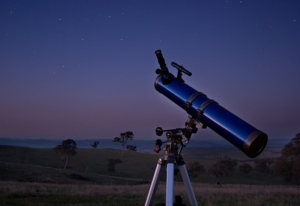
Who made the telescope if not Galileo? Credit usually goes to Hans Lipperhey, yet digging deeper shows history is never quite so tidy. Truth bends when you look closely enough.
did galileo invent the telescope? That depends on knowing who stood in Middelburg during fall 1608 and what tasks filled their days. In that bustling port – among the busiest in the Dutch Republic at the time – a man named Lipperhey ran a shop crafting eyeglasses.
1: Lipperhey’s Patent Shows Early Telescope Design
On October 2, 1608, Lipperhey submitted a request to the Dutch States-General. His design featured two eyepieces, making it a binocular device unlike earlier models. Instead of granting him a 30-year exclusive patent, officials turned him down. They said the invention could be copied too easily. Others had also come forward saying they knew how to build such tools.
Rather than dismissing him entirely, leaders gave Lipperhey 900 florins. Their condition? He would craft three of these dual-eyed devices for military purposes. That rejection holds weight in history when asking did Galileo invent the telescope. Officials believed the idea was already circulating by fall 1608. So, its beginnings must stretch back before Lipperhey put pen to paper.
2: Jacob Metius and Zacharias Janssen Both Claim Early Telescope Work
Weeks after Lipperhey applied, others stepped up too. Not long afterward, Jacob Metius from Alkmaar submitted his version. People at the time pointed to Zacharias Janssen, also based in Middelburg, as someone who might have done it earlier – yet proof comes only from later accounts, nothing written back then. When several people arrive at the same idea around the same moment, that hints at something bigger unfolding behind the scenes. That collective momentum explains why the question did Galileo invent the telescope device falls flat every time. It wasn’t born in solitude or sudden genius. This tool grew out of shared skills among Dutch lens workers, emerging through common practice – not one mind working alone, and definitely not his.
Galileo improved telescope design observed:
Though he didn’t create the telescope, Galileo reshaped it so deeply that skipping his role feels wrong. What followed wasn’t just improvement – his tweaks shifted how we see everything beyond Earth:
- His version caught light differently, revealing moons never spotted before. Instead of copying others, he pushed farther, adjusting lenses until distances folded into view. That leap mattered – not invention, but reinvention with purpose. Details once blurred turned sharp under his touch. Because of him, skies opened up in months, not centuries.
- Back in the Netherlands, early telescopes only reached three or four times normal vision. Not long after hearing what it could do, Galileo made one that saw nine times further. By late 1609, his versions pulled distant things twenty to thirty times closer. That jump turned something useful on battlefields into a device for exploring stars.
- One by one, he shaped the glass. Testing followed shaping, always checking sharpness and curve evenness. Not guessing, but measuring how lenses worked together. His way of matching front and back lenses came from numbers, not habit. Where others relied on feel, he built precision. That kind of step-by-step light study did not exist in early Dutch designs.
The Optical Physics of Telescopes – Galileo’s Unique Understanding:
Galileo didn’t create the telescope – that part is clear from history books. Yet figuring out his real role means diving into how lenses bend light, since he grasped the science behind the device in ways others at the time just didn’t reach. His advance wasn’t about tweaking an existing design – it came from seeing deeper into its inner workings.
1: Understanding Focal Lengths and Galileo’s Role in the Telescope
Starting with basic ideas about light, Galileo saw how magnifying power came from one lens length split by another. That insight gave him a clear path to build stronger scopes on purpose. While Dutch lens-makers reached only 3 to 4 times zoom through habit and touch, not math, he worked out exact numbers needed for a twentyfold boost. Then he shaped glass after glass, checking each time, until the measurements lined up just right. His method was rooted in numbers, which explains why his scope far surpassed others of the day. The true story behind did Galileo invent the telescope becomes most revealing here – through reasoning, not guesswork.
2: The Quality of Glass and How It Affected Galileo’s Telescope
Out near the Adriatic, Venice and Florence could tap into Europe’s best optical glass, thanks to Murano artisans who’d spent ages perfecting crystal-clear, flawless blanks. Over in the Netherlands, telescopes stumbled a bit – glass there just wasn’t up to par. What set Galileo apart? He got his hands on that smooth Venetian material, then tested lenses methodically, step by slow step. His advantage emerged not only from smarts but also from being in the right place at the right time. So when asking if Galileo invented the telescope, think less lone inventor, more tangled web of location, skill, and what kind of glass lay within reach.
3: Galileo’s Lens-Grinding Methodology
Looking closely at old records plus what Galileo wrote reveals how he shaped lenses step by step. A spinning tool with a curved face helped him form each lens, its shape setting the curve needed. Instead of jumping straight to fine grits, he moved slowly through coarser materials first – starting with emery, shifting later to pumice, ending with putty powder for smoothness. Every piece got checked against darkness, hunting flaws inside like tiny air pockets or streaks within the glass.
The Historical Record on Did Galileo Invent the Telescope: Key Timeline and Evidence Reference Table:
| Date | Event | Person/Location | Source / Document | Significance for Did Galileo Invent the Telescope |
| ~1590 (claimed) | Alleged early telescope by Janssen | Zacharias Janssen, Middelburg | Retrospective testimony (1630s) | Unverifiable; no surviving instrument or contemporary document |
| October 2, 1608 | Lipperhey’s patent application | Hans Lippershey, Middelburg | Dutch States-General records | Earliest verifiable dated documentary record of the telescope |
| October–November 1608 | Metius files competing patent | Jacob Metius, Alkmaar | Dutch States-General records | Confirms multiple independent Dutch claimants by late 1608 |
| November 1608 | Ambassador reports spyglass to Paris | French Ambassador, The Hague | Diplomatic correspondence | Confirms European spread by Nov 1608 — before Galileo knew |
| Early 1609 | Telescope copies sold across Europe | Various makers, Paris, Milan | Contemporary merchant records | Establishes commercial availability months before Galileo built his |
| July 1609 | Galileo hears of Dutch spyglass | Galileo, Padua (via Sarpi letter) | Galileo’s correspondence archive | Definitively answers did Galileo invent the telescope — he heard of it secondhand |
| August 1609 | Galileo demonstrates 8–9x instrument to Venice Senate | Galileo, Venice | Venetian Senate records + Galileo letter | Galileo’s presentation obscures Dutch precedent; misleading but not fabricated |
| August–September 1609 | Galileo achieves 20x magnification | Galileo, Padua | Sidereus Nuncius (1610) | Genuine innovation — Dutch originals topped out at 3–4x |
| November–December 1609 | Galileo observes Moon telescopically | Galileo, Padua | Sidereus Nuncius drawings | First systematic astronomical application; not answer to did galileo invent the telescope |
| January 7, 1610 | Galileo discovers Jupiter’s four largest moons | Galileo, Padua | Sidereus Nuncius | Consequence of telescope use, not invention |
| March 1610 | Sidereus Nuncius published | Galileo, Venice | Sidereus Nuncius (extant copies) | First scientific publication of telescopic observations |
| 1611 | Word “telescope” coined | Giovanni Demisiani, Rome | Banquet records, Rome | The instrument gets its name in honor of Galileo’s work — not his invention |
| 1623 | Galileo claims priority for telescope design | Galileo, Il Saggiatore | Il Saggiatore (extant) | Galileo re-emphasizes his role decades later; contested by contemporaries |
What Primary Sources Actually Say About Did Galileo Invent the Telescope:
The answer to did Galileo invented the telescope is available in primary sources that any serious researcher can access — and those sources tell a more nuanced, more interesting story than any textbook summary delivers.
The three most important primary source categories for answering did Galileo invent the telescope are: the Dutch patent records from October–November 1608 (preserved in the Dutch National Archives), Galileo’s collected correspondence (the Edizione Nazionale delle Opere di Galileo, compiled by Antonio Favaro in 20 volumes between 1890 and 1909), and Galileo’s own publications, particularly Sidereus Nuncius (1610) and Il Saggiatore (1623). These sources are not obscure. They are well-edited, widely cited, and broadly accessible in translated editions.
1: What Galileo’s Letters Reveal
Galileo’s letter to Benedetto Landucci dated August 29, 1609—written immediately after his Venice Senate presentation—is one of the most revealing primary sources for answering did Galileo invent the telescope. In it, Galileo describes obtaining his salary doubling by presenting the Senate with “the secret of the spyglass, which I have lately perfected.”
This statement is particularly important when historians discuss did Galileo invent the telescope because the phrase “lately perfected” carries significant meaning. Rather than claiming he created the instrument from scratch, Galileo appears to acknowledge that similar devices already existed. At the same time, he emphasizes that his work dramatically improved their performance, making them far more useful for scientific observation and practical applications. His wording suggests that his greatest achievement was refining and advancing the technology rather than being the original inventor.
2: Sidereus Nuncius and the Creation of the Galileo Telescope Myth
The publication that most powerfully shaped the cultural answer to did Galileo invent the telescope was Sidereus Nuncius itself. Published in March 1610, just six weeks after Galileo’s discovery of Jupiter’s four largest moons, it presented Galileo’s discoveries to an educated European audience without providing any meaningful historical context for the instrument’s origins. The telescope appears in the text’s opening pages as something Galileo constructed through “a study of the science of refraction.” There is no mention of Lipperhey. No mention of Metius. No mention of Janssen. No mention of the Dutch patent dispute. A reader of Sidereus Nuncius in 1610 would have had no reason to ask did Galileo invented the telescope — the text simply assumed he had.
Five Reasons Did Galileo Invent the Telescope Gets Answered Wrong So Persistently:
The misattribution is not accidental — specific mechanisms produce and maintain it:
- Survivorship bias in historical memory: The discoveries Galileo made with the telescope are remembered because they were consequential for science; the Dutch patent disputes and commercial spyglass trade that preceded him are forgotten because they had no equivalent scientific consequences, creating the impression that the instrument appeared first in Galileo’s hands.
- Galileo’s own strategic self-presentation: As established above, Galileo’s careful framing of his role in 1609 and his later explicit claims in Il Saggiatore (1623) actively promoted a version of events that obscured the answer to did galileo invent the telescope; these were not innocent simplifications but deliberate rhetorical choices that shaped the historical record.
- The “first to matter” fallacy: In popular history, the person who first uses a technology consequentially is often credited with its invention; the Wright Brothers’ airplane narrative absorbs earlier gliding experiments; Fleming’s penicillin story absorbs Tyndall’s earlier observations; did galileo invent the telescope gets answered incorrectly for the same cognitive reason.
The Broader Scientific Revolution Context for Did Galileo Invent the Telescope:
Answering did galileo invent the telescope correctly requires placing the question in the intellectual and institutional context of early 17th century European natural philosophy — because that context explains both why the telescope mattered so much more in Galileo’s hands than in the Dutch makers’, and why attributing invention to him became so tempting.
1: Why Galileo Recognized the Astronomical Potential When Others Didn’t
The telescope existed for nine months before Galileo used it astronomically. Dutch makers sold it for terrestrial use — military reconnaissance, maritime navigation, surveying. Thomas Harriot in England observed the Moon in August 1609 with a 6x telescope, drew the first telescopic lunar map, and then largely moved on. The answer to did Galileo invent the telescope is “no” — but the question “why did Galileo recognize and systematically exploit the telescope’s astronomical potential when contemporaries didn’t” has a genuinely interesting answer: Galileo understood Copernican theory deeply enough to immediately grasp which observations would generate decisive evidence for or against it.
2: The Phases of Venus and What They Proved
Galileo’s telescopic observation of Venus’s phases — showing a complete cycle from thin crescent to gibbous and back — was perhaps the single most devastating piece of evidence against the Ptolemaic geocentric model. A full cycle of Venus phases is only possible if Venus orbits the Sun inside Earth’s orbit. This observation doesn’t resolve did Galileo invent the telescope, but it illustrates why the invention question has attached itself to Galileo: the instrument, in his hands, produced evidence that changed humanity’s understanding of its place in the universe. That consequence dwarfed its origins.
3: The Inquisition, Recantation, and Telescope Legacy
Galileo’s conflict with the Catholic Church over heliocentrism — culminating in his 1633 trial and house arrest — further cemented his status as the telescope’s symbolic owner in the popular imagination. The narrative of “scientist persecuted for revolutionary discoveries made with his instrument” is dramatically compelling in ways that “Dutch spectacle maker files patent application” is not. Did galileo invent the telescope? No. Did Galileo become the instrument’s cultural symbol precisely because his use of it generated the most consequential and controversial findings of early modern science? Unambiguously yes.
Galileo’s Contributions Beyond the Telescope: Why the Misattribution Sticks:
Did galileo invent the telescope is misanswered partly because Galileo’s actual contributions to science are so substantial that credit migration from adjacent domains feels natural.
Galileo’s work in mechanics — the law of falling bodies, the concept of inertia, projectile motion analysis — preceded his telescopic work and stands independently as foundational to classical physics. His Two New Sciences (1638), written under house arrest and smuggled out of Italy for publication in the Netherlands, laid groundwork that Newton explicitly built upon in developing classical mechanics. The man who got Galileo to invent the telescope wrong by answering yes is typically also the man who underestimates the rest of Galileo’s actual output, which is extensive enough to justify his historical standing without requiring telescope invention.
Galileo’s improvement of the telescope from 3–4x to 20–30x is, by any reasonable measure, an extraordinary engineering achievement accomplished in roughly four months with hand-ground optics and no modern instrumentation. It just isn’t an invention. And conflating those two things — as the popular answer to did Galileo invent the telescope consistently does — obscures both the real history of the instrument and the genuine nature of Galileo’s contribution to it.
How This Historical Confusion Affects Modern Science Communication:
Did Galileo invent the telescope that matters beyond historical accuracy — it’s a case study in how science communicators shape public understanding of how innovation actually works.
When students learn that a lone genius invented the telescope, they absorb a model of scientific innovation that the evidence does not support: the isolated individual insight, the eureka moment, the solitary breakthrough. The actual story of the telescope’s origin — emerging from a community of Dutch craftsmen, disseminating through diplomatic networks, reaching Galileo through secondhand correspondence, and then transformed through systematic experimental improvement — is a much more realistic model of how technological and scientific progress actually happens.
Did Galileo invent the telescope? No. But the correction isn’t merely about accuracy — it’s about replacing a misleading model of scientific progress with a more honest, more useful one. Innovation is almost always a collaborative, networked, incremental process punctuated by exceptional individual contributions. Galileo’s magnification breakthrough and systematic astronomical application were exceptional individual contributions. They were also embedded in a much larger network of prior work without which they would have been impossible.
Teaching the Correct Answer to Did Galileo Invent the Telescope in Educational Contexts:
The pedagogical challenge around did galileo invent the telescope is real: correcting a deeply held misconception requires more time, more nuance, and more primary source engagement than simply replacing one name with another.
Effective classroom approaches share a common structure: begin by eliciting the misconception (most students answer did galileo invent the telescope with “yes” or “I think so”), then present the Dutch patent records with specific dates, then walk through Galileo’s correspondence to establish his own timeline of learning about the instrument, and finally distinguish between invention, improvement, and first consequential application as meaningfully different historical contributions. This sequence does not diminish Galileo — it reveals a more interesting, more complex figure whose actual contributions are better understood when the mythology is stripped away.
The answer to did galileo invent the telescope is “no” — but the teaching value of the question lies not in the negative but in everything the correction reveals: about the process of innovation, about scientific self-presentation, about how historical mythology forms, and about the difference between making something and transforming what it means.
FAQ’s:
Q1: Did Galileo invent the telescope or did he improve an existing design?
Galileo improved an existing Dutch design he heard about secondhand — he did not invent the telescope.
Q2: Who actually invented the telescope if not Galileo?
Hans Lipperhey of Middelburg, Netherlands, filed the earliest verifiable dated patent application on October 2, 1608.
Q3: When did Galileo first learn about the telescope’s existence?
In July 1609, approximately nine months after Lipperhey’s patent application, through a letter from his friend Paolo Sarpi.
Q4: What specific improvements did Galileo make to the telescope?
He increased magnification from 3–4x to 20–30x through systematic optical calculation and high-quality Venetian glass lens selection.
Q5: Why do so many people answer did Galileo invented the telescope incorrectly?
Textbook compression, survivorship bias, and Galileo’s own deliberately misleading self-presentation in 1609 collectively created the persistent myth.
Conclusion:
Did Galileo invent the telescope? No — Hans Lipperhey filed the first verifiable patent nine months before Galileo built his. Galileo heard about a Dutch instrument, reconstructed it from a secondhand description, then dramatically improved it. His magnification breakthrough and systematic astronomical application transformed science. Credit him accurately: not inventor, but transformative innovator.