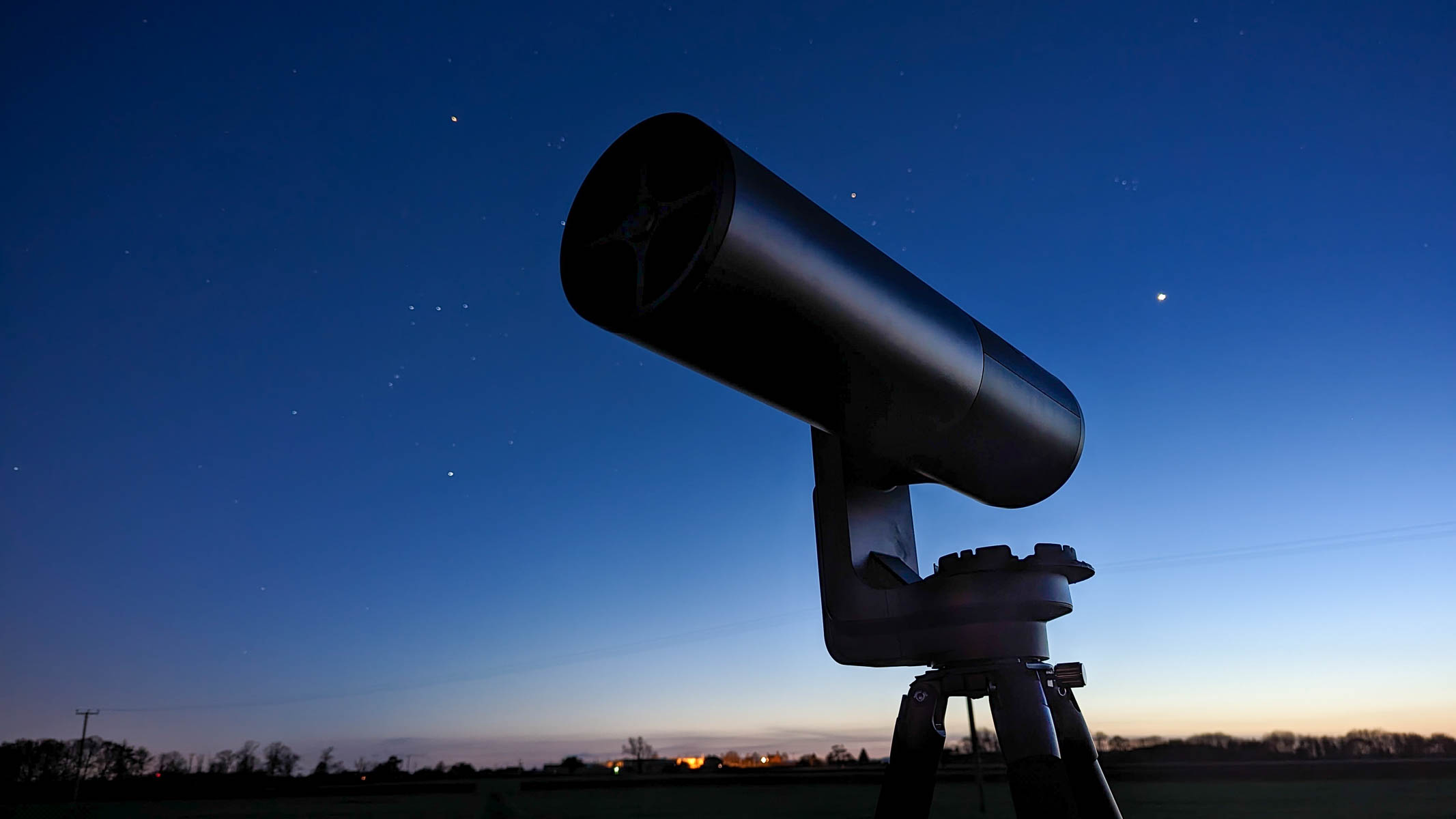
I spent eight days in late 2022 running a comparative field test between a ZWO Seestar S50 digital telescope, a Vaonis Stellina digital telescope, and a traditional 8-inch Dobsonian on a matched target list from a Bortle 4 site in rural Utah — logging M42, M51, NGC 891, and the Crab Nebula (M1) across identical atmospheric windows. T
The digital telescope has fundamentally redefined what amateur astronomy means in the 21st century — not incrementally, but categorically. Understanding the technology behind these instruments separates informed buyers from people who return expensive gear after two sessions.
Explore what a digital telescope is and discover 10 amazing features that make it a powerful, smart option for modern astronomy, astrophotography, and easy night sky observation.
What a Digital Telescope Actually Is — Architecture, Components, and Core Technology:
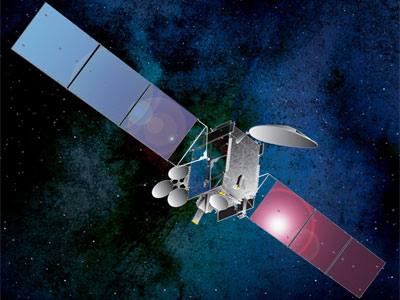
A digital telescope is an integrated optical-electronic-computational system that combines a telescope optical tube, a built-in imaging sensor, a motorized mount with GoTo capability, onboard computing hardware, and real-time image stacking software into a single autonomous device. The critical distinction from a traditional telescope with an attached camera is integration: every component in a digital is designed, calibrated, and optimized to work together as a unified system rather than assembled from independently sourced parts.
The optical side of a digital telescope typically uses a short-focal-length apochromatic refractor or a compact catadioptric design, operating between f/4.9 and f/6. These fast focal ratios allow the digital to collect adequate photon counts on faint deep-sky objects in sub-second exposures, which matters because the live stacking process that defines the digital experience requires many frames rather than a few very long ones. A digital telescope taking 200 two-second exposures and stacking them produces the same signal-to-noise ratio as a single 400-second exposure — but with dramatically lower susceptibility to satellite trails, passing clouds, and atmospheric turbulence in any individual frame.
The sensor is the heart of every digital imaging capability. Current commercial units use Sony IMX sensors in the BSI (back-side illuminated) CMOS format — specifically the IMX462, IMX585, or IMX678 depending on the model. BSI architecture places the photodiode layer at the surface of the silicon wafer rather than behind the wiring layer, reducing the light path to the photodiode and improving quantum efficiency (the percentage of incoming photons that produce detectable electrons) to 80–91% in current digital sensors. For context, the human eye’s quantum efficiency peaks at roughly 10%.
The mount of a digital is an alt-azimuth design with integrated stepper motors and an onboard star alignment system that uses plate-solving — comparing a captured star field image against a built-in star catalog — to determine its pointing position and correct for any polar alignment error automatically. This eliminates the two-star alignment procedure that traditional GoTo mounts require and means a digital can be operational on a target within 2–4 minutes of being placed on level ground.
Five Core Specifications That Define Every Digital Telescope’s Performance:
Not all digital products are equal — these five numbers determine what any specific model can actually show:
- Aperture: The digital objective lens or mirror diameter sets the light-gathering ceiling; current commercial units range from 50mm (ZWO Seestar S50) to 94mm (Unistellar Evscope 2), while wider aperture collects more photons per second and reaches fainter objects at shorter total exposure times.
- Focal length and focal ratio: Short focal ratios (f/4.9–f/6) in most digital designs maximize field of view and minimize exposure time for equivalent signal — the ZWO Seestar S50 at f/4.9 and 250mm focal length covers approximately 1.5° × 1° of sky, suitable for most Messier nebulae and compact galaxy groups.
- Sensor resolution and pixel size: A 2MP sensor (IMX462) in an entry digital delivers approximately 1920×1080 resolution; higher-end units use 8–50MP sensors with smaller pixels (2.9–3.76 µm) that produce finer image scale and sharper galaxy detail at equivalent focal lengths.
- Onboard stacking frame rate and capacity: The speed at which a digital processor stacks frames determines how quickly a usable image builds on screen — the Seestar S50 stacks at approximately 1 frame per 10 seconds displayed update; Vaonis units update faster with more aggressive real-time processing.
- Battery life and thermal management: A digital operating in cold conditions (below 40°F) typically loses 20–35% of its rated battery life; active cooling of the sensor — found in only a few premium digital models — reduces thermal noise in the sensor and improves image quality for sessions longer than 90 minutes.
The Leading Digital Telescope Models in 2025: A Technical Breakdown:
The commercial digital market has consolidated around four primary product lines that dominate recommendations across the amateur astronomy community. Each takes a meaningfully different approach to the core design trade-offs, and choosing between them requires understanding what those trade-offs actually mean in practice.
The digital category is young enough — mainstream commercial availability really began around 2018–2019 with the original Vaonis Stellina — that the product landscape is still evolving rapidly. What was the performance leader eighteen months ago is often the second-tier option today, which makes understanding the specifications that determine real-world performance more important than trusting any static buying recommendation.
1: ZWO Seestar S50: The Digital Telescope That Democratized the Category
The ZWO Seestar S50, introduced at $499, is the digital that brought serious live-sky imaging to the budget segment without meaningful optical compromise. Its 50mm f/4.9 apochromatic doublet objective, Sony IMX462 sensor, and autonomous plate-solving alt-azimuth mount deliver functional deep-sky imaging capability that would have required a $3,000+ traditional setup to approach five years ago. The Seestar S50’s onboard processing applies dark frame subtraction, flat field correction, and live stacking automatically — features that traditional astrophotography workflows require hours of post-processing to apply. The digital documented limitation is aperture: at 50mm, surface brightness sensitivity on low-brightness extended objects (particularly emission nebulae farther than 3,000 light-years) requires 30–60 minutes of integration to build an adequate signal.
2: Vaonis Stellina and Vespera Pro: Premium Digital Telescope Engineering
Vaonis occupies the mid-to-high end of the digital market with the Stellina ($3,999, 80mm f/5, 48MP Sony sensor) and the Vespera Pro ($2,499, 60mm f/5.5, 8MP sensor with built-in dual-band filter). The Vaonis approach to digital telescope design emphasizes optical quality and ease of sharing — a companion app allows multiple users to view the digital live-stacking output simultaneously on their own devices, which makes these units particularly well-suited to outreach and educational contexts. The Stellina’s 48MP sensor produces images with a 1.6° × 1° field at 0.1 arc-second per pixel theoretical resolution — on par with dedicated astrophotography setups costing three to four times the telescope price.
3: Unistellar Evscope 2: The Digital Telescope With Scientific Credentials
The Unistellar Evscope 2 ($3,299, 114mm f/3.9, Sony IMX347 sensor) takes a distinctive approach within the digital category: it integrates with the SETI Institute’s citizen science program, allowing owners to contribute scientifically validated observations of exoplanet transits, asteroid occultations, and variable star photometry directly through the telescope’s app interface. This positions the Evscope 2 not just as a digital for personal enjoyment but as a scientific instrument whose data pipeline has been validated by professional astronomers. The 114mm aperture is the largest among mainstream commercial digital units and collects approximately five times more light than the Seestar S50’s 50mm, which translates to equivalently shorter integration times or access to fainter targets at equivalent session lengths.
Five Ways the Digital Telescope Outperforms Traditional Visual Telescopes for Specific Use Cases:
The digital telescope doesn’t win every comparison — but it wins decisively in these five scenarios:
- Light-polluted suburban locations: A digital with dual-band or narrowband filter integration (Vaonis Vespera Pro, Seestar S50 with optional dual-band filter) suppresses sky glow wavelengths while transmitting nebular emission lines — producing usable nebula images from Bortle 7–8 sites where a traditional visual telescope shows only washed-out grey smears.
- Public outreach and education: A digital live-stacking output displayed on tablets or projected on a screen allows thirty people to see the same deep-sky image simultaneously, with progressive detail accumulating over minutes — a sharing format that individual eyepiece viewing cannot approach.
- Time-limited observing windows: A digital operational within 3–4 minutes of placement captures targets during brief clear breaks between clouds; a traditional imaging setup requiring polar alignment, PHD2 calibration, and sequence setup needs 30–45 minutes before the first photon hits the sensor.
- Travel and location flexibility: Most digital units weigh under 5 lbs and fit in carry-on luggage; the entire system — telescope, mount, power, and imaging capability — requires no additional accessories, cables, or separate computers.
- First-light results for beginners: A digital telescope produces a recognizable image of the Andromeda Galaxy or the Orion Nebula on the first night of use, without any prior astronomy knowledge; the traditional alternative requires weeks of learning to navigate the sky, collimate optics, calibrate mounts, and process raw image files.
How Digital Telescope Image Processing Works: The Technology Behind the View:
The image on a digital telescope’s companion app is not a single photograph — it’s the product of a continuous real-time computational pipeline that most users never think about but that determines everything about what they see. Understanding this pipeline answers a question that confuses almost every first-time digital buyer: “why does the image keep getting better the longer I look?”
The technical core of any digital image improvement cycle is stochastic noise reduction through frame averaging. Each individual short-exposure frame from a digital sensor contains two categories of noise: photon shot noise (random variation in photon arrival, unavoidable, scales with the square root of signal) and read noise (electronic noise added by the readout amplifier with each frame, fixed per frame regardless of exposure length).
Stacking multiple frames averages out the random photon shot noise while the real signal — photons from the target object — accumulates coherently. After N frames, shot noise reduces by a factor of √N while signal increases by N, meaning signal-to-noise ratio improves as √N. Stack 100 frames and SNR improves 10x over a single frame. Stack 400 frames and it improves 20x.
1: Dark Frame Subtraction in Digital Telescope Systems
Every digital performs automatic dark frame subtraction, though most users never see it happen. A dark frame is an exposure taken with no light entering the telescope — the shutter closed or the lens capped — at the same temperature and exposure duration as the science frames. The dark frame captures the sensor’s thermal noise pattern: hot pixels that always read high regardless of incoming light, amp glow from the readout amplifier, and bias offset variations across the sensor array.
Subtracting the dark frame from each science frame before stacking removes these fixed-pattern noise sources, producing a cleaner final image. In a digital operating at ambient temperature, dark frames are often pre-loaded into firmware rather than captured fresh each session — the sensor’s thermal noise pattern is characterized at the factory and stored as a correction map.
2: Live Stacking vs. Post-Processing in Traditional vs. Digital Telescope Workflows
Traditional astrophotography workflows involve capturing hundreds of raw frames, calibrating them with separately captured dark, flat, and bias frames, aligning them to correct for tracking drift and atmospheric refraction, stacking them in dedicated software (PixInsight, AstroPixelProcessor, Siril), and then applying noise reduction, deconvolution, and color calibration in a post-processing session that can run 2–6 hours per target. A digital compresses this entire workflow into a real-time pipeline running on an embedded processor the size of a credit card. The trade-off is flexibility: the digital pipeline makes conservative processing choices optimized for general targets, while a traditional post-processing workflow can be tuned specifically to the characteristics of each individual dataset.
3: Plate Solving: The Navigation Intelligence of Every Digital Telescope
Plate solving — the digital mechanism for knowing where it’s pointed with sufficient accuracy to track and find objects — works by capturing a wide-field image of the current sky position and comparing the pattern of detected stars against a pre-loaded astrometric catalog. The matching algorithm (typically a variant of the astrometry.
net triangle-hash algorithm) identifies three or more stars whose angular separations and brightness ratios uniquely correspond to a small region of the sky, then extracts the precise right ascension and declination of the field center from the matched catalog positions. This process takes 5–15 seconds in current digital telescope firmware and is accurate to within a few arc-minutes — sufficient to center any target smaller than the sensor’s field of view without any user input.
Digital Telescope Limitations: What the Marketing Doesn’t Tell You:
The digital marketing materials show stunning color images of nebulae and galaxies produced in minutes. What they don’t show is the category of targets this instrument class handles poorly, the environmental conditions that degrade performance dramatically, and the expectations that need recalibration to use a digital productively.
Planetary imaging is the digital most significant blind spot. Every current commercial digital uses a fixed sensor without a high-frame-rate capture mode optimized for bright planetary targets — the same live-stacking pipeline optimized for faint deep-sky objects produces overexposed, motion-blurred results on Jupiter and Saturn, which are 100,000 to 10,000,000 times brighter than the nebulae and galaxies the digital is designed for. The ZWO Seestar S50 has received firmware updates enabling a planetary mode, but its 50mm aperture delivers planetary detail far below what a dedicated 8-inch Newtonian planetary imager achieves with a high-frame-rate camera.
Digital Telescope Comparison: Full Specifications and Performance Reference Table:
| Specification | ZWO Seestar S50 | Vaonis Vespera Pro | Vaonis Stellina | Unistellar Evscope 2 | Dwarf Lab DWARF II |
| Aperture | 50mm | 60mm | 80mm | 114mm | 24mm (telephoto) |
| Focal Length | 250mm | 330mm | 400mm | 450mm | 100mm |
| Focal Ratio | f/4.9 | f/5.5 | f/5 | f/3.9 | f/4.2 |
| Sensor | Sony IMX462 | Sony IMX415 | Sony IMX178 | Sony IMX347 | Sony IMX415 |
| Sensor Resolution | 2MP (1920×1080) | 8MP (3840×2160) | 6MP (3096×2080) | 8.7MP (3096×2080) | 8MP |
| Pixel Size | 2.9 µm | 1.45 µm | 2.4 µm | 2.4 µm | 1.45 µm |
| Field of View | 1.5°×1° | 1.6°×0.9° | 1°×0.7° | 0.47°×0.47° | 3.2°×2.4° |
| Built-in Filter | Dual-band optional | Dual-band built-in | None (filter slot) | None | None |
| Battery Life | ~3 hours | ~3 hours | External required | ~4 hours | ~3 hours |
| Weight | 2.5 lbs | 4.2 lbs | 12.3 lbs | 11 lbs | 1.9 lbs |
| Onboard Stacking | Yes | Yes | Yes | Yes | Yes |
| Citizen Science | Limited | No | No | Yes (SETI Institute) | No |
| App Platform | iOS/Android | iOS/Android | iOS/Android | iOS/Android | iOS/Android |
| WiFi Direct | Yes | Yes | Yes | Yes | Yes |
| Best For | Portable deep-sky | Outreach + DSO | Premium wide-field | Science + imaging | Ultra-portable |
| US Retail Price (2025) | $499–$549 | $2,299–$2,499 | $3,799–$3,999 | $3,099–$3,299 | $299–$349 |
Choosing the Right Digital Telescope: Matching Specifications to Real Observing Goals:
The single most common digital purchasing mistake is buying based on price tier alone without examining whether the specific model’s field of view, aperture, and filter options match the targets the buyer actually wants to image.
Large emission nebulae — the Orion Nebula (M42), the Lagoon Nebula (M8), the North America Nebula (NGC 7000) — span between 1° and 3° of sky. A digital with a 0.47° field of view (the Evscope 2) cannot capture these targets in a single frame; they require mosaic imaging that the current firmware does not support natively. The Seestar S50’s 1.5°×1° field captures M42 completely in a single frame. The Stellina’s 1°×0.7° field captures the core but clips the outer wings of the brightest regions. For targets like the Andromeda Galaxy (M31) spanning 3°×1°, no current single-frame digital captures the full extent — though the Seestar S50 comes closest and Vaonis is developing mosaic features.
1: Compact Galaxies and Planetary Nebulae: Where the Evscope 2 Digital Dominates
The Unistellar Evscope 2 digital 0.47°×0.47° field of view, which appears as a limitation for large targets, becomes a strength for compact high-surface-brightness targets. The Whirlpool Galaxy (M51) pair spans approximately 0.2°×0.15° — well within the Evscope 2’s field and filling a larger fraction of its sensor area than it would in the wider-field Seestar S50. Compact planetary nebulae (NGC 7662 at 37 arc-seconds, M57 at 2.5 arc-minutes) are similarly better served by the Evscope 2’s longer effective focal length, which delivers more detail per pixel on small targets than any wider-field digital at equivalent aperture.
2: Using Filters With a Digital Telescope for Light-Polluted Skies
The dual-band narrowband filter — typically transmitting Ha at 656nm and OIII at 500nm while blocking everything else — is transformative for digital use under light-polluted skies. The Vaonis Vespera Pro has this filter built in.
The ZWO Seestar S50 supports it as an add-on insert ($39–$59). With the filter in place, the digital effectively operates as if it were under significantly darker skies for emission nebula targets, because the primary sources of urban sky glow (sodium and mercury vapor streetlights, LED lighting) emit at wavelengths the filter blocks. Galaxy imaging through a narrowband filter is counterproductive — galaxies emit across the full visible spectrum and the filter blocks most of the signal — so understanding when to use the filter is as important as having it.
Five Software Features That Make or Break a Digital Telescope Experience:
The digital is as much a software product as a hardware one — these five software capabilities determine session quality:
- Automated object catalog navigation: A digital app with a well-organized catalog of 1,000+ objects sorted by current visibility (objects above the horizon, ranked by altitude and quality score for the current date, time, and location) eliminates the planning burden that keeps traditional astronomers from using their equipment on spontaneous clear nights.
- Firmware update delivery and quality: The digital category’s rapid evolution means firmware updates routinely add features (new observation modes, improved stacking algorithms, expanded catalog) or fix bugs (tracking errors, sensor calibration drift) — a manufacturer with a reliable update track record is worth a price premium over one with sparse update history.
- Image export format and resolution: Full-resolution FITS or uncompressed TIFF export from a digital allows experienced users to take the raw stacked data into traditional processing software; JPEG-only export permanently caps image quality at the app’s processing decisions.
- Multi-user sharing mode: The ability for multiple smartphones to connect to and view the digital live-stacking output simultaneously — without degrading the telescope’s own processing performance — is the feature that determines whether a digital works for outreach and group settings or only for solo use.
- Session logging and observation history: A digital that logs every observation session with target name, total integration time, stacked frame count, and GPS coordinates enables a meaningful observing record that supports both personal achievement tracking and, for citizen science-enabled units, scientific data submission.
Digital Telescope Astrophotography Workflow: From Unboxing to Publishable Image:
The digital biggest practical advantage over traditional astrophotography is workflow compression — but understanding what the compressed workflow actually involves is essential for setting realistic first-session expectations.
The standard digital workflow from power-on to first stacked image on a known target runs as follows: power on the unit and open the companion app; the digital initializes the sensor and mount while the app connects via WiFi direct; tap the target in the object catalog; the digital slews to the target position based on its onboard GPS and compass, captures a plate-solving frame to confirm pointing accuracy, and makes a correction slew if needed; the digital begins capturing sub-frames and displays the first rudimentary stack (typically after 4–8 frames) within 30–60 seconds of acquisition start; the image builds progressively over 15–60 minutes as more frames stack and random noise averages out.
1: Managing Expectations for Digital Telescope Image Quality
A digital 60-minute stack through a 50–80mm aperture produces images that are technically impressive relative to what that aperture achieves in traditional photography — but they do not approach the depth or detail of professional observatory images, and they don’t match what a well-configured 8-inch astrophotography system with a cooled monochrome camera achieves after a full night’s integration. The digital output is best understood as an excellent real-time observing tool that also produces shareable, aesthetically satisfying images — not as a replacement for serious long-session deep-sky astrophotography with dedicated equipment.
2: Post-Processing Digital Telescope Output for Maximum Quality
While the digital handles most processing automatically, experienced users who export raw stacked FITS files can apply additional processing steps that improve the final result meaningfully. Starless processing — using software like Starnet++ to temporarily remove stars and process the nebular signal independently before recombining — allows more aggressive noise reduction on the diffuse nebular regions without bloating the star images. Deconvolution using a point-spread function measured from the digital own star images can recover fine spatial detail that the onboard processing’s conservative denoising blurs. These are advanced techniques that require desktop software (PixInsight, Siril, or Affinity Photo) and are entirely optional — the digital onboard output is perfectly shareable without any additional processing for most social media and outreach contexts.
Digital Telescope vs. Smart Telescope vs. Traditional Telescope: Getting the Terminology Right:
The market uses “digital ,” “smart telescope,” and “electronic telescope” nearly interchangeably, which creates real confusion when comparing products. These terms have meaningful distinctions that affect purchasing decisions.
A digital , as used in this article, refers specifically to the integrated-sensor GoTo live-stacking units like the Seestar S50, Vaonis products, and Evscope 2 — systems where an imaging sensor replaces the eyepiece as the primary observation interface and onboard computing handles the image processing pipeline. The view is always on a screen. There is no eyepiece option. The digital is a camera-first instrument.
A smart telescope typically refers to a traditional optical telescope with added GoTo automation — mounts like the Celestron NexStar series or the Sky-Watcher SynScan series that motorize pointing and tracking but still use eyepieces for visual observation. Some marketing conflates this with the digital category. They are different instruments solving different problems. The digital replaces the eyepiece workflow entirely. The smart telescope enhances it.
Digital Telescope for Citizen Science: Real Scientific Contributions From Consumer Hardware:
The citizen science dimension of the digital telescope category is not marketing language — it’s a genuine, documented contribution channel that connects the consumer digital telescope to professional astronomy research programs.
The Unistellar network, in collaboration with the SETI Institute, has coordinated digital telescope observations from amateur networks that contributed to published scientific results. The 2022 DART asteroid impact mission — NASA’s planetary defense test that successfully altered the orbit of asteroid Dimorphos — incorporated photometric light curve measurements from a network of Unistellar Evscope digital telescope users who monitored Dimorphos’s brightness before and after impact. These observations contributed to the published impact assessment, with citizen scientist contributors credited in the scientific literature. A consumer digital telescope purchase, in this context, is also a science instrument acquisition.
Exoplanet transit photometry is another validated citizen science application for the digital telescope. When a planet transits its host star, it blocks approximately 0.1–2% of the star’s light for 2–5 hours. The dip is detectable by a well-calibrated digital telescope aperture above 60–80mm in targets with transit depth above 0.5%. The Unistellar Evscope 2 has been specifically documented in this application; other digital telescope units are technically capable of it but lack the guided scientific observation workflow that makes submitted data scientifically usable.
The Future of the Digital Telescope: Where the Technology Is Heading:
The digital telescope category in 2025 is notably different from the category in 2022, and the trajectory of development points clearly toward capabilities that will arrive in the 2026–2028 timeframe.
Aperture scaling is the most predictable development direction. The current generation of commercial digital telescope units tops out at 114mm (Evscope 2). Engineering constraints — primarily battery capacity relative to mount motor requirements and heat dissipation from larger sensors — have limited aperture scaling, but purpose-built battery systems and more power-efficient processors are progressively removing these limits. A digital telescope with 150–180mm aperture and an active cooling system for the sensor would deliver a genuine step-function improvement in deep-sky sensitivity without requiring the user to add any external components.
Mosaic automation is the software capability most requested by current digital telescope owners, and it’s actively in development across multiple platforms. Automated mosaic capture — where the digital telescope automatically moves through a grid of adjacent sky positions, captures a stack at each, and stitches them into a final large-format image — would allow wide-field targets like the full Andromeda Galaxy, the Veil Nebula complex, and the complete Cygnus Wall to be captured by units that currently have fields too small to frame them in a single pointing.
AI-assisted processing is already partially implemented in current digital telescope firmware — the onboard algorithms that decide how aggressively to apply noise reduction, when to reject frames for tracking errors, and how to balance star brightness against nebular signals are all forms of adaptive machine learning. The next generation of digital telescope onboard processing will likely apply target-specific processing models, recognizing that a galaxy and an emission nebula require fundamentally different processing approaches and applying distinct algorithms automatically rather than using a single generic pipeline for all targets.
FAQ’s:
Q1: What is a digital telescope and how is it different from a regular telescope?
A digital telescope integrates a camera, computer, and motorized mount into one unit — the view is always on a screen, never through an eyepiece.
Q2: Can a digital telescope see planets clearly?
Current digital telescope units are optimized for deep-sky objects; planetary views are possible but significantly inferior to dedicated planetary imaging setups.
Q3: How long does it take to get a good image from a digital telescope?
Most digital telescope units deliver a recognizable first image within 30–90 seconds and a fully detailed stack within 15–60 minutes of acquisition.
Q4: Do I need astronomy experience to use a digital telescope?
No — the digital telescope’s autonomous alignment, GoTo targeting, and live stacking require no prior astronomy knowledge to produce results.
Q5: What is the best digital telescope for beginners on a budget under $600?
The ZWO Seestar S50 at $499–$549 is the strongest digital telescope value in the entry segment for 2025.
Conclusion:
The digital telescope has permanently lowered the barrier between wanting to do astronomy and actually doing it. For beginners, the ZWO Seestar S50 is the entry point; for outreach, the Vaonis Vespera Pro; for serious deep-sky work with scientific credentials, the Unistellar Evscope 2. Match aperture to targets, understand the software pipeline, and this instrument delivers every session.