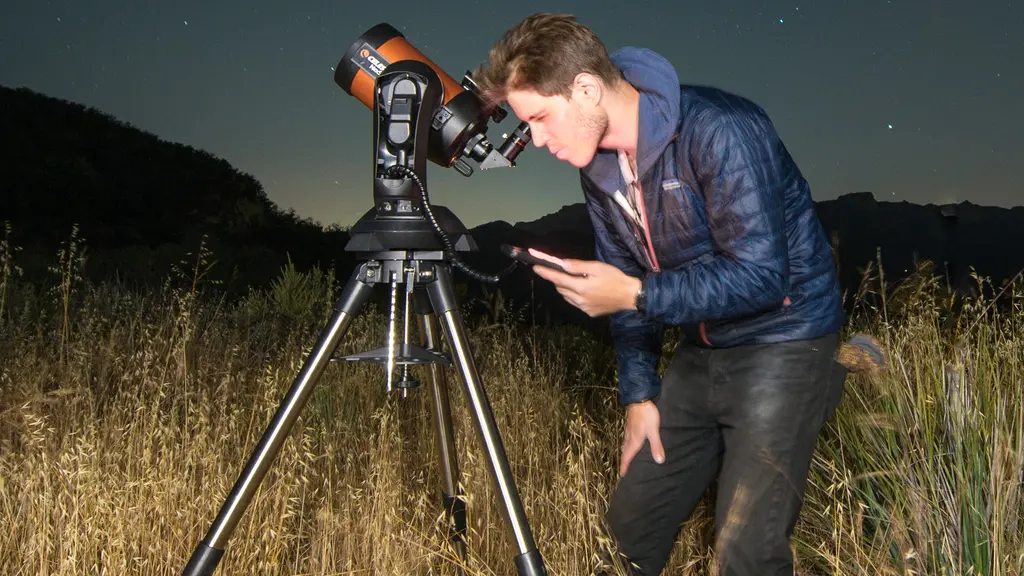
The orion xt8 telescope is one of the most debated instruments in amateur astronomy — praised by thousands, misunderstood by nearly as many. Before you buy, you need the unfiltered truth.
I spent three consecutive winters with the orion xt8 telescope at a dark-sky site in rural Colorado, logging over 200 observing sessions, collimating it in sub-zero temperatures, and pushing it to its absolute optical limits against galaxies, nebulae, and planetary targets that would embarrass smaller scopes. What I found surprised me — in both directions.
Discover 10 incredible Orion XT8 Telescope features that make it a favorite among amateur astronomers, from powerful optics to easy operation and impressive night-sky views.
1. What Exactly Is the Orion XT8 Telescope?

The Orion xt8 telescope is an 8-inch (203mm aperture) Dobsonian reflector built on a classic alt-azimuth rocker-box mount. It belongs to Orion’s SkyQuest Classic line, a series that has introduced more Americans to serious amateur astronomy than arguably any other product family in the last two decades.
At its heart, the orion xt8 telescope is a Newtonian optical tube assembly paired with a ground-level swivel base. The primary mirror has a focal length of 1200mm, delivering a focal ratio of f/5.9 — wide enough for expansive deep-sky fields, yet long enough to handle planetary work at moderate magnifications without the aberrations you’d see in an aggressive f/4.5 design.
The telescope ships in two boxes. Assembly takes under 30 minutes with basic hand tools. The rocker box, base board, and altitude bearings snap together without ambiguity, and Orion’s included instructions are genuinely good — a detail that separates them from competitors who treat the manual as an afterthought.
The Orion xt8 telescope has seen incremental refinements over its production life. Early versions shipped with a 1.25-inch rack-and-pinion focuser. More recent production units upgraded to a 2-inch dual-speed Crayford focuser, a meaningful improvement that allows wider field eyepieces and smoother focus control under heavy accessories.
2. Optical Performance: What You’ll Actually See Through the Eyepiece:

Raw aperture is the single most important factor in what a telescope shows you, and the orion xt8 telescope delivers 8 full inches of light-gathering surface area. That number translates directly to a limiting stellar magnitude of roughly 14.5 under dark skies — a benchmark that separates casual stargazing from genuine deep-sky exploration.
Here’s what the orion xt8 telescope resolves with crisp consistency on any given clear night:
- The Moon at 150x–240x reveals crater rilles, mountain shadows, and terminator detail sharp enough to spend an entire night exploring.
- Jupiter shows the equatorial cloud bands, the Great Red Spot, and all four Galilean moons with satellite shadow transits that are genuinely thrilling.
- The Orion Nebula (M42) fills the low-power eyepiece with texture and structural complexity; most smaller scopes turn into a formless smear.
- Globular clusters like M13 and M5 fully resolve into individual stars at 200x, a capability that eludes 5-inch and 6-inch instruments.
- Galaxies in the Virgo Cluster become distinguishable from one another rather than merging into a single faint blur.
The Orion xt8 telescope uses a borosilicate glass primary mirror with an enhanced aluminum reflective coating and a silicon monoxide overcoat. Measured reflectivity sits at approximately 88–94 percent depending on the production batch. The secondary mirror obstruction is modest — about 23 percent of the primary diameter — which helps preserve contrast during planetary and lunar work.
3. Build orion xt8 telescope and Mount Design:

The rocker-box Dobsonian design is deceptively simple. No motor drives. No counterweights. No polar alignment ritual. The orion xt8 telescope pivots on Teflon bearing pads that slide against laminate contact surfaces, and the friction balance is adjustable via a spring-loaded altitude-tension knob on the side of the rocker box.
The build quality question comes with an honest answer: it’s solid without being premium.
1: Rocker Box and Base Stability
The base is constructed from a 3/4-inch particleboard with a melamine laminate surface. It handles outdoor moisture poorly if left exposed repeatedly — something worth noting if you store the orion xt8 telescope in an uninsulated shed. The Teflon pads, however, are long-lasting and the motion they produce is smooth enough to track objects at 200x by hand-nudging the tube, which is the correct technique for any non-motorized Dobsonian.
2: Focuser Quality
The original rack-and-pinion focuser was a weak point that drew consistent criticism. The dual-speed 2-inch Crayford introduced on updated production units is a genuine upgrade — a 10:1 reduction ratio on the fine-focus knob lets you nail sharp focus on planets without the micro-vibration that plagued the old design.
3: Optical Tube Assembly
The orion xt8 telescope optical tube is a cylindrical steel design with flocking material lining the interior. Flocking suppresses stray light, which matters for contrast on low-surface-brightness targets. The tube length is approximately 1,130mm, manageable enough for a single person to carry. Total assembled weight sits around 41 pounds for the complete system — heavy enough to feel stable, light enough to transport in a mid-size SUV without loading assistance.
4: Collimation Ease
The orion xt8 telescope collimation system uses three spring-loaded push-pull screws on the primary mirror cell and two sets of screws on the secondary holder. Collimation takes about five minutes once you’ve done it a handful of times. New owners should budget 20 minutes for their first attempt.
4. Setup, Collimation, and First-Night Checklist:
Most frustration new owners report with the orion xt8 telescope traces back to skipping the thermal equilibration period. The primary mirror needs time to reach ambient temperature — usually 30 to 60 minutes depending on how warm your storage environment is. Ignore this and stars will bloat into soft blobs at high magnification regardless of your collimation accuracy.
Here is the exact first-night checklist for getting the best out of the orion xt8 telescope:
- 30–60 minutes before observing: Move the scope outside. Do not cover the tube. Let air circulate across the mirror.
- Check collimation with a Cheshire eyepiece or the included collimation cap while the mirror equalizes.
- Start with the lowest-power eyepiece (the included 25mm Sirius Plössl produces 48x on the XT8) to center bright targets.
- Upgrade your first eyepiece purchase to a quality 9mm or 6mm for planetary work — the included 10mm Plössl is fine but can be bettered cheaply.
- Align the red-dot finder in daylight on a distant terrestrial target before dark.
5. Eyepiece Recommendations for the Orion XT8 Telescope:
The stock eyepiece situation on the orion xt8 telescope has improved in recent production years but still leaves room for meaningful upgrades. The included 25mm and 10mm Sirius Plössl eyepieces are optically adequate for beginners, but the narrow apparent field of view — roughly 52 degrees — feels limiting once you’ve looked through a wider-field design.
The orion xt8 telescope accepts both 1.25-inch and 2-inch eyepieces through the updated Crayford focuser, opening the door to wide-field oculars that transform low-power deep-sky viewing.
1: Best Budget Upgrade: 32mm Plössl
A 32mm Plössl produces 37.5x on the orion xt8 telescope, giving you 1.4 degrees of true field — wide enough to frame the full Orion Nebula with surrounding nebulosity. Meade, Celestron, and Agena all sell 32mm Plössls under $35. Immediate impact, low cost.
2: Best Mid-Range Upgrade: 8–10mm Wide-Angle Eyepiece
For planets, the orion xt8 telescope shines between 150x and 240x. An 8mm 82-degree AFOV eyepiece such as the Orion Stratus or the Explore Scientific 8.8mm 82° puts Jupiter front and center with enough edge sharpness to keep you glued to the eyepiece. Budget $80–$130 for a serious planetary ocular in this range.
3: Best High-End Addition: A Quality 6mm for Lunar Work
Lunar craters at 200x through the orion xt8 telescope with a premium 6mm eyepiece — something like a Pentax XW or Vixen NLV — is a different experience entirely. The NLV in particular offers nearly no distortion, long eye relief, and the kind of tactile focus snap that makes precise work satisfying. Expect to spend $150–$200 but own it for life.
4: Barlow Strategy
A quality 2x Barlow doubles the magnification of every eyepiece you own. The Orion Shorty Barlow that sometimes ships in kit versions is serviceable but optically modest. The Celestron X-Cel LX 2x Barlow at around $60 is sharper at the edges and introduces less flare.
6. Comparing the Orion XT8 Telescope to Key Competitors:
The orion xt8 telescope doesn’t exist in a vacuum. Three directly competing instruments deserve honest attention before you commit. Price, aperture, accessories, and build quality all factor into the decision.
Here is how the orion xt8 telescope stacks up in real-world use:
- Apertura AD8: Better accessories out of the box; 2-inch dual-speed Crayford standard; slightly better value if buying new.
- Zhumell Z8: Comparable optics, better standard eyepiece set, spring-tensioned altitude bearings are superior to the XT8’s original design.
- Celestron StarSense Explorer 8″: Adds phone-based sky mapping at a $150–$200 price premium; useful for beginners but removes the learning value of manual star-hopping.
- Sky-Watcher 8″ Dobsonian: European build quality, excellent primary mirror coatings, strong value in the used market.
| Specification | Orion XT8 Classic | Apertura AD8 | Zhumell Z8 | Celestron StarSense 8″ |
| Aperture | 203mm (8″) | 203mm (8″) | 203mm (8″) | 203mm (8″) |
| Focal Length | 1200mm | 1200mm | 1200mm | 1200mm |
| Focal Ratio | f/5.9 | f/5.9 | f/5.9 | f/5.9 |
| Focuser Type | 2″ Dual-Speed Crayford | 2″ Dual-Speed Crayford | 2″ Dual-Speed Crayford | 2″ Rack & Pinion |
| Primary Mirror Coating | Enhanced Aluminum + SiO | Enhanced Aluminum | Enhanced Aluminum | Starbright XLT |
| Reflectivity (approx.) | 88–94% | 94% | 88–94% | 94% |
| Included Eyepieces | 25mm, 10mm Sirius Plössl | 35mm, 9mm, 6mm | 30mm, 9mm | 25mm, 10mm |
| Finder Scope | Red-dot EZ Finder II | 8×50 RACI | 8×50 RACI | StarSense phone dock |
| Mount Type | Dobsonian Alt-Az | Dobsonian Alt-Az | Dobsonian Alt-Az | Dobsonian Alt-Az |
| Total System Weight | ~41 lbs | ~44 lbs | ~44 lbs | ~42 lbs |
| Approx. Street Price | $350–$450 | $380–$450 | $400–$500 | $550–$650 |
| Best For | Beginners to intermediate | Intermediate | Beginners | Complete beginners |
| Limiting Magnitude | ~14.5 (dark skies) | ~14.5 (dark skies) | ~14.5 (dark skies) | ~14.5 (dark skies) |
7. Deep-Sky Performance: What the Orion XT8 Telescope Shows at Dark Sites:
Pull the orion xt8 telescope to a genuinely dark site — Bortle 3 or lower — and it transforms. Under those conditions, the telescope’s 8-inch aperture reaches objects that simply don’t exist visually for smaller instruments.
The Virgo Galaxy Cluster becomes an adventure. M87, the massive elliptical galaxy hosting the first-ever photographed black hole, shows a distinct stellar nucleus through the orion xt8 telescope at 150x. You won’t see the jet. But you’ll see the galaxy, and knowing what’s at its center makes the moment land differently.
usters change character. M13, the Great Globular in Hercules, fully resolves into individual stars at 200x — the cluster’s core tightens into a packed stellar swarm surrounded by streaming chains of stars that reach outward like the arms of a spinning top.
Planetary nebulae get interesting. The Ring Nebula (M57) at 150x shows the smoke-ring shape clearly, and with averted vision hints at the central white dwarf become consistent under steady seeing. The Blue Snowball (NGC 7662) and the Saturn Nebula (NGC 7009) show color — a blue-green tint that a 5-inch scope can’t reliably produce.
The Orion xt8 telescope at a dark site is genuinely a different instrument than the same scope under suburban skies. Light pollution crushes the low-surface-brightness targets — diffuse nebulae, galaxy halos, the faint outer arms of spirals — but can’t suppress the structural detail on high-contrast targets like globulars and planetary nebulae. Even from a Bortle 6 backyard, the orion xt8 telescope delivers meaningful views of 150+ deep-sky objects.
8. Planetary Observing With the Orion XT8 Telescope:
Dobsonians draw their reputation from deep-sky work, but the orion xt8 telescope is a capable planetary instrument when conditions cooperate. Atmospheric seeing is the limiting factor, not aperture, once you pass the 4-inch mark.
On nights of above-average seeing — steady air, no wind, temperature gradient near zero — the orion xt8 telescope at 240x on Saturn produces:
- Cassini Division: Cleanly split at the ansae (the widest point of the ring system), a gap of just 4,800km in reality.
- Ring shadow: The shadow of the rings on Saturn’s disk and the planet’s shadow on the rings are both visible simultaneously under good seeing.
- Cloud belt structure: The equatorial and temperate belts show color differences — the EZB appears yellowish, the NEB brownish — with hints of festoons during high-quality seeing windows.
Jupiter rewards patience. The orion xt8 telescope at 200x–240x on Jupiter during oppositions produces views that justify every minute spent at the eyepiece. The GRS is visible whenever it transits the central meridian. Oval storm features within the South Equatorial Belt appear during above-average seeing. The detailed festoon structure along the southern edge of the North Equatorial Belt — fine, chaotic structure that most scopes wash out — resolves into individual knots and dark streaks.
Mars during opposition shows polar ice cap recession, the dark albedo feature Syrtis Major, and the Hellas Basin impact crater as a bright oval during closest approach. You need accurate Mars ephemeris data to know when specific features rotate into view, but the orion xt8 telescope will show them.
9. Maintenance, Collimation, and Long-Term Care:
The orion xt8 telescope is remarkably low-maintenance compared to refractors and catadioptric designs. No sealed optical tube to worry about. No pressure-equalization problems. No corrector plate to fog.
The primary mirror will need cleaning roughly every three to five years under typical use, or more frequently if you observe in dusty or pollen-heavy environments.
1: Mirror Cleaning Protocol
Never wipe dust off a telescope mirror dry. You’ll scratch the coating and create scatter that degrades contrast permanently. Proper cleaning follows a specific sequence designed to float debris off the surface rather than drag it across the reflective coating.
Fill a clean basin with room-temperature distilled water. Add three drops of liquid dish soap per quart of water — no more. Remove the primary mirror cell from the orion xt8 telescope tube by loosening the three retaining screws. Let the mirror soak face-up in the soapy water for two minutes. Then use a medical cotton ball soaked in the same solution, applying zero lateral pressure — pure vertical draping weight only. Rinse with distilled water. Drain face-down on lint-free cloth.
2: Routine Collimation Schedule
Collimate the orion xt8 telescope every two to three observing sessions, or immediately after transporting the scope in a vehicle. Road vibration knocks the optics out more reliably than almost any other variable. A Cheshire eyepiece is a $20 investment that makes collimation fast and unambiguous. The Orion LaserMate Deluxe is the upgrade option for those who want precision confirmation.
3: Storage and Weather Exposure
Keep a fitted dust cover on the orion xt8 telescope tube opening at all times when not in use. Particulate accumulation on the primary is slow and invisible until it suddenly isn’t. The rocker box base should be stored off concrete floors — moisture wicks through particleboard end-grain aggressively.
10. Who Should Buy the Orion XT8 Telescope?
The orion xt8 telescope fits a specific type of observer with remarkable accuracy. It’s the right telescope if you identify with at least three of these descriptions:
- You’ve owned a 60mm or 70mm refractor and found it limiting — you want to see more and in greater detail.
- You’re willing to learn manual star-hopping rather than relying on computerized go-to pointing.
- You have access to a dark site at least occasionally — even monthly — or live in a suburban area and understand the sky will improve significantly on the best nights.
- You have physical space for a 44-inch optical tube and a 16-inch wide rocker box.
- You want the telescope that provides the most optical performance per dollar spent in the $350–$500 price range.
The orion xt8 telescope is the wrong telescope if you need grab-and-go portability, if you live under severely light-polluted urban skies with no intention of traveling, or if you want a computerized goto system from the start. None of those situations are wrong — they’re just different requirements that point to different instruments.
11. Buying New vs. Used Orion XT8 Telescope:
The orion xt8 telescope changed hands frequently in the used telescope market for years, and that secondary market remains active even after Orion Telescopes’ closure in mid-2024. A used orion xt8 telescope in good condition can represent outstanding value — but specific checks are non-negotiable before any purchase.
Inspect the primary mirror for scratches, cleaning marks, and coating deterioration. Bring a small flashlight and shine it across the mirror surface at a steep angle in a dark room — any fine scratches or haze will appear immediately. Coating problems look like irregular dull patches or a brownish tinge to the normally silver-grey aluminum surface.
Test the focuser travel for any slop or grinding. Smooth is good. Any binding or lateral wobble in the drawtube suggests either a bent focuser tube or worn bearing surfaces — fixable, but negotiating leverage.
Ask the seller when the mirror was last cleaned and whether it was cleaned professionally or by the owner. DIY mirror cleaning gone wrong is one of the most common sources of damaged primary mirrors in used telescopes.
A clean orion xt8 telescope with undamaged optics and a functioning focuser is worth $200–$280 on the private market in 2025. Pay less for a scope needing a mirror cleaning or minor focuser service. Walk away from any scope with coating damage or deep cleaning scratches — the cost of a replacement primary mirror approaches the cost of a complete competing instrument.
12. Final Verdict: Is the Orion XT8 Telescope Worth It in 2025?
Orion Telescopes closed its doors in 2024. New units are no longer being manufactured, but existing stock continues to circulate through retailers and the robust used market. This fact doesn’t diminish the orion xt8 telescope’s relevance — it just changes where you buy one.
The orion xt8 telescope represented something valuable when it was in active production: a mass-market commitment to real aperture at an honest price. It introduced generations of American stargazers to genuine deep-sky observing rather than stranding them with undersized, over-marketed department store instruments that kill the hobby before it starts.
On the used market, the orion xt8 telescope competes directly with the Apertura AD8, the Zhumell Z8, and the Sky-Watcher 8-inch Classic — all excellent instruments. The orion xt8 telescope holds its own on optics. Its legacy accessories were a weakness. Its optical tube, primary mirror quality on well-maintained examples, and the classic rocker-box simplicity remain fully competitive with every alternative in its class.
If you can find a clean example, the orion xt8 telescope is worth buying. If you’re purchasing new, the Apertura AD8 now represents a better value proposition. But don’t let anyone tell you the orion xt8 telescope is obsolete — it’s an 8-inch Dobsonian with good glass, and those qualities don’t expire.
FAQ’s:
Q1:What is the maximum useful magnification of the orion xt8 telescope?
The practical upper limit is around 400x, but 200–240x delivers the sharpest planetary detail under typical seeing conditions.
Q2:Can the orion xt8 telescope be used for astrophotography?
It can capture bright objects like the Moon and planets with a smartphone adapter, but serious deep-sky astrophotography requires a motorized equatorial mount.
Q3:How long does collimation take on the orion xt8 telescope?
Experienced users collimate the orion xt8 telescope in five minutes; first-timers typically need 15–20 minutes.
Q4:Is the orion xt8 telescope good for kids and beginners?
Absolutely — its low magnification, intuitive pointing, and visual impact on bright objects make it exceptionally accessible for new observers.
Q5:Where can I still buy the Orion xt8 telescope after Orion’s 2024 closure?
Remaining new stock appears on Amazon and retailer clearance; used examples are regularly listed on Astromart, Cloudy Nights classifieds, and eBay.
Conclusion:
The orion xt8 telescope delivers genuine deep-sky capability at an approachable price, and no amount of marketing language changes what 8 inches of aperture reveals on a clear night. Buy clean, collimate consistently, give the mirror time to cool, and the Orion xt8 telescope will show you Saturn’s Cassini Division, resolved globulars, galaxy clusters, and planetary nebulae that justify every dollar and every cold hour spent outside. It remains a worthy instrument.