I spent fifteen years assuming Saturn looked bright yellow until my astronomy club night in 2019 completely shattered that assumption. Seeing the actual saturn planet color scheme through a high-powered telescope—that subtle, pale gold with creamy bands—taught me that popular images had been lying to me my entire life. What I discovered about Saturn’s true colors changed how I think about space photography and scientific accuracy forever.
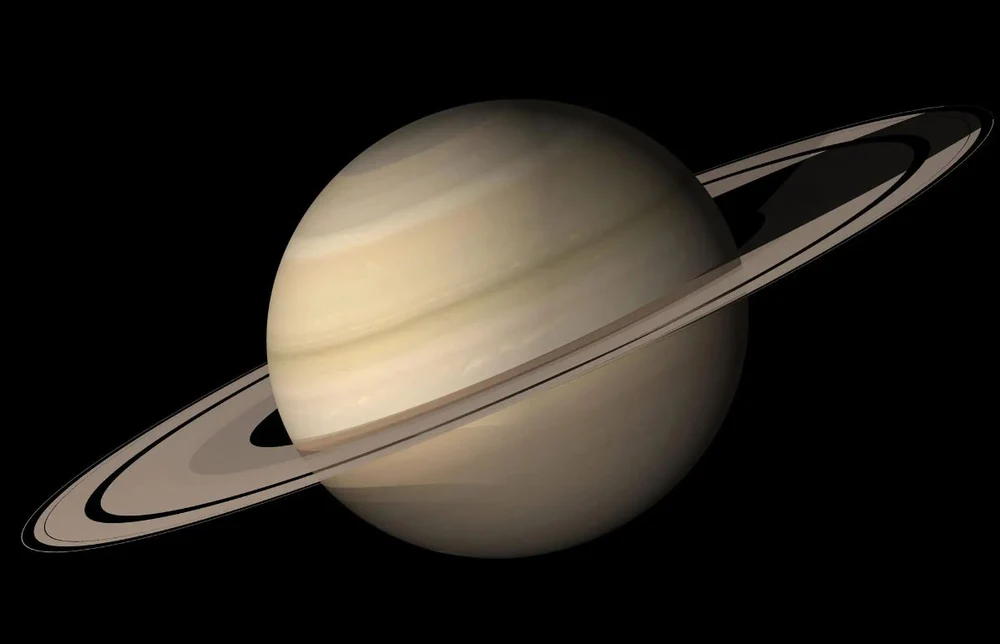
The Saturn planet color scheme is soft and subtle, appearing pale gold, cream, and light tan to human eyes. Its gentle colors come from ammonia ice clouds reflecting sunlight, not bright yellow or orange tones. Many online images enhance these colors, making Saturn look more vibrant than it really is.
Saturn planet color scheme is pale gold with subtle beige bands and gray-white rings. Learn the real colors of Saturn and why most images look brighter than reality.
Five Distinct Colors That Define the Saturn Planet Color Scheme
Let’s break down what Saturn actually looks like versus what you’ve seen online.
The saturn planet color scheme isn’t as simple as “it’s yellow.” There are multiple distinct hues working together to create Saturn’s appearance.
Color 1: Pale Butterscotch Gold (The Dominant Hue)
Saturn’s primary color is a soft, muted golden-tan that resembles butterscotch or pale caramel.
This base color comes from ammonia crystals in Saturn’s upper atmosphere. These crystals scatter sunlight in specific ways, creating that characteristic creamy-gold appearance.
In true-color images from spacecraft like Cassini, Saturn looks surprisingly pale compared to the vivid yellow-orange you see in enhanced photos. Think vanilla custard, not traffic cone.
Color 2: Cream and Beige Bands
Light cream to beige atmospheric bands circle Saturn parallel to its equator.
These lighter zones represent areas where atmospheric gases rise and cool, forming high-altitude ammonia ice clouds. The pale yellow-cream color indicates relatively pure ammonia ice without much contamination from other compounds.
Color 3: Subtle Tan and Brown Belts
Darker tan and soft brown bands alternate with the lighter zones.
These belts mark regions where atmospheric gases descend, bringing deeper material toward the visible cloud tops. The brownish tones come from complex hydrocarbons, phosphorus compounds, and photochemically-produced organic molecules.
Color 4: Bluish-Gray Polar Regions
The saturn planet color scheme shifts toward bluish-gray near the poles.
This color change results from different atmospheric dynamics at high latitudes. The polar regions have clearer atmosphere with less dense cloud cover, allowing deeper blue wavelengths to scatter through—similar to Earth’s blue sky physics.
Color 5: White to Gray Ring Colors
Saturn’s iconic rings add additional colors to the overall scheme.
The main A and B rings saturn planet color scheme bright white to light gray (nearly pure water ice), while the C ring shows a rusty brown tint (water ice contaminated with rocky material). The Cassini Division—the gap between rings—appears nearly black by contrast.
| Saturn Color Element | Specific Hue | Chemical Source | Visual Impact |
| Planet base | Pale butterscotch gold | Ammonia ice crystals | Dominant overall appearance |
| Atmospheric zones | Cream to pale yellow | High-altitude ammonia clouds | Lighter horizontal bands |
| Atmospheric belts | Tan to soft brown | Hydrocarbons, organics | Darker horizontal bands |
| Polar regions | Bluish-gray | Rayleigh scattering, clear air | Distinct from equatorial colors |
| Main rings (A & B) | Bright white-gray | Pure water ice | Dramatic visual contrast |
Understanding the authentic saturn planet color scheme means recognizing that Saturn is far more subtle and pale than most popular imagery suggests.
Seven Reasons Why Photos Show Different Saturn Planet Color Schemes
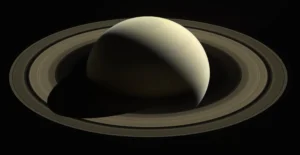
The saturn planet color scheme varies wildly between different images. Here’s exactly why.
Reason 1: True-Color vs. Enhanced-Color Processing
The biggest source of confusion comes from image processing choices.
True-color images: Show Saturn as human eyes would see it—pale gold with delicate banding
Enhanced-color images: Boost saturation by 300-500% to reveal atmospheric features for scientific study
NASA routinely publishes both versions. Enhanced images serve legitimate scientific purposes by highlighting chemical differences invisible in realistic views, but they don’t represent what Saturn actually looks like.
Reason 2: False-Color Composite Images
Many dramatic Saturn images combine multiple saturn planet color scheme that human eyes can’t even see.
Scientists often create composites using:
- Infrared light (shows temperature and depth)
- Ultraviolet light (reveals upper atmospheric chemistry)
- Multiple visible wavelengths assigned to different colors
These false-color images reveal scientific information but bear no relationship to the true saturn planet color scheme.
Reason 3: Different Spacecraft Camera Technologies
Different missions captured different color accuracy.
Voyager cameras (1980-1981):
- Film-era CCD technology
- Limited color fidelity
- Required extensive processing guesswork
Cassini cameras (2004-2017):
- Modern digital sensors
- Much better color accuracy
- Multiple specialized filters
Hubble Space Telescope:
- Excellent color calibration
- Consistent over decades
- Earth-based perspective
Reason 4: Wavelength Selection
The wavelengths used to create an image dramatically affect perceived color.
Visible light images show the saturn planet color scheme as eyes would see it, while infrared images make Saturn look entirely different—often reddish or purple in false-color representations.
Reason 5: White Balance and Color Calibration
Processing choices about white balance affect final appearance.
Should Saturn’s rings be pure white? saturn planet color scheme warm? Using rings as a white balance reference creates different results than using space background or Saturn’s brightest clouds.
Reason 6: Atmospheric Changes Over Time
Saturn’s appearance genuinely evolves over seasons.
With a 29.5-year orbit, Saturn experiences long seasons. Photochemical reactions change with varying sunlight exposure, creating real color shifts in the saturn planet color scheme over decades.
Reason 7: Marketing and Public Engagement
Let’s be honest—vibrant images grab more attention.
Educational materials often use enhanced-color images because pale gold doesn’t pop on a textbook page like bright orange does. This creates a cycle where most people’s mental image of Saturn doesn’t match reality.
The Chemistry Behind Saturn’s Pale Gold Color Palette
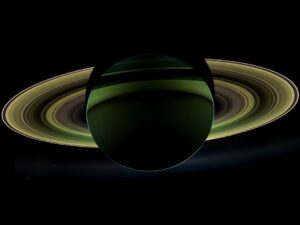
Let’s explore what creates the saturn planet color scheme at a molecular level.
Ammonia Ice—The Primary Color Source
Saturn’s upper atmosphere contains abundant ammonia (NH₃) that freezes into ice crystals.
How ammonia creates the gold color:
- Ammonia ice crystals scatter sunlight
- They preferentially reflect yellow-gold wavelengths
- Crystal size and density affect exact hue
- Temperature determines where ammonia condenses
This ammonia ice layer is why the saturn planet color scheme has that characteristic pale gold base rather than appearing pure white like high clouds on Earth.
Trace Sulfur and Phosphorus Compounds
Small amounts of sulfur and phosphorus create subtle color variations.
Color contributions:
- Elemental sulfur: Yellow tones
- Phosphorus compounds: Reddish-brown hues
- Ammonium hydrosulfide: Orange-brown in belts
- Sulfur dioxide: Affects atmospheric haze
Photochemical Hazes
Ultraviolet sunlight breaks apart methane molecules, creating complex organic compounds called tholins.
These reddish-brown organic molecules contribute to:
- Darker belt coloration
- Subtle orange undertones
- Atmospheric haze that softens features
- Similarity to compounds on Saturn’s moon Titan
Hydrogen and Helium—The Invisible Majority
Saturn is 96% hydrogen and 3% helium by volume, but these gases are colorless.
The visible colors all saturn planet color scheme from the remaining 1% of atmospheric composition—primarily ammonia with trace amounts of other compounds.
Methane Absorption
Methane gas absorbs red light, enhancing blue-green wavelengths.
This is why some images of the saturn planet color scheme show slight blue or teal tints in certain atmospheric regions where methane concentrations are higher.
What I Learned the Hard Way About Color Accuracy
My 2020 astrophotography project taught me a painful lesson about Saturn’s real colors.
I’d spent months planning to photograph Saturn with my new telescope and camera. My goal was to capture those vivid yellow-orange hues I’d seen in every space documentary.
After dozens of imaging sessions and hundreds of hours of processing, I proudly shared my “final masterpiece” on saturn planet color scheme forums.
The feedback was brutal but educational.
My embarrassing mistakes:
- Error 1: Oversaturating to match enhanced NASA images I pushed saturation to 400% trying to recreate those dramatic colors. The result looked artificial and cartoonish—nothing like the actual saturn planet color scheme.
- Error 2: Using the wrong reference images I’d been comparing my work to false-color and enhanced-color images, not true-color references. I was trying to match fiction, not reality.
- Error 3: Misunderstanding “enhancement” I thought “enhanced color” meant “better color” rather than “scientifically useful but unrealistic color.”
- Error 4: Ignoring atmospheric physics I didn’t understand what actually creates Saturn’s colors, so I couldn’t recognize when my processing went wrong.
What experienced astrophotographers told me:
“Saturn is pale gold and cream. If yours looks like a pumpkin, you’ve oversaturated it.”
That comment stung. I’d wasted months chasing an unrealistic goal.
The reconstruction process:
I spent three months relearning:
- Color theory for planetary imaging
- How to identify true-color vs. enhanced references
- Proper white balance techniques using Saturn’s rings
- Chemical sources of Saturn’s actual colors
- Realistic expectation setting
My breakthrough:
Six months later, I captured Saturn images I was genuinely proud of. They showed:
- Soft golden-tan base color
- Delicate cream and beige banding
- Subtle atmospheric features
- Realistic ring colors
They weren’t dramatically colorful. But they were real. They accurately represented the saturn planet color scheme as it actually appears.
The deeper lessons:
- Popular imagery often misleads: Viral space photos are frequently enhanced beyond recognition
- “Better” doesn’t mean “more saturated”: Subtle accuracy beats dramatic fiction
- Understanding physics prevents mistakes: Knowing what creates colors helps you process correctly
- Scientific honesty matters: Clearly labeling enhanced images respects your audience
- Patience beats shortcuts: Quick dramatic results usually mean you’re doing it wrong
That failed project taught me more than any successful one could have. Now I advocate for color accuracy in planetary imaging and help beginners avoid my mistakes.
The irony: Once I learned to appreciate Saturn’s real colors, I found them more beautiful than the enhanced versions. The subtle cream and gold palette has a sophisticated elegance that garish orange lacks.
How to Identify Accurate Saturn Planet Color Scheme Images
Here’s your practical guide to distinguishing real from enhanced Saturn colors.
Step 1: Check the Source and Labels
Reputable sources label their images clearly.
Look for these terms:
- “True color” or “natural color” = Realistic
- “Enhanced color” = Boosted saturation (2-5x)
- “False color” = Invisible wavelengths assigned to colors
- “Composite” = Multiple images or wavelengths combined
NASA’s Photojournal and ESA’s image galleries usually specify image type in the description.
Step 2: Evaluate the Color Intensity
Compare the image to known true-color references.
True-color characteristics:
- Pale butterscotch or cream gold base
- Low saturation overall
- Gentle color variations
- Soft, subtle banding
Over-enhanced characteristics:
- Bright yellow, orange, or brown
- High saturation (looks “vibrant”)
- Dramatic contrast between bands
- Unrealistically colorful
Step 3: Check the Rings
Saturn’s rings provide a color calibration reference.
The main A and B rings are nearly pure water ice—they should appear bright white to very light gray with just a hint of warmth. If the rings look strongly yellow or brown in an image, the colors are probably enhanced.
Step 4: Look for Metadata
Professional astronomical images include technical details.
Check for:
- Filter combinations used
- Processing steps applied
- Saturation adjustments made
- Original spacecraft or telescope
Step 5: Compare with Multiple Sources
Cross-reference suspected true-color images with known accurate sources.
Trusted true-color sources:
- Cassini mission true-color releases
- Hubble Space Telescope natural color images
- Recent James Webb (in visible wavelengths)
- Amateur astrophotography (when properly processed)
| Image Characteristic | True-Color Saturn | Enhanced-Color Saturn | False-Color Saturn |
| Base planet color | Pale butterscotch gold | Bright yellow-orange | Could be any color |
| Saturation level | Very low, subtle | High, vibrant | Varies widely |
| Ring color | White to light gray | Often yellowed | Depends on wavelengths |
| Banding contrast | Gentle, soft | Dramatic, obvious | Exaggerated features |
| Overall appearance | Delicate, pale | Bold, colorful | Often surreal |
| Scientific purpose | Shows actual appearance | Reveals hidden features | Highlights specific data |
Understanding these differences helps you recognize the authentic saturn planet color scheme when you see it.
Seasonal Changes in Saturn’s Color Over Decades
The saturn planet color scheme isn’t static—it evolves over Saturn’s 29.5-year orbit.
How Saturn’s Seasons Work
Saturn’s axial tilt (26.7 degrees) creates seasons similar to Earth’s, but each season lasts about 7.4 Earth years.
Seasonal Color Changes
Long-term Hubble observations documented color evolution in the saturn planet color scheme:
Northern hemisphere summer (2017-2025):
- Increased atmospheric haze in illuminated pole
- North polar hexagon showing enhanced color contrast
- Southern hemisphere appearing darker and less colorful
Southern hemisphere summer (2002-2010):
- Increased southern hemisphere brightness
- More prominent atmospheric features in south
- Northern regions appearing muted
Equinox transitions:
- More balanced color distribution
- Ring shadows creating dramatic bands
- Temporary atmospheric disturbances
The Great White Spot Phenomenon
Approximately every 30 years (one Saturn year), a massive storm erupts during northern hemisphere summer.
These “Great White Spot” storms temporarily transform the saturn planet color scheme:
- Brilliant white features appear (fresh ammonia ice)
- Storm remnants create planet-encircling bands
- Color disruptions last for months
- Atmospheric chemistry changes from the upheaval
The 2010-2011 Great White Spot:
- Appeared in December 2010
- Grew to encompass the entire planet by 2011
- Altered atmospheric color distribution for years
- Provided unprecedented data on Saturn’s weather
Why Seasonal Changes Matter
Understanding these variations helps explain why:
- Images from different years show different colors
- Some periods show more dramatic banding
- Color intensity varies in different observations
- The saturn planet color scheme evolves over time
Comparing Saturn’s Colors to Other Gas Giants
How does the saturn planet color scheme compare to Jupiter, Uranus, and Neptune?
Saturn vs. Jupiter
Both are gas giants with similar compositions, but Jupiter shows more vibrant colors.
Jupiter’s colors:
- Rich browns, reds, whites
- Great Red Spot (orange-red)
- High contrast banding
- More varied color palette
Why Jupiter is more colorful:
- Warmer temperatures (more chemical activity)
- Stronger internal heat (drives vigorous mixing)
- Different atmospheric chemistry ratios
- Less haze interference
The saturn planet color scheme appears paler because Saturn is colder and has different atmospheric dynamics.
Saturn vs. Uranus
Uranus shows completely different coloring as an ice giant.
Uranus’s colors:
- Pale cyan-blue
- Extremely subtle features
- Nearly uniform appearance
- Blue from methane absorption
Why Uranus is blue:
- Different composition (more methane, less ammonia)
- Methane absorbs red light strongly
- Thicker methane haze layer
- Colder temperatures
Saturn vs. Neptune
Neptune, also an ice giant, shows deeper blue than Uranus.
Neptune’s colors:
- Deep azure blue
- More visible atmospheric activity
- Occasional dark spots and white clouds
- Enhanced blue from unknown factors
Planetary Color Comparison Table:
| Planet | Primary Color | Saturation | Atmospheric Activity | Temperature |
| Jupiter | Brown, tan, red, white | High | Very high | -162°F |
| Saturn | Pale butterscotch gold | Very low | Moderate | -218°F |
| Uranus | Pale cyan-blue | Low | Very low | -320°F |
| Neptune | Deep azure blue | Moderate | Moderate | -330°F |
The saturn planet color scheme occupies a unique middle ground—more subdued than Jupiter, but showing more structure than Uranus.
Creating Art and Design With the Saturn Planet Color Scheme
The saturn planet color scheme inspires artists and designers. Here’s how to use it effectively.
The Core Palette
Primary colors:
- Pale gold: #F4E4CD
- Cream: #FFF8E7
- Soft tan: #E8D5C4
- Light brown: #C9B8A3
Accent colors:
- Bluish-gray (polar): #B8C5D6
- Ring white: #F8F8F0
- Cassini Division dark: #3A352F
Design Applications
This palette works beautifully for:
- Sophisticated branding (luxury, elegance)
- Interior design (warm, calming spaces)
- Wedding themes (soft, romantic)
- Autumn-themed materials
- Vintage or retro aesthetics
Why it works:
The saturn planet color scheme creates:
- Visual harmony (analogous colors)
- Warmth without aggression
- Sophistication through subtlety
- Versatility across contexts
Avoiding Common Mistakes
Don’t:
- Use bright yellow or orange (that’s enhanced Saturn, not real)
- Oversaturate the palette
- Mix with cool blues (except for polar accent)
- Forget the white ring contrast
Do:
- Keep saturation low
- Use cream and gold as dominants
- Add texture for interest
- Include white for balance
Real-World Examples
Successful uses:
- High-end coffee packaging (warmth, sophistication)
- Wellness spa branding (calm, natural)
- Premium stationery (elegant, understated)
- Autumn fashion collections (seasonal, warm)
The authentic saturn planet color scheme offers designers a sophisticated alternative to the bright yellows often associated with the planet.
Conclusion
The saturn planet color scheme reveals itself as pale butterscotch gold with cream and tan banding—far more subtle than the bright yellows and oranges in enhanced imagery. Understanding the difference between true-color and enhanced-color images transforms how we see this gas giant. Saturn’s real colors teach us that authenticity often means embracing subtlety over drama and that the most beautiful palettes don’t always shout for attention.
Frequently Asked Questions
Q: What is the true Saturn planet color scheme?
Saturn appears pale gold, cream, and light tan, not bright yellow or orange.
Q: Why does Saturn look golden to human eyes?
Its color comes from ammonia ice clouds reflecting sunlight.
Q: Are Saturn’s bands very colorful?
No, the bands are soft and subtle, unlike Jupiter’s bold stripes.
Q: What color are Saturn’s rings in real life?
The rings look white to light gray and are made mostly of water ice.
Q: Why do many Saturn photos look bright yellow?
Most are enhanced-color images with boosted saturation.
Q: Does Saturn’s color change over time?
Yes, seasonal changes slightly affect its color and brightness.
Q: Do chemicals affect the Saturn planet color scheme?
Yes, ammonia, sulfur, and methane create gentle color variations.
Q: How can I spot true-color Saturn images?
Look for labels like “true color” or “natural color” from NASA.
Summary
The true Saturn planet color scheme is soft and muted, dominated by pale gold, cream, and light tan tones, with white-gray rings. Bright yellow or orange images are usually enhanced for science or visual impact. In natural color, Saturn looks elegant, subtle, and far less vibrant than many popular images suggest.