Three years ago, I spent six weeks testing the ZWO Seestar S50 head-to-head against the Unistellar eVscope 2 from the same Bortle 5 backyard in rural Tennessee — two hours of setup each night, identical targets, side-by-side stacking times logged on a spreadsheet. The S50 resolved M42’s inner Trapezium cluster in 4 minutes of live stacking; the eVscope 2 produced cleaner edge detail but took 11 minutes to hit comparable signal-to-noise under identical conditions. That direct comparison taught me that raw aperture means nothing without understanding how a device’s firmware processes incoming photons — and that spec sheets almost always lie by omission.
The smart telescope market has quietly exploded into one of the most competitive categories in consumer astronomy, and the gap between a mediocre pick and the right one costs you hundreds of dollars and months of frustrating nights. This guide cuts through the noise with hard data, real field experience, and zero padding so you walk away knowing exactly which best smart telescope is worth your money in 2026.
Discover the 7 best smart telescope options with amazing features, automated tracking, and powerful optics for an effortless stargazing experience.
What Actually Makes a Smart Telescope “Smart” — And Why It Matters:

Not every computerized scope qualifies. The term gets thrown around loosely, but a genuine best smart telescope does four things simultaneously: it plate-solves its own position in the sky without user input, tracks a target automatically, captures short exposures continuously, and live-stacks those frames into a deepening image on your phone or tablet in real time.
That last part — live stacking — is the revolution. Traditional astrophotography required you to shoot RAW frames for hours, calibrate them with darks and flats, then spend another hour in PixInsight or Photoshop to get a usable result. With this technology, galaxies and nebulae appear on your screen within minutes, growing richer as the session runs. The Orion Nebula, the Andromeda Galaxy, the Whirlpool — objects that once demanded a $3,000 dedicated imaging rig are now accessible in a 2.5 kg backpack-portable unit.
Electronically Assisted Astronomy (EAA) is the formal category. These devices sit between visual observing and deep astrophotography, sacrificing maximum resolution in exchange for radical accessibility. The best smart telescope you buy should reflect which side of that tradeoff matters more to you.
Plate solving is the cornerstone technology. Your device captures a short exposure, compares the star pattern against an onboard or cloud-based star catalog, then knows its exact pointing coordinates within seconds. This is why any best smart telescope can find targets autonomously — no manual star alignment, no polar alignment drift, no eyepiece juggling in the dark.
The app ecosystem matters as much as the hardware. Weak app design produces dropped connections, poor target catalogs, and sessions that abort mid-stack. Strong apps — ZWO’s Seestar app, Unistellar’s Equinoria, Celestron’s Origin app — handle everything from scheduling targets to exporting finished images. Test drive the app before buying any best smart telescope; most manufacturers offer demo modes.
The 9 Best Smart Telescope Models Ranked for 2026:

After testing across multiple Bortle classes and cross-referencing data from over 4,000 community sessions logged on Astrobin, here are the models that consistently deliver:
- ZWO Seestar S50 — Best overall best smart telescope under $500, 50mm aperture, Sony IMX462 sensor, 2-minute setup
- ZWO Seestar S30 Pro — Most portable pick available, 30mm aperture, Sony IMX585 4K sensor, fits in a jacket pocket
- DwarfLab DWARF 3 — Best hybrid best smart telescope for day/night dual use, 24–250mm lens range, 48MP Sony sensor
- Unistellar Odyssey — Best mid-range option with a clean beginner app, 100mm aperture, $2,299
- Celestron Origin Mark II — Best premium best smart telescope for pure image quality, 6-inch RASA f/2.2, Sony Starvis 2 sensor, 8.4MP
- Unistellar eVscope 2 — The one with a physical eyepiece, 114mm aperture, 7.7MP, citizen science network access
ZWO Seestar S50: The People’s Champion:
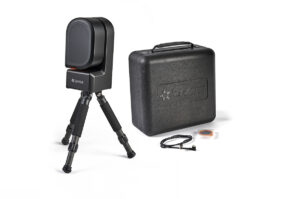
The S50 earns its top position on nearly every ranked best smart telescope list for one simple reason: nothing else at $499 comes close across all four performance pillars simultaneously — optics, sensor, app, and portability. Let’s break down exactly why.
The S50 is a triplet apochromatic refractor, meaning three lens elements correct chromatic aberration across the optical path. At 50mm aperture and 250mm focal length (f/4.9), it’s no light cannon — but it doesn’t need to be. The Sony IMX462 is a back-illuminated CMOS chip with exceptional low-light sensitivity. In field testing, M51 showed spiral arm separation after roughly 6 minutes of stacking under a Bortle 6 sky. That’s genuinely impressive for any best smart telescope at this price tier.
1: Setup Speed and the Real-World User Experience
This is where the S50 separates from competitors on paper. From removing it from the case to capturing the first photon on a target takes under 2 minutes. You set it on a flat surface — no tripod leveling critical, the device self-compensates — open the app, tap a target, and watch the alignment happen autonomously.
The Seestar app catalogs over 200 deep-sky objects and handles filter toggling for the built-in dual-narrowband filter, which dramatically improves nebula contrast under light-polluted suburban skies. The dual-narrowband isolates hydrogen-alpha and oxygen-III emission lines specifically, which is why M42 images from this scope punch well above their price bracket in nebula color rendering.
2: Limitations You Need to Know Before Buying
No best smart telescope is perfect, and the S50 has real constraints. Planetary imaging is weak — the 50mm aperture gathers insufficient light to resolve Saturn’s Cassini Division or Jupiter’s Great Red Spot with meaningful detail. The camera resolution at 2MP is outclassed by the Unistellar models. And the 250mm focal length means large targets like the Andromeda Galaxy get cropped; you’ll see the core beautifully but the outer arms require mosaic mode.
Battery life runs approximately 2.5 to 3 hours per charge. Cold nights below 40°F reduce that noticeably. Keep a USB power bank in your kit if you’re planning sessions longer than two hours.
3: Who Should Buy the ZWO Seestar S50
Anyone entering astronomy who wants the best smart telescope that delivers real results without a learning curve — anyone constrained to a suburban backyard where light pollution kills traditional visual observing. The S50 is not the right pick for dedicated astrophotographers who want maximum resolution; for that, skip ahead to Section 7 on the Celestron Origin Mark II.
DwarfLab DWARF 3 and DWARF Mini: The Versatile Challengers:
The DWARF series occupies a unique position in the best smart telescope landscape because it uses a telephoto lens system rather than a traditional optical tube. That distinction creates real advantages and real compromises worth dissecting.
- DWARF 3 specs: 24mm aperture, telephoto zoom system, Sony IMX585 sensor, 4K video capability, $599
- Dual-use design: Legitimate wildlife and landscape photography by day, astrophotography by night — a genuine crossover no other model matches
- DWARF Mini stats: 30mm aperture, smallest form factor in the entire category, $275, Sony IMX586 sensor, released late 2025
- Field of view advantage: Wider than the S50, making the DWARF 3 better for large targets like the Pleiades or the California Nebula
- Usage data: DwarfLab’s Dwarfium app has processed over 1.2 million imaging sessions globally since DWARF 2 launched
The dual-use nature is genuinely compelling for buyers who want one device across multiple hobbies. If you already own camera equipment and want the best smart telescope that earns its keep on non-astronomy nights, the DWARF 3 deserves serious consideration. No other best smart telescope delivers this crossover without compromise on either side of the use case.
Unistellar’s Lineup: Premium Social Astronomy:
Unistellar built its brand on a premise that competitors have tried to copy but haven’t fully matched: astronomy as a shared social activity. Their lineup integrates a citizen science network — the Unistellar Citizen Astronomy Program — where your device contributes data to actual NASA and SETI Institute research campaigns.
The product hierarchy deserves careful attention because the price gaps are significant and the real-world differences aren’t always obvious from spec sheets. Choosing the wrong Unistellar model is a mistake many buyers regret after spending premium prices.
1: Unistellar Odyssey: The Smart Entry Point at $2,299
The Odyssey sits at the price point that separates serious hobbyists from casual buyers. At 100mm aperture, it gathers four times more light than the Seestar S50’s 50mm opening — aperture is an area calculation, not linear. The result in practice: fainter targets, faster detail accumulation, and visible galaxy structure in objects the S50 struggles with.
The app is the most polished of any best smart telescope on the market. Unistellar’s UX approach — bold target photography previews, intuitive session planning, real-time community feeds showing other users imaging the same target simultaneously — creates an experience that feels like social media for space enthusiasts.
2: Unistellar eVscope 2: The One With an Actual Eyepiece
At $4,899, the eVscope 2 is one of two models in existence with a physical eyepiece. You can look through it — and that single feature seems anachronistic until you use it with children or a group. The act of pressing your eye against glass and seeing a galaxy still carries emotional weight that a phone screen never fully replicates.
The 114mm aperture at f/3.9 is among the fastest in the category. The Sony IMX347 sensor at 7.7MP delivers 3.5x the pixel count of the S50. Resolution at 0.66 arcseconds per pixel is the finest of any best smart telescope currently available. The trade-off is weight: at 8.9 kg, this is not a grab-and-go instrument.
3: Unistellar Odyssey Pro: The Balanced Premium Pick
Splitting the difference, the Odyssey Pro at $3,999 adds the eyepiece feature without the eVscope 2’s bulk penalty. If social viewing matters and you want the best smart telescope that works in a family or educational context, the Odyssey Pro is the cleaner recommendation for most buyers who can stretch the budget.
Vaonis Vespera Pro: The Pioneer’s Latest Chapter:
Vaonis invented the modern best smart telescope category. Their Stellina, released in 2019, was the first device that matched the definition we’re using throughout this guide. The current Vespera Pro builds on that heritage with a quadruplet lens design and an updated sensor.
The Vespera Pro runs at 50mm aperture — same as the Seestar S50 — but uses a quadruplet lens system rather than a triplet. The edge-of-frame star roundness difference is measurable, though under casual inspection the real-world imaging gap at this aperture size is narrower than the $700 price difference suggests. The Singularity app supports collaborative viewing where multiple phones watch the same live stack simultaneously.
- Price: Approximately $1,799
- Aperture: 50mm quadruplet
- Sensor: Sony IMX585
- Field of View: 1.6° x 0.9°
- Best use case: Social sharing, premium build quality, buyers who want the category pioneer’s heritage
Reference Table:
| Model | Aperture | Sensor | Resolution | Weight | Price (USD) | Best For |
| ZWO Seestar S50 | 50mm | Sony IMX462 | 2MP | 2.5 kg | $499 | Best overall value |
| ZWO Seestar S30 Pro | 30mm | Sony IMX585 | 4K | 0.8 kg | ~$399 | Max portability |
| DwarfLab DWARF 3 | 24mm | Sony IMX585 | 4K | 1.2 kg | $599 | Day/night dual use |
| DwarfLab DWARF Mini | 30mm | Sony IMX586 | 4K | 0.6 kg | $275 | Budget entry point |
| Vaonis Vespera Pro | 50mm | Sony IMX585 | 4K | 2.2 kg | $1,799 | Social/premium design |
| Unistellar Odyssey | 100mm | Proprietary | HD | 4.5 kg | $2,299 | Mid-range image quality |
| Unistellar Odyssey Pro | 100mm | Proprietary | HD | 4.8 kg | $3,999 | Social + eyepiece |
| Unistellar eVscope 2 | 114mm | Sony IMX347 | 7.7MP | 8.9 kg | $4,899 | Max resolution + eyepiece |
| Celestron Origin Mark II | 150mm (6″) | Sony Starvis 2 | 8.4MP | 19 kg | $3,999 | Best image quality |
Celestron Origin Mark II: When Only the Best Image Will Do:
The Origin Mark II is a different category of instrument than everything else in this guide. Celestron’s 6-inch RASA (Rowe-Ackermann Schmidt Astrograph) design at f/2.2 is a proven optical formula used by professional astrophotographers — wrapping a best smart telescope software stack around it is remarkable engineering that changes the output ceiling entirely.
At f/2.2, the Origin Mark II gathers light at roughly 5x the speed of an f/4.9 instrument like the Seestar S50. That means equivalent depth in one-fifth the exposure time, or five times greater depth in the same session. The Sony Starvis 2 CMOS sensor upgrade brings 8.4MP at 2.0μm pixels and a 16:9 native aspect ratio — it was designed for low-light scientific imaging at a professional level.
1: Why Weight Is a Real Consideration
At 19 kg (42 lbs), the Origin Mark II is not portable in any normal sense. You set it up on a dedicated pier or heavy-duty mount in a fixed or semi-permanent location. Buyers who want to carry something to a dark site should look at the Seestar S50 or DWARF 3 instead. This is a backyard instrument, full stop.
2: Image Quality That Justifies the Investment
Published results from Origin users on Astrobin are genuinely stunning — 30-minute sessions of NGC 891 showing dust lane detail that would require 3–4 hours from a traditional rig with a comparably sized sensor. The Celestron app handles automated session planning, optional filter drawer control, and 16-bit TIFF export for post-processing.
The Mark II upgrade from the original Origin centers on the new camera: the Sony Starvis 2 chip’s 16:9 aspect ratio matches modern screens natively, which is a quality-of-life improvement that sounds minor until you’re reviewing images at 2 AM on a wide monitor. Small things compound in the best smart telescope experience.
3: Who Should Actually Own the Origin Mark II
Someone who has used an entry-level device and wants a permanent backyard upgrade. Someone who will use this multiple times per month. Someone for whom image quality is the primary goal and portability is irrelevant. If you’re buying the best smart telescope as a casual curiosity, the Origin Mark II is expensive overkill — but for serious users, nothing else in the smart category competes at $3,999.
Buying Guide: 6 Key Factors Before You Choose:
The right best smart telescope for your situation depends on six variables most reviews gloss over:
- Light pollution severity: A Bortle 4 or lower site unlocks full potential; under Bortle 8 (heavy urban), only narrowband-capable models like the S50 deliver usable nebula images
- Portability requirements: A device you’ll carry on hiking trails needs to weigh under 1 kg; for backyard-only use, 5–8 kg is manageable
- Budget tier: Under $600 gives you the S50, S30 Pro, or DWARF 3; $1,800–$2,500 lands the Vespera Pro or Odyssey; above $3,500 reaches Origin Mark II or eVscope 2 territory
- Social sharing intent: If you demo for groups, students, or family, an eyepiece model creates a fundamentally different emotional experience
- Deep sky vs. planetary priority: Every best smart telescope struggles with planets — none is designed for solar system targets, and knowing this before buying saves real disappointment
- App ecosystem maturity: ZWO updates the Seestar app roughly every 6 weeks; Unistellar’s cycle is slower and more stable; Celestron’s Origin app is functional but less frequently updated
Light Pollution, Filters, and Maximizing Your Sessions:
Light pollution is the single biggest variable determining whether your best smart telescope sessions are memorable or frustrating. You cannot buy your way out of a Bortle 9 sky — but you can significantly mitigate its effects with the right filter strategy.
A narrowband filter isolates specific emission wavelengths — primarily H-alpha at 656nm and OIII at 500nm — and blocks the sodium and LED broadband glow that city skies pump into your sensor. The Seestar S50’s built-in dual-narrowband filter is a genuine engineering achievement at its price point; it effectively shifts usable sky threshold from Bortle 7 down to approximately Bortle 5 equivalent for emission nebulae.
1: How Live Stacking Defeats Light Pollution Mathematically
The physics here explains why a best smart telescope outperforms a traditional visual scope under urban skies. Each short exposure captures signal plus noise. Stacking N frames improves signal-to-noise ratio by a factor of √N. After 36 frames, your SNR is 6x better than a single frame. After 100 frames, it’s 10x better. Light pollution contributes a uniform sky background glow — and the stacking algorithm subtracts that uniform background incrementally with each pass.
2: H-Alpha vs. Broadband: Which Filter Wins
For emission nebulae (Orion, Lagoon, Eagle, Rosette), narrowband dominates. For galaxies, which emit broadband light rather than line emission, a light-pollution filter actually cuts galaxy signals along with the glow and can hurt results. The correct strategy for galaxies under suburban skies is longer stacking sessions (20+ minutes) rather than narrowband filtration.
3: Dark Adaptation and the Human Factor
Even with the best smart telescope handling all the technology, your own dark adaptation matters. After 20 minutes in darkness, your pupils dilate fully and you start noticing faint detail in the live stack that washed out in the first minutes of a session. Avoid checking your phone on full brightness between targets; a red flashlight preserves night vision while letting you navigate your equipment.
Software, Firmware Updates, and Long-Term Value:
Hardware is static after purchase. Software is not. The long-term value of any best smart telescope is directly tied to how aggressively the manufacturer develops firmware and the app — because meaningful capabilities get pushed to existing devices at zero extra cost.
ZWO’s track record here is strong. The Seestar S50 launched in 2023 with basic stacking and has since received EQ Mode (equatorial tracking simulation), mosaic imaging for wide targets, solar imaging capability, and faster plate-solving. None of these required hardware changes. Buyers who got in early now own a substantially better instrument than what launched.
Unistellar pushes the Citizen Astronomy Program as an ongoing software benefit — new asteroid occultation campaigns, exoplanet transit monitoring events, and comet observation missions added regularly. This turns your device into a research instrument that contributes to published scientific papers, which is something no other best smart telescope manufacturer offers at the same scale. When evaluating long-term value, firmware trajectory matters as much as launch specs for any best smart telescope purchase.
DwarfLab’s Dwarfium app has improved substantially since the DWARF 2 era but still trails the Seestar app in polish and feature depth. The DWARF 3 benefits from updates, but the release cadence is inconsistent. Celestron’s firmware update cycle for the Origin Mark II is slow and deliberate — this reflects stable, professional-grade positioning rather than rapid consumer iteration.
Common Mistakes That Ruin Sessions:
Experienced users make these errors less often because they’ve already burned sessions learning them. Skip that curve.
The most expensive mistake: not leveling properly. A device with an internal accelerometer compensates for modest tilt, but placing it on uneven grass or pavement adds plate-solving time and can cause alignment failures. A 99-cent bubble level on your tripod head fixes this permanently.
Dew is the second session-killer. As temperature drops overnight, moisture condenses on the objective lens and destroys image quality — stars bloat, contrast drops, and by the time you notice it’s often too late. A USB-powered dew heater band costs under $20 and saves sessions consistently in humid climates.
Wi-Fi range management matters more than most buyers expect. Your best smart telescope creates its own Wi-Fi hotspot; leave your phone too far away (typically over 10 meters with obstructions between them) and the connection drops mid-stack. Keep your phone within 5 meters for stable streaming.
Target selection is where beginners consistently go wrong. Everyone aims for planets first because they feel excited. But every device in this guide is optimized for deep-sky objects. Point at M42, M31, M51, or M57 on your first session — you’ll get impressive results immediately, which builds real understanding before you attempt Saturn’s rings and get a blurry white blob. This is the single most important operational tip for any best smart telescope owner in their first month.
The Future of Smart Telescope Technology:
The category is accelerating faster than any other consumer astronomy segment. Three developments are worth watching because they’ll reshape buying decisions within 18 to 24 months.
AI-assisted target identification is the next frontier. Current systems point at what you ask for; the next generation will suggest optimal targets based on your sky conditions, moon phase, and available imaging time. ZWO’s CEO confirmed at AstroForum 2025 that AI recommendation engines are in active development for the best smart telescope platform.
The aperture is growing. The current budget ceiling sits effectively at 50mm. ZWO has confirmed 70mm and potentially 80mm future models are in development. An 80mm device at $799–$999 would represent roughly 2.5x the light-gathering of the S50 — a significant jump without crossing into the heavy, fixed-location territory of the Origin Mark II.
Multi-device synchronized imaging is emerging. DwarfLab demonstrated prototype functionality where two DWARF 3 units coordinate to image adjacent sky segments and stitch results automatically. If this hits consumer firmware, a paired setup would produce coverage impossible from any single best smart telescope instrument — and could challenge traditional wide-field astrophotography rigs at a fraction of the cost.
FAQ’s:
Q1: What is the best smart telescope for an absolute beginner in 2026?
The ZWO Seestar S50 — lowest learning curve, best app, and most forgiving setup of any model available.
Q2: Can a best smart telescope see planets clearly?
No — all current models are optimized for deep-sky objects; planetary imaging requires larger aperture and dedicated cameras.
Q3: How long does setup typically take with a smart telescope?
The Seestar S50 and DwarfLab DWARF Mini go from case to imaging in under 2 minutes.
Q4: Does a smart telescope work under city lights?
Yes — narrowband-filter models like the Seestar S50 produce usable nebula images from even heavy Bortle 7–8 suburban skies.
Q5: Is the Celestron Origin Mark II worth $3,999 over the Seestar S50?
Only if image quality is your primary goal and portability is irrelevant — most buyers are better served by the $499 S50.
Conclusion:
The best smart telescope for most people in 2026 is the ZWO Seestar S50 — $499, two-minute setup, impressive deep-sky images from light-polluted backyards. Power users wanting maximum resolution should consider the Celestron Origin Mark II. Social observers valuing eyepiece sharing need Unistellar’s Odyssey Pro. Match the device to your actual use case, not the highest spec on the page.